Role of brand clarity: 73% trust boost for creators
Entrepreneurs often chase marketing tactics without stopping to clarify what their brand actually stands for. This leads to scattered messaging, weak customer connections, and growth that stalls despite constant effort. Brand clarity is the foundation that makes everything else work. It defines your unique value, guides consistent communication, and builds the trust needed for sustainable growth without relying on endless ads or algorithms.
Table of Contents
- Key takeaways
- Understanding brand clarity: definitions and common misconceptions
- The impact of brand clarity on meaningful customer connection and trust
- How to achieve brand clarity: key elements and actionable steps
- Applying brand clarity for sustainable, marketing-independent growth
- Discover our customer-centric branding workshop
- FAQ
Key Takeaways
| Point | Details |
|---|---|
| Brand clarity defined | Brand clarity is the clear articulation of your purpose, positioning, and values that guides consistent communication. |
| Trust through consistency | When purpose and values are clear, customers understand what you offer and why you stand for, creating an emotional connection. |
| Strategy before marketing | Separating brand clarity from marketing execution helps you define strategy first and then align all campaigns to that foundation. |
| Lower acquisition costs | Clear brands attract the right customers faster and lower acquisition costs by relying on trust and referrals. |
Understanding brand clarity: definitions and common misconceptions
Brand clarity is the clear articulation of your brand’s purpose, positioning, and values. It answers why you exist, who you serve, what makes you different, and what you stand for. This foundation shapes every customer interaction and business decision.
Many entrepreneurs confuse brand clarity with surface-level branding work. Here are the most common myths:
- Brand clarity is just logos, colors, and visual design
- It’s the same as having a catchy tagline or slogan
- Marketing campaigns create brand clarity automatically
- Once established, brand clarity never needs revisiting
- Only big companies need to worry about brand clarity
These misconceptions cause real problems. When you treat brand clarity as a visual exercise, you skip the strategic thinking that actually drives results. You might have beautiful graphics but no clear message. Your marketing looks professional but doesn’t connect.
True brand clarity has four essential components. Purpose explains why your business exists beyond making money. Positioning defines how you’re different and who you serve best. Values establish the principles guiding your decisions and actions. Consistent messaging ensures every touchpoint reinforces the same core ideas.
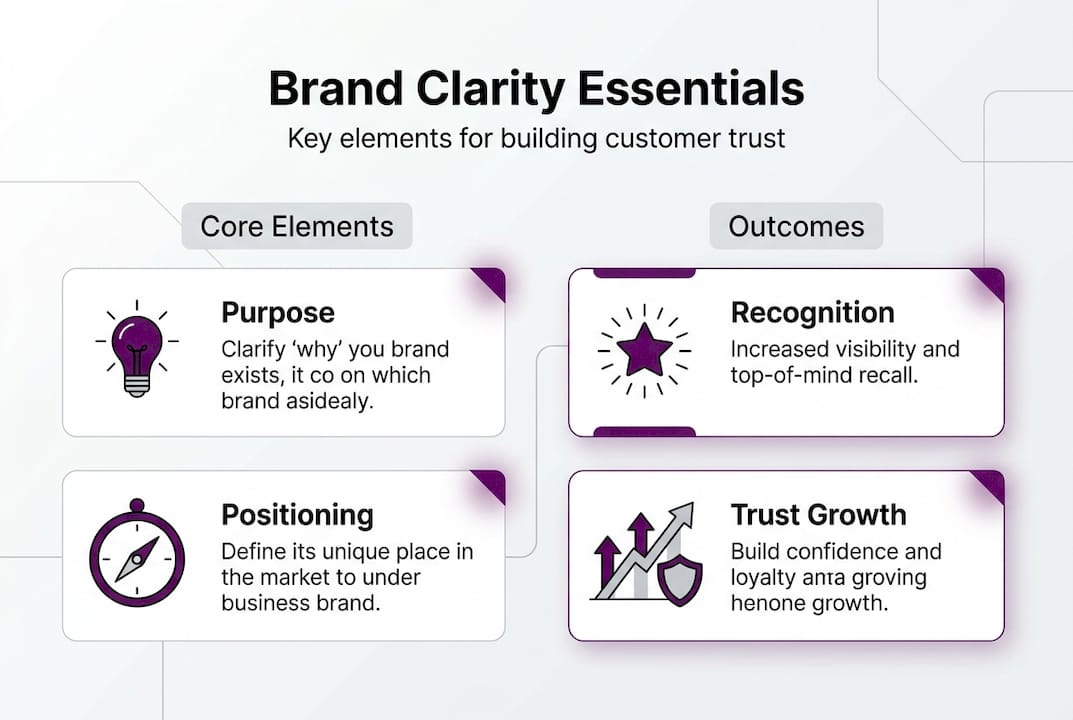
These elements work together to create a coherent brand that customers understand and remember. Without clarity in each area, your brand feels vague or generic. With it, you stand out naturally.
Pro Tip: Separate brand clarity from marketing execution. Clarify your strategy first by defining purpose, positioning, and values. Then use that foundation to guide all marketing efforts. This prevents scattered campaigns that confuse rather than convince.
The difference shows up in results. Clear brands attract the right customers faster, retain them longer, and grow through referrals instead of constant prospecting. Unclear brands burn resources trying to be everything to everyone.
The impact of brand clarity on meaningful customer connection and trust
Brand clarity transforms how customers perceive and relate to your business. When your purpose, values, and positioning are crystal clear, people immediately understand what you offer and whether it fits their needs. This understanding creates emotional connection rather than transactional relationships.
Clarity builds trust through several powerful mechanisms:
- Consistent messaging across all touchpoints reinforces reliability
- Authentic values create alignment with like-minded customers
- Transparent positioning sets honest expectations
- Memorable brand story makes you relatable and human
Clear brand purpose and values boost trust by 73%, fostering deeper customer connections and loyalty.
This trust advantage compounds over time. Customers who trust your brand become repeat buyers, leave positive reviews, and refer friends without prompting. They defend you when competitors attack and forgive minor mistakes because they believe in your intentions.
The economic impact is substantial. Acquiring new customers costs five to seven times more than retaining existing ones. When brand clarity drives trust and loyalty, your customer lifetime value increases while acquisition costs drop. You spend less on paid advertising because satisfied customers do marketing for you.

This shift matters especially for solo entrepreneurs and small teams. You can’t outspend big competitors on ads, but you can out-connect them through authentic brand clarity. Large companies often struggle with genuine values-driven positioning because corporate bureaucracy dilutes the message. Your size becomes an advantage when clarity enables direct, meaningful relationships.
Brand clarity also filters your audience naturally. Clear positioning attracts ideal customers while repelling poor fits. This saves time and energy you’d otherwise waste on mismatched prospects. You build a community of people who genuinely care about what you’re doing, not just a list of contacts.
The connection goes beyond transactions. Customers with strong brand affinity participate in your journey. They provide feedback, share ideas, and co-create value. This engagement fuels innovation and keeps your brand relevant without expensive market research.
How to achieve brand clarity: key elements and actionable steps
Achieving brand clarity requires addressing four core elements systematically. Purpose defines why you exist and the change you want to create. Positioning explains who you serve and how you’re uniquely valuable to them. Values establish the principles guiding your decisions. Story development weaves these elements into a compelling narrative.
Follow these steps to clarify your brand:
- Research your audience deeply to understand their needs, challenges, and aspirations
- Articulate your brand purpose by identifying the meaningful problem you solve
- Define your positioning by clarifying your unique approach and ideal customer
- Establish core values that guide decisions and resonate with your audience
- Craft your brand story connecting purpose, positioning, and values into one coherent narrative
- Test messaging with real customers and refine based on feedback
- Document everything to ensure consistency across all touchpoints
Most entrepreneurs succeed in clarifying brand purpose within three months by following a structured approach. The key is treating it as a process, not a one-time brainstorm.
| Unclear brand element | Clear brand element |
|---|---|
| Vague purpose: “Help people succeed” | Precise purpose: “Help solo creators build sustainable income without burning out” |
| Generic positioning: “Quality products for everyone” | Specific positioning: “AI-assisted tools for entrepreneurs who value purpose over profit” |
| Inconsistent messaging across channels | Consistent core message adapted per platform |
| Values listed but not applied to decisions | Values actively guide product, pricing, partnership choices |
| Fragmented story with no through-line | Cohesive narrative connecting all brand elements |
The comparison shows how specificity drives clarity. Vague statements sound nice but give customers nothing to grab onto. Precise elements create instant recognition and differentiation.
Start with brand positioning because it forces tough choices about who you serve and how. Many entrepreneurs resist narrowing their focus, fearing they’ll lose opportunities. The opposite happens. Clear positioning attracts ideal customers powerfully while naturally filtering out poor fits.
Once positioning is set, purpose becomes easier to articulate. You know who you’re serving, so you can define the specific change you create for them. Values follow from understanding what matters to both you and your audience.
Brand story development ties everything together. Your story should show how your purpose led to your unique positioning and how your values shape your approach. Make it personal and specific, not generic inspiration.
Pro Tip: Set measurable brand clarity goals like “articulate purpose in one sentence” or “achieve 80% message consistency across platforms.” Track progress monthly to maintain momentum and avoid overcomplicating your message with too many ideas.
The process requires honest self-reflection and customer input. Don’t guess what your brand should be. Talk to customers, analyze what resonates, and refine accordingly. Clarity emerges from iteration, not inspiration.
Applying brand clarity for sustainable, marketing-independent growth
Brand clarity becomes powerful when you apply it consistently across all business decisions. It’s not just a marketing tool but a strategic filter for everything from product development to customer service. When your purpose, positioning, and values are clear, choices become simpler and more aligned.
Clarity informs product decisions by keeping you focused on what serves your specific audience best. Instead of chasing every trend, you evaluate opportunities against your brand purpose. Does this new feature align with our values? Will it help our positioned audience achieve their goals? These questions prevent scope creep and wasted resources.
Customer service improves dramatically when team members understand brand values and positioning. They make decisions that reinforce your brand promise rather than just following scripts. This consistency builds trust faster than any marketing campaign.
Brand clarity reduces reliance on paid advertising through several mechanisms. Consistent messaging creates recognition, so customers remember you without constant reminders. Authentic communication resonates deeper than polished ads, generating word-of-mouth growth. Clear positioning attracts qualified leads naturally through content and community.
The cost difference is significant. Paid advertising requires ongoing investment with diminishing returns as platforms get more competitive. Brand clarity creates compounding returns. Each customer interaction reinforces your message, building momentum over time.
Growth strategies enabled by strong brand clarity include:
- Customer-centric innovation driven by deep understanding of audience needs
- Community building around shared values and purpose
- Content marketing that educates rather than sells
- Strategic partnerships with aligned brands
- Referral programs leveraging existing customer enthusiasm
- Values alignment that attracts talent and collaborators naturally
These approaches work because they’re rooted in genuine connection rather than interruption. You’re not buying attention but earning it through consistent value delivery.
Defining brand strategy thoughtfully leads to focused marketing efforts and sustainable business decisions that support long-term growth. The strategy becomes your north star, guiding resource allocation and priority setting.
Authentic marketing rooted in clear brand story costs less and performs better over time. You’re not crafting new messages for every campaign. You’re expressing the same core truth in different contexts. This consistency builds recognition and trust exponentially.
Sustainable growth requires continuous refinement of brand clarity. As your business evolves, revisit your purpose, positioning, and values quarterly. Are they still accurate? Do they reflect where you’re heading? Small adjustments keep your brand relevant without losing coherence.
The growth strategies creators use successfully share one trait: they’re all amplified by brand clarity. Whether you’re building community, creating content, or developing products, clarity makes every effort more effective.
Brand clarity also enables better decision-making under uncertainty. When market conditions shift or new opportunities arise, your clear brand foundation helps you evaluate quickly. Does this align with our purpose? Does it serve our positioned audience? Will it reinforce or dilute our values? These filters prevent costly mistakes.
The ultimate benefit is freedom. Clear brands don’t chase every trend or opportunity. They focus on what matters, execute consistently, and build sustainable momentum. This focused approach reduces stress, increases impact, and creates businesses that support rather than drain their founders.
Discover our customer-centric branding workshop
You’ve learned how brand clarity drives trust, connection, and sustainable growth. Now you need practical tools to implement these principles in your business. The Customer StarMap™ AI Power Workshop helps you clarify exactly who you serve and why it matters.
This workshop guides you through deep customer understanding and brand positioning without generic templates or guesswork. You’ll map your ideal customer’s journey, clarify your unique value, and align your brand strategy with real audience needs. The AI-assisted process accelerates clarity while keeping your authentic voice central.
Explore the Customer StarMap™ AI Power Workshop to build a meaningful, sustainable brand without heavy reliance on traditional marketing tactics. It’s designed specifically for entrepreneurs and creators who want strategic clarity before scaling.
FAQ
How does brand clarity differ from branding?
Brand clarity is the clear definition of your brand’s purpose, values, and positioning. It’s the strategic foundation answering why you exist, who you serve, and what makes you different. Branding is the visual and communication work that expresses that clarity to your audience through logos, colors, messaging, and campaigns. Clarity comes first and guides all branding decisions.
Why is brand clarity important for entrepreneurs and creators?
Brand clarity helps you stand out in crowded markets by defining your unique value precisely. It attracts the right audience naturally because people immediately understand what you offer and whether it fits their needs. Clear brands build trust and loyalty faster, leading to sustainable growth through referrals and retention rather than constant paid marketing. Without clarity, you waste resources on scattered efforts that don’t connect.
What are the key steps to clarify your brand?
Start by researching your audience deeply to understand their real needs and challenges. Define your brand purpose by identifying the meaningful problem you solve for them. Establish your positioning by clarifying your unique approach and ideal customer segment. Document your core values and ensure they guide actual decisions, not just marketing copy. Finally, craft a cohesive brand story that weaves purpose, positioning, and values into one compelling narrative.
How can brand clarity reduce reliance on traditional marketing tactics?
Clarity creates authentic messaging that resonates naturally with your ideal audience, generating word-of-mouth growth and organic awareness. When customers deeply understand and trust your brand, they become advocates who refer others without prompting. This reduces dependency on paid advertising and interruptive marketing. Clear positioning also improves conversion rates because you attract qualified prospects who already align with your values and approach. Over time, brand clarity compounds into sustainable growth that doesn’t require constant ad spending.
When should I revisit and refine my brand clarity?
Revisit your brand clarity quarterly as your business evolves and you learn more about your customers. Major milestones like launching new products, entering new markets, or significant growth spurts warrant immediate review. Customer feedback and market shifts may also signal the need for refinement. The goal isn’t constant change but ensuring your clarity remains accurate and relevant. Small adjustments maintain alignment without losing the consistency that builds recognition and trust.