How AI in branding cuts strategy time by 95% in 2026
Branding used to take weeks of workshops, revisions, and creative back-and-forth. Now, AI accelerates brand strategy development from weeks to 1-2 hours, cutting timelines by over 95%. For entrepreneurs and creators building sustainable brands, this shift means faster launches, smarter positioning, and more time to focus on community growth. AI doesn’t replace your creative vision, it amplifies it by handling research, iteration, and personalization at scale. This guide shows you how to leverage AI for brand positioning, design co-creation, and community-driven growth without losing authenticity.
Table of Contents
- Key takeaways
- How AI transforms brand strategy development
- AI’s impact on brand design and creative co-creation
- Leveraging AI for personalized branding and community growth
- Comparing AI-driven branding tools and workflows
- Explore AI-powered branding workshops at Starfireblast
- FAQ
Key Takeaways
| Point | Details |
|---|---|
| Strategy speedup | AI reduces brand strategy development from weeks to one to two hours, delivering thirty to forty percent productivity gains. |
| Personalization at scale | AI enables tailored variations for different audience segments and can increase conversion rates by twenty five to thirty five percent. |
| Design co creator | AI serves as a design co creator, producing concepts that are more novel and useful and many users prefer AI as a co creation partner. |
| Practical AI workflow | A practical AI workflow includes starting with clear inputs, synthesizing patterns, iterating on messaging, testing variations with small audiences, and refining based on real engagement data. |
How AI transforms brand strategy development
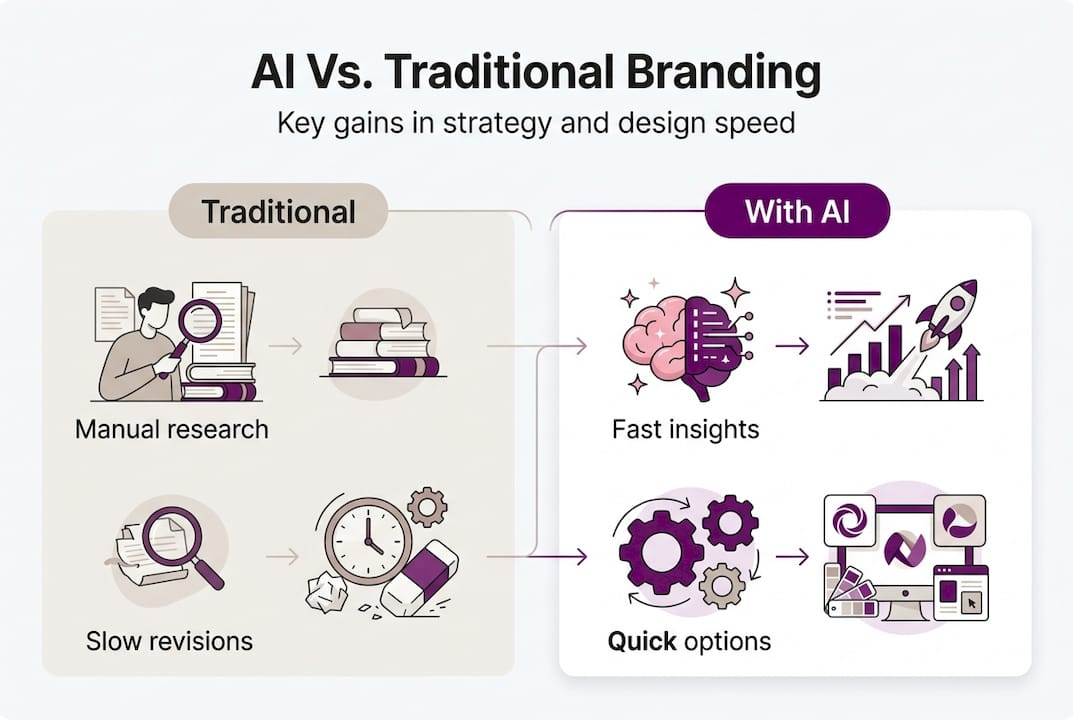
Traditional brand strategy demands extensive research, stakeholder interviews, competitive analysis, and multiple revision cycles. This process drains time and resources, especially for solo founders and small teams. AI changes the equation by automating research synthesis, generating positioning frameworks, and testing messaging variations in minutes instead of weeks.
Teams using AI for brand building see 30-40% productivity gains because AI handles the heavy lifting of data processing and pattern recognition. You can feed customer feedback, market trends, and competitor insights into AI tools that instantly identify positioning gaps and opportunities. This speed matters when you’re validating ideas or pivoting based on market feedback.
Personalization becomes scalable with AI. Instead of creating one generic brand message, you can generate tailored variations for different audience segments. AI-driven personalization increases conversion rates by 25-35% because messages resonate more deeply when they address specific pain points and aspirations. For creators building community-driven brands, this means speaking directly to niche groups without multiplying your workload.
The real power lies in iteration speed. You can test dozens of positioning statements, value propositions, and messaging angles in a single afternoon. AI generates variations based on your inputs, and you select what aligns with your vision. This rapid experimentation helps you find clarity faster, which is essential for entrepreneur action planning and defining brand strategy impact.
Here’s how to integrate AI into your brand strategy workflow:
- Start with clear inputs: customer insights, business goals, competitive landscape
- Use AI to synthesize patterns and generate positioning frameworks
- Iterate rapidly on messaging and value propositions
- Test variations with small audience samples before full rollout
- Refine based on real engagement data, not assumptions
Pro Tip: Use AI to generate 10 positioning statements, then pick the top 3 that feel authentic to your vision. Test these with a small segment of your audience to see which drives the strongest response before committing to one.
The efficiency gains free you to focus on what AI can’t do: building genuine relationships, understanding nuanced human needs, and making strategic decisions that align with your values. AI tools for entrepreneurs handle the repetitive analysis work so you can spend energy on meaningful connection and sustainable growth.
AI’s impact on brand design and creative co-creation
Design used to be the domain of trained professionals with years of experience. AI democratizes this by generating visual concepts that rival human creativity. An empirical study with 121 participants shows AI-generated logo concepts are conceptually and visually comparable to human designers, challenging assumptions about AI’s creative limitations.
What makes AI particularly valuable is its role as a co-creator. Research reveals that 76% of users prefer AI as a co-creation partner over humans, with AI concepts rated 92% more novel and 74% more useful in controlled studies. This preference stems from AI’s ability to generate unexpected combinations and break conventional design patterns.
The co-creation model works because AI handles exploration while you provide direction and judgment. You describe your brand attributes, target emotions, and visual preferences. AI generates dozens of variations, from minimalist to complex, abstract to literal. You select promising directions and refine them through iterative prompts. This workflow accelerates the creative process without replacing your vision.

Here’s a comparison of traditional vs AI-assisted design workflows:
| Aspect | Traditional Design | AI-Assisted Design |
|---|---|---|
| Initial concepts | 3-5 options, 1-2 weeks | 20-50 options, 1-2 hours |
| Revision cycles | 2-3 rounds, days each | Unlimited, minutes each |
| Cost per concept | $500-2000 | $0-50 |
| Novelty score | Baseline | 92% higher |
| Designer dependency | High | Low to medium |
AI excels at generating variations quickly, which is crucial for step-by-step branding processes where you need to test ideas before committing resources. You can explore color palettes, typography combinations, and iconography styles without hiring multiple designers or agencies.
The key is understanding AI’s strengths and limitations:
- AI generates novel combinations and breaks creative blocks
- AI accelerates exploration and iteration dramatically
- AI requires clear direction and human judgment for refinement
- AI works best when you provide context about brand values and audience
- AI complements rather than replaces human creativity and taste
Pro Tip: Generate 30 logo concepts with AI in one session, then narrow to 5 finalists based on your gut reaction. Refine those 5 with specific prompts about adjustments, then test the top 2 with your target audience before finalizing.
This approach aligns with human-centered branding principles because you maintain control over what resonates with your community. AI handles the technical execution and variation generation, while you ensure the final design reflects authentic values and connects emotionally. For solo founders practicing AI entrepreneurship, this balance is essential for building brands that feel personal, not generic.
Leveraging AI for personalized branding and community growth
Personalization used to require massive marketing teams and complex automation systems. AI makes it accessible to solo creators and small teams by analyzing audience data and generating tailored messaging at scale. The result is 25-35% higher conversion rates because your brand speaks directly to specific needs and aspirations.
Community-driven brands thrive on authentic connection, and AI helps you maintain that authenticity while scaling your reach. Instead of broadcasting one message to everyone, you can create personalized variations that address different segments within your community. This approach respects individual differences while maintaining a cohesive brand identity.
Here’s a step-by-step approach to AI-powered personalization:
- Segment your audience based on goals, challenges, and values, not just demographics
- Use AI to analyze engagement patterns and identify what resonates with each segment
- Generate personalized messaging variations that address specific pain points
- Test different approaches with small groups before scaling
- Refine based on response rates and qualitative feedback
- Maintain brand consistency by establishing core values that anchor all variations
The balance between automation and authenticity matters deeply. AI handles the technical work of generating variations and analyzing performance, but you decide what feels true to your brand. This human oversight ensures your community experiences genuine connection, not algorithmic manipulation.
Community growth accelerates when members feel seen and understood. AI helps you identify emerging topics, questions, and needs within your community by analyzing conversations and engagement patterns. You can then create content and offerings that directly address these needs, fostering loyalty and word-of-mouth growth.
Key tactics for AI-enhanced community building:
- Use AI to identify common questions and pain points in community discussions
- Generate personalized onboarding sequences that address specific member goals
- Create content variations that speak to different experience levels and interests
- Analyze engagement data to understand what drives meaningful interaction
- Automate routine communication while preserving personal touch for key moments
The goal is sustainable growth that doesn’t burn you out. AI handles repetitive tasks like data analysis, content variation, and performance tracking. You focus on strategic decisions, relationship building, and creating experiences that deepen community bonds. This division of labor aligns with growth strategies for sustainable brands that prioritize long-term viability over short-term metrics.
Authentic personal branding becomes more achievable with AI support because you can maintain consistency across channels without sacrificing depth. AI helps you adapt your core message for different platforms and contexts while preserving your unique voice and values. This consistency builds trust, which is the foundation of community-driven growth.
The most effective approach combines AI efficiency with human judgment. Use AI to generate options and identify patterns, then apply your understanding of your community to make final decisions. This ensures your brand remains clear and purposeful while benefiting from AI’s analytical power.
Comparing AI-driven branding tools and workflows
Choosing the right AI tools depends on your branding stage, technical comfort, and budget. The market offers everything from fully automated brand generators to specialized tools for specific tasks like logo design or messaging refinement. Understanding the tradeoffs helps you build a workflow that fits your needs.
Here’s a comparison of popular AI branding tool categories:
| Tool Type | Best For | Strengths | Limitations |
|---|---|---|---|
| All-in-one brand generators | Quick MVP launches | Speed, comprehensive output | Generic results, limited customization |
| AI design tools | Visual identity creation | High-quality visuals, iteration speed | Requires design judgment |
| AI copywriting platforms | Messaging and content | Volume, variation testing | Needs editing for voice consistency |
| AI analytics tools | Strategy refinement | Data insights, pattern recognition | Interpretation requires expertise |
| Custom AI workflows | Specific brand needs | Tailored solutions, flexibility | Technical setup, learning curve |
Workflow choice matters as much as tool selection. Fully automated workflows generate complete brand packages in minutes but often lack the nuance that makes brands memorable. Human-in-the-loop workflows take longer but produce results that feel authentic and distinctive.
The most effective approach for sustainable brands combines automation with strategic human input:
- Use AI for initial exploration and variation generation
- Apply human judgment to select directions that align with values
- Refine AI outputs with specific feedback and iteration | Test results with real audience members before finalizing
- Maintain brand consistency through clear guidelines and oversight
When evaluating AI branding tools, consider these criteria:
- Ease of use: Can you get results without extensive training?
- Customization depth: Does it allow refinement beyond templates? | Output quality: Do results match your standards without heavy editing?
- Integration capability: Does it work with your existing tools and workflows?
- Cost structure: Does pricing align with your usage patterns and budget?
- Learning curve: How quickly can you become productive?
Different branding stages require different tool approaches. Early validation benefits from quick, automated tools that let you test concepts cheaply. Established brands need more sophisticated tools that offer deeper customization and maintain consistency across touchpoints. Solo founders might prioritize ease of use, while growing teams need collaboration features.
The AI tools landscape for entrepreneurs in 2026 offers more options than ever, but more choice creates decision paralysis. Start with one tool that addresses your most pressing need, whether that’s logo design, messaging clarity, or audience analysis. Master it before adding complexity.
Your workflow should support purpose in branding by giving you space to make intentional choices. AI handles execution speed and variation generation, but you decide what aligns with your values and resonates with your community. This balance ensures your brand feels human, not algorithmic.
As you build experience with AI tools, you’ll develop intuition about when to automate and when to slow down for human judgment. The step-by-step branding process becomes faster and more efficient, but the core work of understanding your audience and clarifying your purpose remains fundamentally human.
Explore AI-powered branding workshops at Starfireblast
Understanding AI’s potential is one thing. Applying it effectively to build a sustainable, community-driven brand requires hands-on practice and expert guidance. That’s where specialized training makes the difference between knowing concepts and achieving real results.
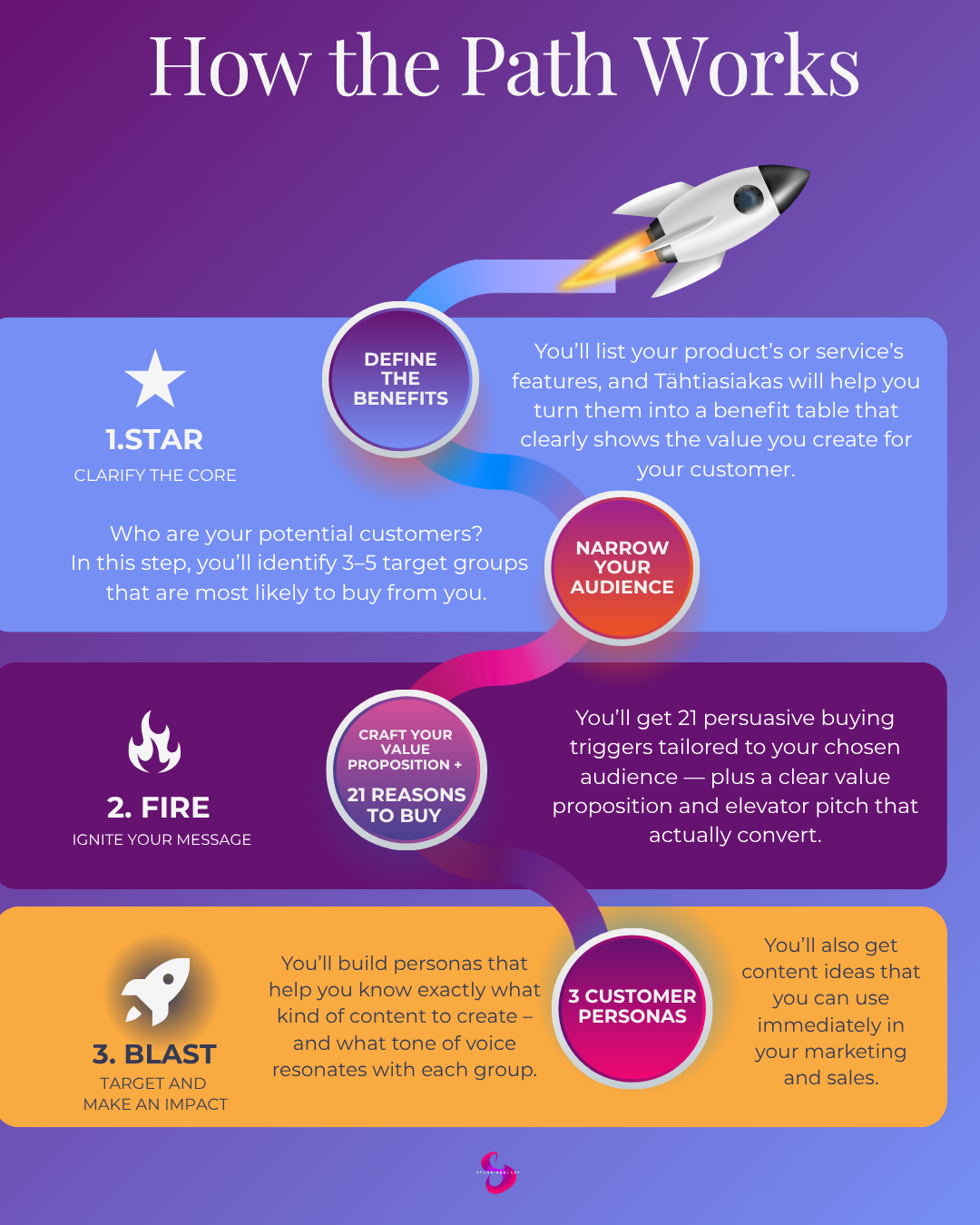
Starfireblast’s Customer StarMap™ AI Power Workshop helps you turn AI branding insights into actionable strategies tailored to your specific audience and business model. You’ll learn to combine AI efficiency with human-centered positioning, so your brand stands out without burning you out. The workshop focuses on practical application, not theory, giving you frameworks and tools you can implement immediately. Join entrepreneurs and creators who are building meaningful brands with AI as a strategic partner, not a replacement for authentic connection.
FAQ
What is the role of AI in brand strategy creation?
AI dramatically shortens brand strategy development from weeks to hours by automating research synthesis, competitive analysis, and messaging iteration. It enables data-driven personalization at scale, allowing entrepreneurs to test positioning variations quickly and identify what resonates with specific audience segments. The efficiency gains free you to focus on strategic decisions and relationship building while AI handles pattern recognition and option generation.
How does AI improve creative processes in branding?
AI generates logo concepts and visual assets that are conceptually and visually comparable to human designers, as demonstrated in empirical studies. It acts as a preferred co-creator because it produces more novel and useful outputs, helping break creative blocks and explore unexpected design directions. The key is using AI for rapid exploration while applying human judgment to select and refine concepts that align with your brand values.
Can AI-driven branding foster authentic community growth?
AI personalization increases engagement and conversion rates by 25-35% because tailored messaging addresses specific needs and aspirations within your community. When balanced with human oversight, AI helps you maintain authentic connections at scale by identifying emerging topics and needs while you focus on strategic relationship building. The goal is using AI to amplify your capacity for genuine connection, not replace it with automation.
What should entrepreneurs consider when choosing AI branding tools?
Evaluate tools based on ease of use, customization depth, output quality, and cost structure relative to your branding stage and technical comfort. Consider whether you need fully automated workflows for quick validation or human-in-the-loop systems for more distinctive results. Start with one tool addressing your most pressing need, master it, then expand your toolkit as your branding sophistication grows.