Why ethical growth matters: 8.2pp edge for your business
TL;DR:
- Ethical companies outperform financially with increased resilience and faster crisis recovery.
- Embedding ethics into strategy builds trust, attracts talent, and reduces risk.
- Practical frameworks guide integrating ethical principles into everyday business decisions.
Businesses committed to ethical growth outperform financially and recover faster than conventional peers. That challenges a persistent belief among entrepreneurs: that ethics mean trade-offs. The data says otherwise. Companies with strong ethical foundations show measurable advantages in revenue, risk reduction, and crisis recovery. This guide defines ethical growth clearly, presents the evidence behind it, walks through practical frameworks, and gives you a step-by-step path to embed it in your business. If you want growth that holds up over time, this is where to start.
Table of Contents
- What is ethical growth and why does it matter?
- The business case: How ethical growth drives performance
- Frameworks and decision tools for ethical growth
- Common trade-offs, edge cases, and how to navigate them
- Action steps for embedding ethical growth in your business
- Our take: Why ethical growth is not just a moral imperative, but a business superpower
- Take your next step toward ethical growth
- Frequently asked questions
Key Takeaways
| Point | Details |
|---|---|
| Ethical growth fuels resilience | Ethical companies recover faster from setbacks and outperform their competition over time. |
| Competitive edge through ethics | Integrating ethics drives sales, reduces risk, and builds lasting trust with all stakeholders. |
| Frameworks simplify decisions | Decision tools and ethical frameworks help make sustainable growth practical, not just aspirational. |
| Short-term cost, long-term gain | Investing in ethical practices may increase initial expenses but pays off with improved reputation and lower risk. |
| Action drives alignment | Clear goals and transparent engagement embed ethical growth deeply into your business. |
What is ethical growth and why does it matter?
Ethical growth means expanding your business while keeping integrity, sustainability, and stakeholder impact at the center of every decision. It is not a vague commitment to being good. It is a structured approach to building a business that accounts for ecological, social, and governance factors alongside financial performance.
Standard growth models often treat ethics as optional or secondary. Ethical growth treats them as operational inputs. The difference shows up in how a business handles supplier relationships, pricing decisions, hiring, and environmental impact.
The 2026 Ethics Premium Report documents clear financial advantages for ethical companies:
| Metric | Ethical companies | Conventional peers |
|---|---|---|
| Financial outperformance | +8.2 percentage points over 5 years | Baseline |
| Risk drawdown | 7.1% smaller | Baseline |
| Recovery speed | 10.1% faster | Baseline |
| Time underwater after crisis | 14.4% less | Baseline |
Those numbers are not marginal. They represent a structural advantage built over time through consistent ethical choices.
Core business advantages of ethical growth include:
- Trust: Customers and partners stay longer with businesses they trust.
- Talent attraction: Skilled workers increasingly choose employers with clear values.
- Scandal avoidance: Ethical practices reduce exposure to reputational and legal risk.
- Resilience: Businesses with strong stakeholder relationships recover faster from disruption.
“Ethical growth is not a soft strategy. It is the most durable competitive position a business can hold.”
For a broader view of how to structure this kind of growth, the guide to sustainable growth covers the foundational principles in detail. The business ethics toolkit from the Institute of Business Ethics also provides practical starting points for any size organization.
Ethical growth is not a nice-to-have. It is a competitive edge that compounds over time.
The business case: How ethical growth drives performance
Ethical growth translates into measurable business outcomes. The evidence spans revenue, risk, and recovery.
SMEs with ESG scores at or above 0.6 show a 0.5% probability of default, compared to significantly higher rates for low-ESG peers. That is a direct financial benefit. Lower default risk means better access to credit, more favorable terms, and stronger investor confidence.
Corporate sustainability boosts sales through innovation and improved performance metrics. Businesses that integrate sustainability into their strategy tend to develop better products, enter new markets, and retain customers at higher rates.

| Factor | Ethical companies | Conventional companies |
|---|---|---|
| Default probability (SMEs) | 0.5% (ESG ≥0.6) | Significantly higher |
| Sales growth driver | Innovation and sustainability | Cost and volume |
| Risk exposure | Lower drawdown | Higher volatility |
| Post-crisis recovery | 10.1% faster | Baseline |
Key performance benefits of ethical growth:
- Reduced regulatory and legal exposure
- Stronger customer loyalty and repeat purchase rates
- Higher employee retention, which lowers hiring costs
- Better supplier relationships, which reduces supply chain disruption
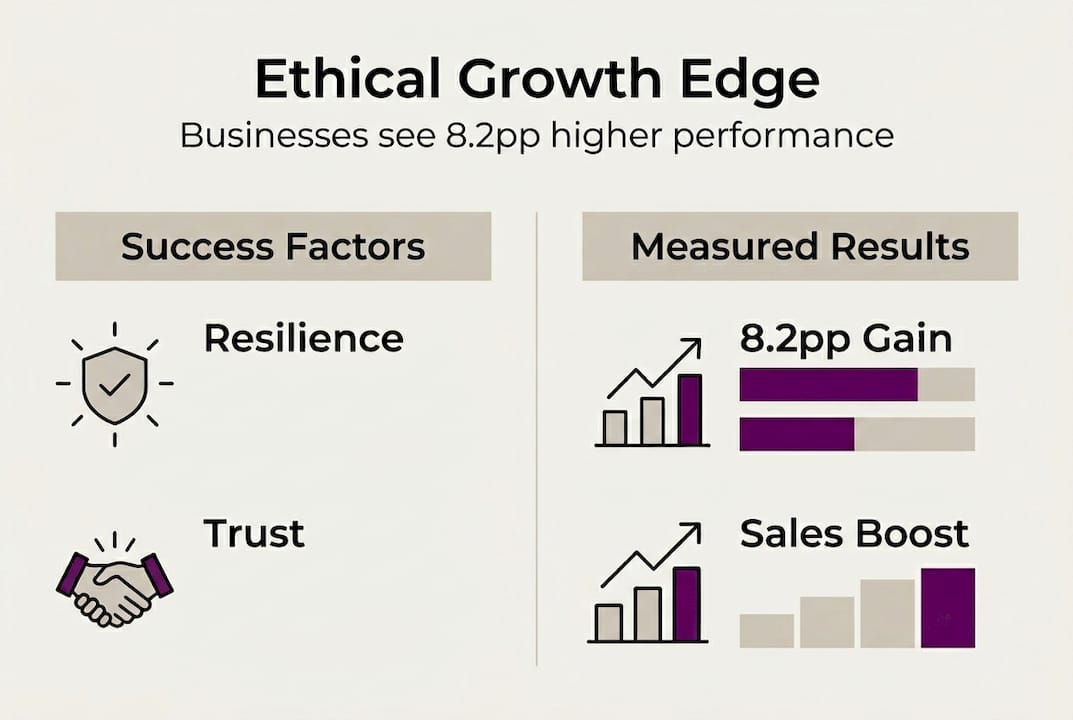
Stat to note: Ethical companies outperform by 8.2 percentage points over five years. That is not a rounding error. That is a strategy.
Profitability and ethics are not opposites. Research confirms that businesses can be both profitable and ethical when the right systems are in place.
Pro Tip: Use innovation as the bridge between your sustainability commitments and your growth strategy. When ethical choices drive product development, they create value instead of just cost.
For entrepreneurs building this foundation, sustainability fundamentals and business positioning for impact are practical next reads.
Frameworks and decision tools for ethical growth
Knowing that ethical growth works is one thing. Knowing how to operationalize it is another. The right frameworks turn intention into repeatable practice.
The IBE’s 8 elements provide a clear checklist for building an ethical business:
- Leadership commitment
- Defined purpose and values
- Ethics integrated into strategy
- Culture that reinforces values
- Clear policies and codes of conduct
- Training and communication
- Reporting and accountability mechanisms
- Regular review and improvement
These elements work as a diagnostic. You can assess where your business is strong and where gaps exist.
Six ethical lenses help with specific decisions:
- Rights: Does this decision respect the rights of all stakeholders?
- Justice: Is the outcome fair and equitable?
- Outcomes: What are the likely consequences for all affected parties?
- Character: Does this reflect the values we claim to hold?
- Care: Does this decision show genuine concern for people and relationships?
- Systems: How does this choice affect the broader ecosystem we operate in?
Applying these lenses to key decisions, such as pricing, hiring, or supplier selection, builds ethical reasoning into daily operations.
A practical integration process:
- Set clear ethical goals tied to your business purpose.
- Communicate those goals transparently to your team and stakeholders.
- Embed ethical criteria into existing decision-making processes.
- Assign accountability for ethical outcomes, not just financial ones.
- Review regularly and adjust as your business evolves.
Pro Tip: Start with one decision category, such as supplier selection, and apply the ethical lenses there first. Build the habit before scaling it across all operations.
For entrepreneurs working on purpose alignment, purpose-driven entrepreneurship and brand strategy for lasting impact offer useful context. The business ethics framework resource also provides a structured starting point.
Common trade-offs, edge cases, and how to navigate them
Real-world ethical growth involves difficult calls. Gray areas are common. Knowing how to navigate them is part of the practice.
Short-term costs vs. long-term gains: Ethical decisions sometimes require upfront investment. Paying suppliers fairly, reducing environmental impact, or investing in employee wellbeing can raise costs initially. But ethical practices safeguard reputation and long-term performance. The cost of a scandal, a lawsuit, or a talent exodus almost always exceeds the cost of doing the right thing earlier.
Common trade-off situations and how to approach them:
- Mission drift during growth: B Corps and values-led businesses can lose their ethical footing when scaling fast. Set explicit guardrails before growth accelerates.
- Profit vs. people: Layoffs, pricing decisions, and resource allocation require balancing stakeholder needs. Transparent communication and clear criteria help.
- Regulatory compliance vs. values: Compliance sets the floor. Values-driven action goes further. When regulations fall short, your stated values should guide the decision.
- Supplier pressure: Ethical sourcing may cost more. Document the rationale and communicate it to customers who share your values.
“The businesses that hold their values under pressure are the ones that earn lasting trust. Consistency is the proof.”
Navigating ethical tradeoffs in organizations requires structured thinking, not just good intentions.
Pro Tip: When facing a tough call, use transparent communication and gather stakeholder feedback before deciding. The process of asking builds trust even when the answer is hard.
For solo operators and small teams, sustainable entrepreneurship for solopreneurs and leadership skills for impact address these dilemmas in practical terms.
Action steps for embedding ethical growth in your business
Entrepreneurial leadership drives ethical leadership, sustainability, and competitive advantage at the SME level. That connection is direct. The leader sets the standard, and the organization follows.
A five-step blueprint for embedding ethical growth:
- Set your purpose: Define what your business stands for beyond revenue. Write it down. Make it specific.
- Engage stakeholders: Talk to employees, customers, suppliers, and community members. Their input shapes your ethical priorities.
- Choose your metrics: Identify measurable indicators for ethical performance, such as supplier diversity, carbon output, or employee turnover.
- Integrate into operations: Embed ethical criteria into hiring, procurement, product development, and sales processes.
- Review regularly: Schedule quarterly or annual ethics reviews. Treat them with the same weight as financial reviews.
Listening to employees, customers, and community members is not a soft practice. It generates actionable data. Businesses that build feedback loops into their operations identify problems earlier and respond faster.
Aligning sales and compensation with impact goals deepens team engagement. When your team is rewarded for outcomes that reflect your values, behavior follows.
Pro Tip: Document your ethical standards in a simple, accessible format. Revisit them annually or whenever your business model changes significantly.
For context on how businesses evolve over time, business evolution explained and sustainable growth strategies offer relevant frameworks.
Our take: Why ethical growth is not just a moral imperative, but a business superpower
Ethical growth gets dismissed as idealism more often than it deserves. The data does not support that dismissal. The 8.2 percentage point financial outperformance, the faster recovery, the lower default rates: these are not coincidences. They are the result of businesses that built trust, maintained accountability, and made consistent choices when it was inconvenient.
True resilience is not built in a crisis. It is built in the decisions made before the crisis arrives. Ethical choices when no one is watching are what determine how a business performs when everyone is.
In fast-changing markets, agility and trust are the most durable assets a business can hold. Both are products of ethical foundations. Competitors can copy your product. They cannot easily copy your reputation or your relationships.
Community-driven sustainable growth is one of the clearest expressions of this principle in practice.
Take your next step toward ethical growth
For entrepreneurs ready to move from insight to action, the gap between knowing and doing is where most progress stalls.
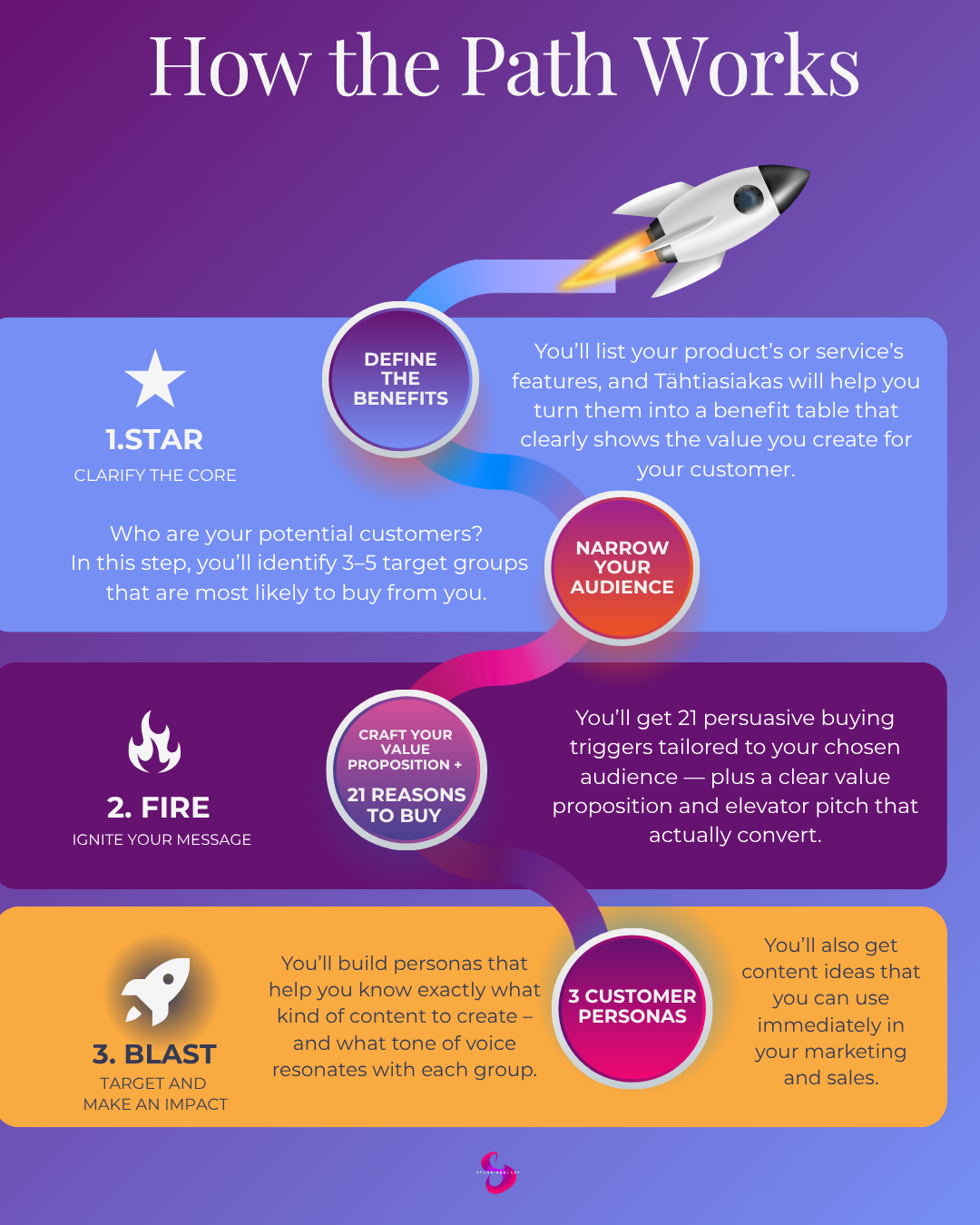
Starfireblast is built for exactly this transition. The Customer StarMap™ Power Workshop helps you clarify who you are building for, why it matters, and how to position your business for ethical, sustainable growth. It is a practical tool, not a theory session. Explore the full range of resources at Starfireblast to find the right starting point for your business stage. The next step does not have to be large. It has to be the right one.
Frequently asked questions
What is ethical growth in business?
Ethical growth means expanding a business while prioritizing integrity, sustainability, and positive stakeholder impact, embedding social and ecological values into every decision. Ethical companies financially outperform peers while reducing risk.
How does ethical growth impact a small business’s performance?
Ethical growth can boost sales through innovation, reduce financial risk, and lead to lower probabilities of default for SMEs. Corporate sustainability boosts sales performance, and high ESG scores lead to lower default probability.
Aren’t ethical practices more expensive for a startup?
Ethical practices may raise short-term costs but often prevent costly scandals, build trust, and attract talent, making the long-term business case positive. Short-term costs are offset by trust and sustainable advantages.
What frameworks help entrepreneurs make ethical decisions?
Frameworks like IBE’s 8 elements and the six ethical lenses provide practical tools to integrate ethics into decision-making. IBE’s 8 elements and ethical lenses guide ethical growth in practical terms.
How can I start aligning my team with ethical growth?
Begin by setting clear goals, involving stakeholders, and using feedback loops to make ethics part of daily operations. Leadership and stakeholder engagement drive ethical corporate sustainability at the SME level.
Recommended
- Your guide to sustainable growth: balanced, profitable, responsible – Starfireblast
- Why clarity matters in business: key to growth, alignment – Starfireblast
- Business Evolution Explained: Sustainable Growth for Entrepreneurs – Starfireblast
- Purposeful growth for sustainable entrepreneurs 2026 – Starfireblast
- How websites power tax advisory success: visibility & trust | SiteForCPA.com