Why creators need community: build loyalty, engage, and thrive
TL;DR:
- Small creator communities have higher engagement and trust than large audiences. Building owned, relationship-based communities provides stability and long-term growth. Focus on member belonging and transformation for sustainable success.
Creators who chase follower counts often miss what actually drives sustainable business growth. Nano creators outperform mega creators by 3 to 6 times in engagement per follower across platforms like TikTok, YouTube, and LinkedIn. That single fact rewrites the playbook for every solo entrepreneur and creator trying to build something real. Bigger audiences do not automatically mean stronger businesses. Community does. This guide breaks down the evidence behind community-driven growth, shows you how to build one that lasts, and helps you avoid the traps that stall most creators before they gain real momentum.
Table of Contents
- The engagement advantage: Why smaller communities matter
- Community as a trust and resilience asset
- Identity, belonging, and the new creator edge
- Practical strategies to build and scale your creator community
- Our perspective: The overlooked power of small, intentional communities
- Level up your creator business with expert community support
- Frequently asked questions
Key Takeaways
| Point | Details |
|---|---|
| Small communities win | Targeted communities drive much higher engagement and loyalty than large audiences. |
| Community builds resilience | An owned community protects creators from platform changes and fuels long-term business. |
| Belonging is the edge | Shared identity and purpose are why members join, stay, and champion creators. |
| Quality beats quantity | Intentional, supportive communities enable sustainable growth without burnout. |
| Practical frameworks work | Modern tools, memberships, and events provide scalable ways to nurture thriving communities. |
The engagement advantage: Why smaller communities matter
The numbers behind creator engagement are not what most people expect. A creator with 1,000 deeply connected followers can outperform one with 1,000,000 disengaged ones. This is not a theory. It is measurable, repeatable, and documented across multiple platforms and creator categories.
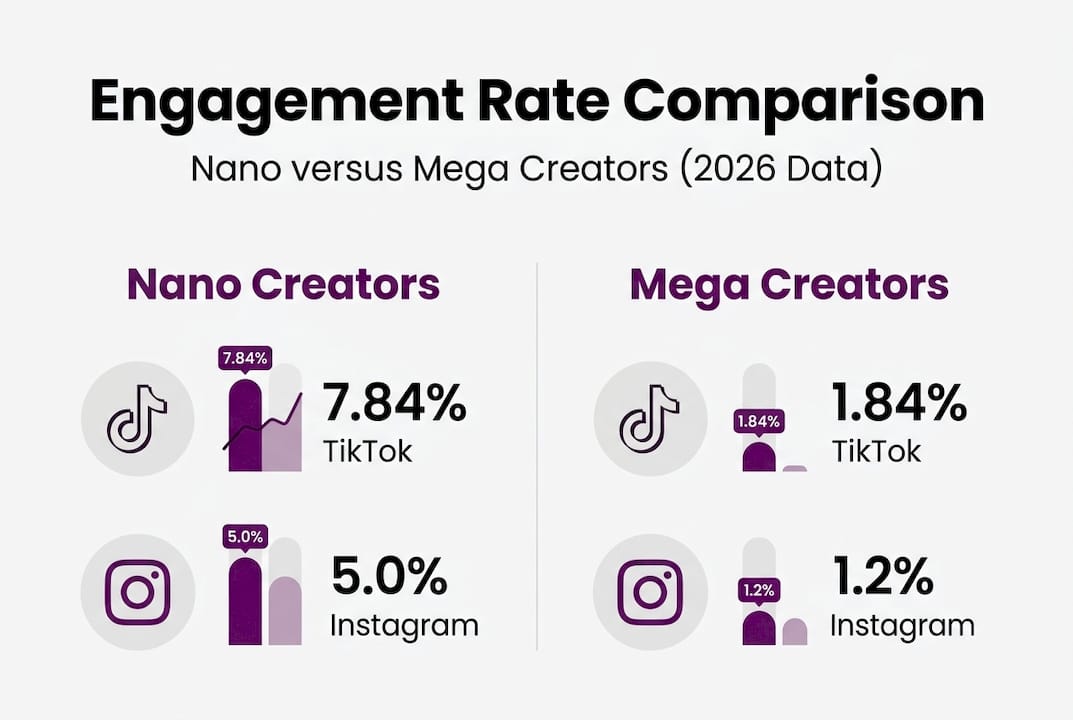
Nano creator engagement rates sit at 7.84% on TikTok compared to 1.84% for mega creators. That is a 4.3x difference. On LinkedIn, nano creators see 5.62% engagement versus 1.12% for mega creators, a 5x gap. These are not marginal differences. They represent a fundamentally different relationship between creator and audience.
Platform engagement comparison: Nano vs. mega creators (2026)
| Platform | Nano creator ER | Mega creator ER | Advantage |
|---|---|---|---|
| TikTok | 7.84% | 1.84% | 4.3x |
| 5.62% | 1.12% | 5.0x | |
| YouTube | ~4.1% | ~1.3% | ~3.2x |
Why does this happen? The answer is simple. Smaller creators talk with their audience, not at them. They respond to comments. They remember names. They create content that speaks directly to a tight niche rather than trying to appeal to everyone. That specificity builds trust fast.
“A loyal community of 500 people who know you, trust you, and actively engage with your content is worth more than 50,000 passive followers who scroll past without noticing.”
Community-driven brands understand this distinction. They invest in depth over breadth. They create spaces where members feel heard, valued, and part of something larger than a content feed.
Here is what loyalty, trust, and intimacy actually deliver for creators:
- Higher conversion rates on products, courses, and services
- More word-of-mouth referrals from members who believe in the mission
- Lower customer acquisition costs because trust replaces paid advertising
- Greater content longevity since engaged audiences return, share, and discuss
- Stronger feedback loops that sharpen your offer over time
There is also a well-being dimension here. Creators who build tighter communities report less burnout. They spend less time chasing algorithms and more time doing work that matters. The pressure to constantly produce for a massive disengaged audience is one of the leading drivers of creator fatigue.
Pro Tip: Consider capping membership in your core community space. A waitlist creates perceived value and helps you maintain the quality of relationships. Platforms like Circle and Discord allow you to limit access by tier, protecting the intimacy that makes your community worth joining in the first place.
The practical lesson is clear. If you are a solo creator or small team, community tactics for creators will do more for your business than doubling your posting frequency or chasing trending content formats.
Community as a trust and resilience asset
Understanding the power of engagement leads us to the next pillar: resilience and trust through true community ownership.

Platform algorithms change. They always have and always will. In 2026, creators who built their entire audience on a single social media platform have experienced dramatic drops in reach overnight, with no warning and no recourse. This is not a hypothetical risk. It is a pattern that repeats every few years, and it disproportionately harms creators who never built an owned audience.
Platform dependency risks are real. Smaller creators who build deeper trust and own their community relationships convert better than macro-influencers and are far more protected from platform volatility. This is the core distinction between a transactional audience and a relational community.
Owned vs. rented audiences: Key business metrics
| Metric | Rented audience (social) | Owned community |
|---|---|---|
| Algorithm control | Platform controls reach | You control access |
| Revenue stability | Volatile | More predictable |
| Trust level | Surface level | Deep and relational |
| Data access | Restricted | Full access |
| Survival of platform change | Low | High |
Transitioning from an audience to an owned community is not complicated, but it does require intention. Here is a clear sequence to follow:
- Start with your existing followers. Identify your most engaged 5 to 10 percent and invite them into a more direct channel, such as an email list, a private group, or a membership platform.
- Create a reason to join. Offer something exclusive: early access, live Q&As, a resource library, or a members-only newsletter. Give people a concrete reason to move beyond the social feed.
- Build a onboarding experience. When someone joins, make them feel welcomed immediately. A simple welcome message, a getting-started guide, and a first-week check-in go a long way toward retention.
- Prioritize conversation over content. Post questions, run polls, host discussions. The goal is participation, not passive consumption.
- Monetize gradually and transparently. Once trust is established, paid tiers and offers convert naturally because members already believe in your value.
“The creator who owns their community owns their business. Everyone else is renting.”
Community-driven business growth follows a compound curve. Each member who stays, refers, and buys again reduces your dependence on cold traffic and paid acquisition. Over time, this structural advantage becomes very difficult for competitors to replicate.
Growth strategies for creators that prioritize community ownership consistently outperform those built on reach and impressions alone. The data supports this, and so does common sense. People buy from people they trust, and trust requires relationship, not just visibility.
Identity, belonging, and the new creator edge
While trust and ownership are foundational, a creator’s real competitive moat comes from building identity and real belonging.
There is a question worth asking about every community you build or join: why do people really stay? The answer is almost never “because the content is good.” Good content is everywhere. What is rare is the feeling of belonging to something meaningful, of being seen and recognized by others who share the same struggles, values, or goals.
According to Circle’s 2026 Community Trends Report, 67% of community members join and stay because of shared identity. Nearly half of community builders report that having a community gives them a competitive edge over traditional branding. And 69% of the most successful community operators prioritize member transformation over information delivery.
That last point is worth slowing down on. Transformation over information. Most creators think their job is to deliver content, knowledge, or entertainment. The creators who build the most durable communities understand that members want to become something. They want to grow, shift, and change. Your community is the container for that transformation.
Here is how belonging consistently outpaces conventional branding strategies:
- Belonging creates emotional switching costs. Members do not leave because they have too much to lose socially.
- Shared identity produces organic advocacy. Members recruit others who are like them without being asked.
- Transformation-focused communities generate higher lifetime value because members stay longer and buy more.
- Identity-based communities are algorithm-proof. The connection happens between members, not just between creator and follower.
- A strong community identity attracts better partnerships because sponsors and collaborators want access to a defined, engaged group.
Consider the difference between a creator who shares productivity tips and one who runs a community for solo founders redesigning their work lives around clarity and sustainability. Both might post similar content. But only the second creates a context where members feel they belong to a movement. That is community-driven branding in practice.
Pro Tip: Before your next community event or content piece, ask one question: “Does this help members become who they are trying to be?” If the answer is no, reconsider the format. Focus on member transformation, not just information transfer.
Practical strategies to build and scale your creator community
Synthesizing these insights, here is how you can build, scale, and safeguard your own creator community.
The foundation is straightforward. You need five elements in place: the right platform, a tiered membership structure, a strong onboarding experience, regular events that drive participation, and smart use of AI to scale without losing the human touch.
Community event strategies show that IRL and virtual events are among the most powerful tools creators have. Community-building accounts for 46.9% of creator mentions in discussions around monetization, according to Influencer Marketing Hub. Events, both in-person and online, enable revenue streams that pure social media posting cannot support.
Here is a step-by-step process to launch and grow your community:
- Choose one platform and commit. Trying to maintain communities on multiple platforms fragments your energy and confuses members. Pick one, whether Circle, Slack, Discord, or a course platform with community features, and build there consistently.
- Design two to three membership tiers. A free entry tier, a paid core tier, and an optional high-touch tier create natural upgrade paths. Each tier should offer distinct, tangible value.
- Run a structured onboarding. A 1:1 onboarding call or a short welcome email sequence dramatically improves 30-day retention. New members who feel welcomed stay. Those who feel dropped off quietly disappear.
- Schedule recurring events. Weekly open calls, monthly workshops, or quarterly focus sprints give members a reason to show up beyond passive content consumption.
- Use AI to personalize at scale. AI for personalization can help you segment members by interest or stage, automate welcome sequences, and flag members who are going quiet so you can re-engage them before they churn.
Community integration methodologies from research on high-performing communities show that integrating tools onto a single platform cuts churn by 35 to 40 percent. Fragmentation is one of the biggest invisible killers of community momentum. When members have to jump between apps to get value, most of them stop jumping.
Creative engagement ideas that work across community types:
- Virtual co-working sessions (body-doubling increases member productivity and attendance)
- Member spotlights that rotate recognition across the community
- Peer accountability pairings that create relationships beyond the creator
- Seasonal challenges tied to shared goals
- Open office hours where creators are accessible for direct conversation
Pro Tip: Use AI tools to draft personalized welcome messages and track member activity patterns, but set a limit on automation. If members feel like they are talking to a bot, belonging evaporates. Use community marketing tactics to stay human at the core.
Our perspective: The overlooked power of small, intentional communities
Endless audience chasing leads to one outcome reliably: burnout without business stability. Most creators learn this the hard way, spending months or years optimizing for reach while their actual conversion rates and community depth stay flat or decline.
The evidence points clearly in one direction. Depth creates real impact. A community of 200 people who show up consistently, buy your products, refer their peers, and feel genuinely transformed by what you offer is worth more than a following of 20,000 who never engage past a like.
There is something uncomfortable in this truth for creators who measure success by follower counts. But founder vision drives community growth in ways that vanity metrics simply do not. The creators building the most sustainable, financially stable businesses in 2026 are not the ones with the largest audiences. They are the ones who stay close to their members, protect the intimacy of their spaces, and design for transformation rather than consumption.
Cap your membership when necessary. Protect the quality of relationships inside your community. Even if it feels counterintuitive, a smaller, tighter community is often a stronger business asset than a large, diffuse one. Sustainable advantage comes from the depth of what you build, not the width.
Level up your creator business with expert community support
You have seen the data and the strategies. Now the question is where to start. Building a community that drives real business results takes more than good intentions. It takes a clear framework, the right tools, and a plan that fits your specific audience and goals.
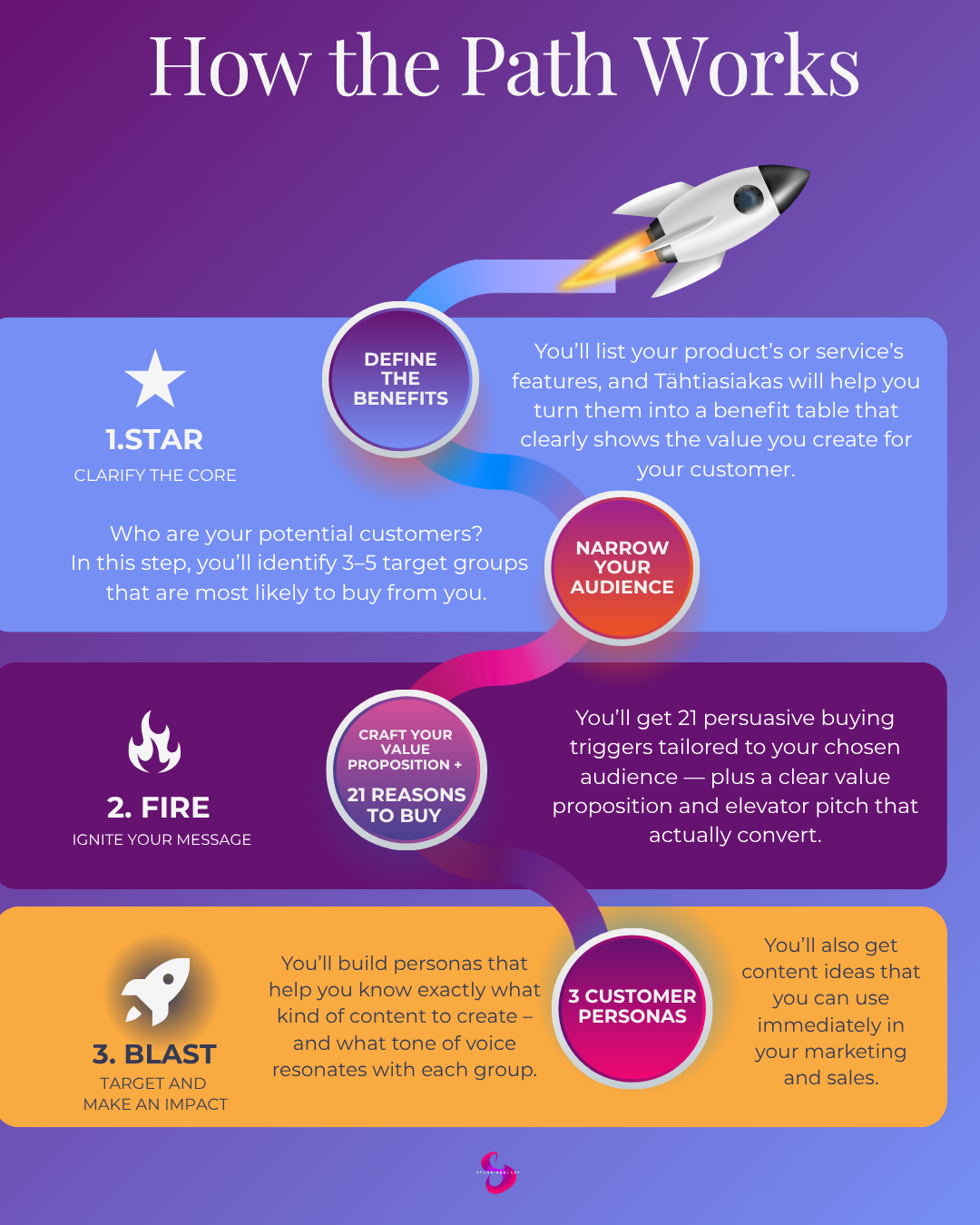
Starfireblast offers workshops and resources designed specifically for solo creators and entrepreneurs who want to grow through community rather than through ads or algorithms. The Customer StarMap™ AI workshop helps you get precise about who you are building for, what they actually need, and how to position your community for maximum relevance and retention. If you are ready to move from inspiration to structured action, this is the logical next step.
Frequently asked questions
What makes a creator community different from just having followers?
A creator community builds two-way relationships and shared identity, producing greater loyalty and resilience compared to one-way follower audiences. Nano creators see 4.3x higher engagement on TikTok than mega creators, showing that depth of connection consistently outperforms raw reach.
How do creator communities increase business resilience?
Communities give creators an owned audience and trust assets that survive algorithm changes. Smaller creators convert better than macro-influencers because relational trust translates directly into purchasing decisions, referrals, and long-term retention.
Is building a community worth it for solo creators or those just starting?
Yes. Data shows nano and micro creators achieve up to 6x higher engagement rates, making community-building especially high-value for new or solo entrepreneurs who cannot compete on production budget or posting volume alone.
What is the main reason members join and stay in a creator community?
Members overwhelmingly join and stay because of shared identity and a sense of belonging. 67% of members in Circle’s 2026 Community Trends Report cited shared identity as their primary reason for staying, far outweighing content quality alone.
How can creators scale their communities without losing personal touch?
Integrate community tools onto a single platform and use tiered memberships to manage growth. Consolidating tools cuts churn 35 to 40%, while tiers allow you to reserve high-touch access for your most committed members without spreading yourself too thin.