What Is Sustainable Entrepreneurship? Triple Bottom Line Explained
TL;DR:
- Sustainable entrepreneurship balances economic, social, and environmental goals using the triple bottom line framework.
- Applying sustainable practices can lead to increased investor interest, customer loyalty, and risk reduction.
- The key challenge is managing trade-offs and maintaining focus on customer-valued sustainability areas for strategic advantage.
Many founders assume that building a profitable business and caring for the planet are competing goals. That assumption is wrong. Sustainable entrepreneurship is the creation and management of businesses that integrate ecological responsibility, social impact, and economic viability through what is known as the triple bottom line framework: people, planet, and profit. This guide breaks down what that means in practice, which frameworks actually work, what the research says about financial outcomes, and how to handle the real tensions that come with building this way.
Table of Contents
- Defining sustainable entrepreneurship: The triple bottom line
- Core methodologies and frameworks for sustainable startups
- Evidence-backed benefits: Why sustainable entrepreneurship pays off
- Key challenges and practical approaches for founders
- A new lens: Integrating sustainability for real business advantage
- Take action: Tools to advance your sustainable venture
- Frequently asked questions
Key Takeaways
| Point | Details |
|---|---|
| Triple bottom line approach | Sustainable entrepreneurship prioritizes people, planet, and profit equally. |
| Proven business case | Research links sustainability practices to stronger profits and growth. |
| Practical integration matters | Success relies on embedding sustainable practices into your core business model from day one. |
| Navigate challenges wisely | Balancing costs and values demands smart strategies and clear priorities for founders. |
Defining sustainable entrepreneurship: The triple bottom line
Sustainable entrepreneurship is not a niche trend. It is a distinct approach to building a business that holds three objectives in balance at once. The Triple Bottom Line (TBL) balances economic, social, and environmental objectives as a single, integrated system rather than treating profit as the only measure of success.
Traditional ventures optimize almost entirely for financial return. Sustainable ventures add two more columns to that ledger: social value created and environmental impact avoided or restored. This is not charity. It is a different design logic for the business itself.
“Sustainopreneurship treats ecological and social value creation as core business functions, not as add-ons or PR strategies.”
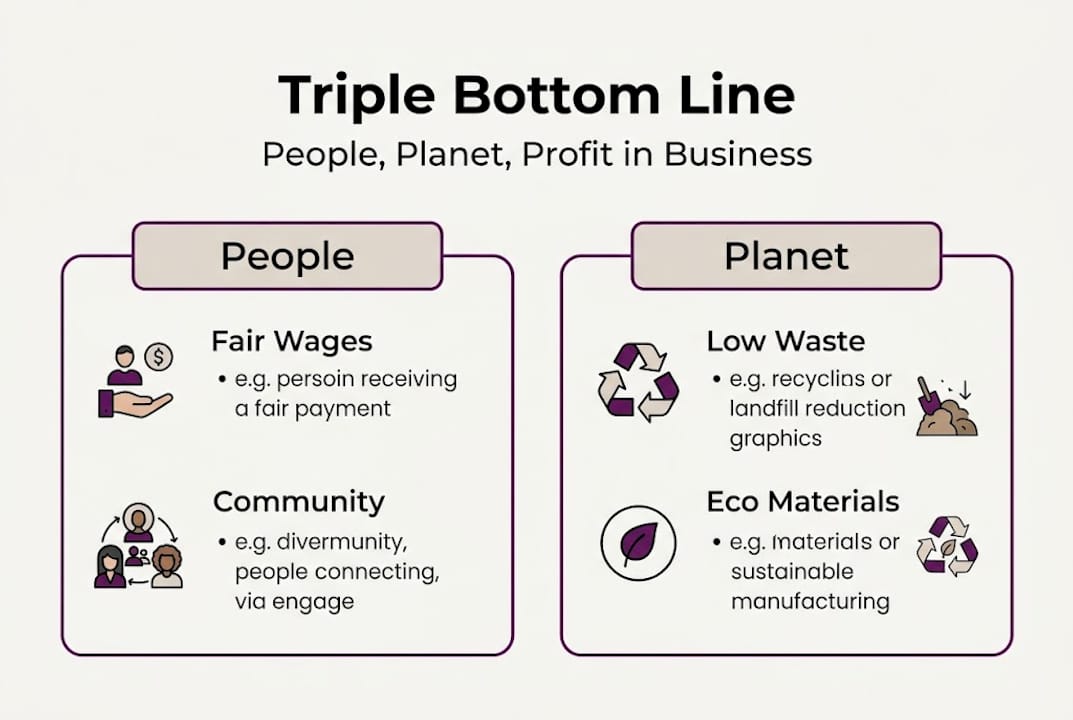
Here is a simple breakdown of the three pillars:
| Pillar | Focus | Example |
|---|---|---|
| People | Social equity, labor, community | Fair wages, local hiring, supplier ethics |
| Planet | Environmental stewardship | Low-waste production, carbon tracking |
| Profit | Economic viability | Revenue, margins, long-term growth |
Understanding why sustainability matters for solo founders and small teams is the starting point. Without that clarity, sustainability becomes a label rather than a system.
The key distinction between conventional and sustainable startups is intentionality. Conventional startups may adopt green practices later as a marketing move. Sustainable startups embed these values into their founding decisions: what they sell, how they source it, who they hire, and how they measure progress. That embedded intentionality is what makes the TBL framework a genuine strategy rather than a checklist.
Each pillar also reinforces the others. A business that treats workers well tends to retain talent longer, reducing hiring costs. A business that reduces material waste often lowers production costs. These are not trade-offs. They are compounding advantages when designed correctly from the start.
Core methodologies and frameworks for sustainable startups
Now that we understand the core concepts, let’s explore how founders actually apply sustainable practices. The research identifies several key methodologies including stakeholder engagement, ethical governance, circular economy principles, green innovation, and frameworks like TBL, entrepreneurial orientation (EO), and dynamic capabilities.
Here is a comparison of the most commonly used frameworks:
| Framework | Core idea | Best for |
|---|---|---|
| Triple Bottom Line | Measure people, planet, profit | All stages |
| Circular Economy | Eliminate waste by design | Product businesses |
| Entrepreneurial Orientation | Risk-taking with sustainability intent | Growth-stage founders |
| Dynamic Capabilities | Adapt resources to changing conditions | Scaling teams |
Applying these frameworks does not require a large team or a big budget. Here is a practical sequence for embedding sustainability from the start:
- Map your stakeholders. Identify who is affected by your business: customers, suppliers, employees, and the local community.
- Assess your material impact. Where does your business consume the most resources or generate the most waste?
- Choose one framework that fits your stage. Early-stage founders often start with TBL. Product businesses benefit from circular economy thinking.
- Set measurable targets. Vague commitments do not hold. Specific targets do.
- Review quarterly. Sustainability is not a one-time decision. It requires ongoing adjustment.
For sustainability fundamentals that apply directly to small businesses, the principles above translate into daily decisions about sourcing, pricing, and partnerships.
Ethical governance and sustainability are also closely linked. How a business makes decisions internally shapes whether its sustainability commitments hold under pressure.
Pro Tip: Focus first on sustainability initiatives your customers already value. Solving a problem they care about creates loyalty and revenue at the same time. Use action planning for sustainable progress to structure that process.
Evidence-backed benefits: Why sustainable entrepreneurship pays off
Understanding the frameworks is one thing. Seeing the real benefits is another. The financial case for sustainable entrepreneurship is now well-documented.
A meta-analysis of 57 studies found strong positive effects: green entrepreneurial orientation showed a correlation of r=0.38, green market orientation r=0.39, and financial planning showed a beta coefficient of 0.508 on overall sustainability performance. These are not marginal gains.
Here is what the evidence shows sustainable businesses gain:
- Investor access. ESG-aligned businesses attract a growing pool of impact investors and mission-aligned capital.
- Customer loyalty. Buyers increasingly favor brands that align with their values, especially in younger demographics.
- Risk reduction. Businesses with strong environmental practices face fewer regulatory penalties and supply chain disruptions.
- Talent retention. Purpose-driven workplaces reduce turnover, which directly lowers costs.
- Regulatory advantages. Governments in many markets now offer tax incentives, grants, and preferred procurement status for sustainable businesses.
ESG and innovation impact research confirms that integrating digital tools with sustainability strategies creates measurable returns, particularly for small and mid-size ventures.
Understanding sustainable business evolution helps founders see that these benefits compound over time rather than appearing immediately.
Pro Tip: Align your sustainability strategy with your core business economics first. If your green initiative does not connect to revenue, cost savings, or customer value, it will not survive the next cash flow crunch. Use the guide to sustainable growth to build that connection deliberately.
Key challenges and practical approaches for founders
Despite the clear rewards, pursuing sustainability as an entrepreneur brings unique challenges. These are not hypothetical tensions. They show up in real decisions every week.
Research identifies specific tensions in sustainable ventures: profit vs. impact, higher startup costs for sustainable materials, misalignment between individual and business values, and the complexity of managing sustainability across multiple levels of the organization at once.
Here are the most common friction points founders face:
- Cost of sustainable inputs. Organic materials, ethical suppliers, and certified production processes often cost more upfront.
- Speed vs. values. Growth pressure can push founders to cut corners on sustainability commitments.
- Measurement complexity. Tracking social and environmental impact requires systems that most early-stage businesses do not have.
- Stakeholder misalignment. Investors, customers, and team members may each define sustainability differently.
“The most common mistake is treating sustainability as a fixed policy rather than a living practice that adapts as the business grows.”
Founders who navigate these tensions well tend to do a few things differently. They set boundaries early about which values are non-negotiable. They build supplier relationships based on shared principles, not just price. And they communicate trade-offs transparently to customers rather than hiding them.
Reviewing organizational paradoxes in sustainable ventures shows that the most resilient founders treat tension as a design feature, not a failure. The goal is not to eliminate conflict between profit and impact. It is to build a business that can hold both without collapsing.
The well-being success guide for entrepreneurs addresses how founders can maintain personal resilience while navigating these structural pressures.
A new lens: Integrating sustainability for real business advantage
Having examined methods and realities, there is one angle that most sustainability conversations miss entirely. The trap is not failing to be sustainable enough. The trap is pursuing sustainability so broadly that it loses strategic focus.
Research is clear: prioritize customer-valued sustainability over broad goals, and use data-driven tools including AI for emerging economies and competitive markets. Founders who try to address every sustainability dimension at once often end up with a diluted message and a confused customer base.
The smarter move is to identify the one or two sustainability dimensions your specific customers care about most, and build your brand around those with precision. That is not compromise. That is strategy.
Sustainability becomes a business multiplier when it is specific, measurable, and tied to something your market already values. When it is generic, it becomes a cost center with no return. Purpose-driven entrepreneurship works when purpose is defined, not assumed.
The founders who win long-term are not the ones who check every sustainability box. They are the ones who build deep credibility in one or two areas and let that credibility do the marketing for them.
Take action: Tools to advance your sustainable venture
Ready to integrate these insights into your business? Here is how to level up.
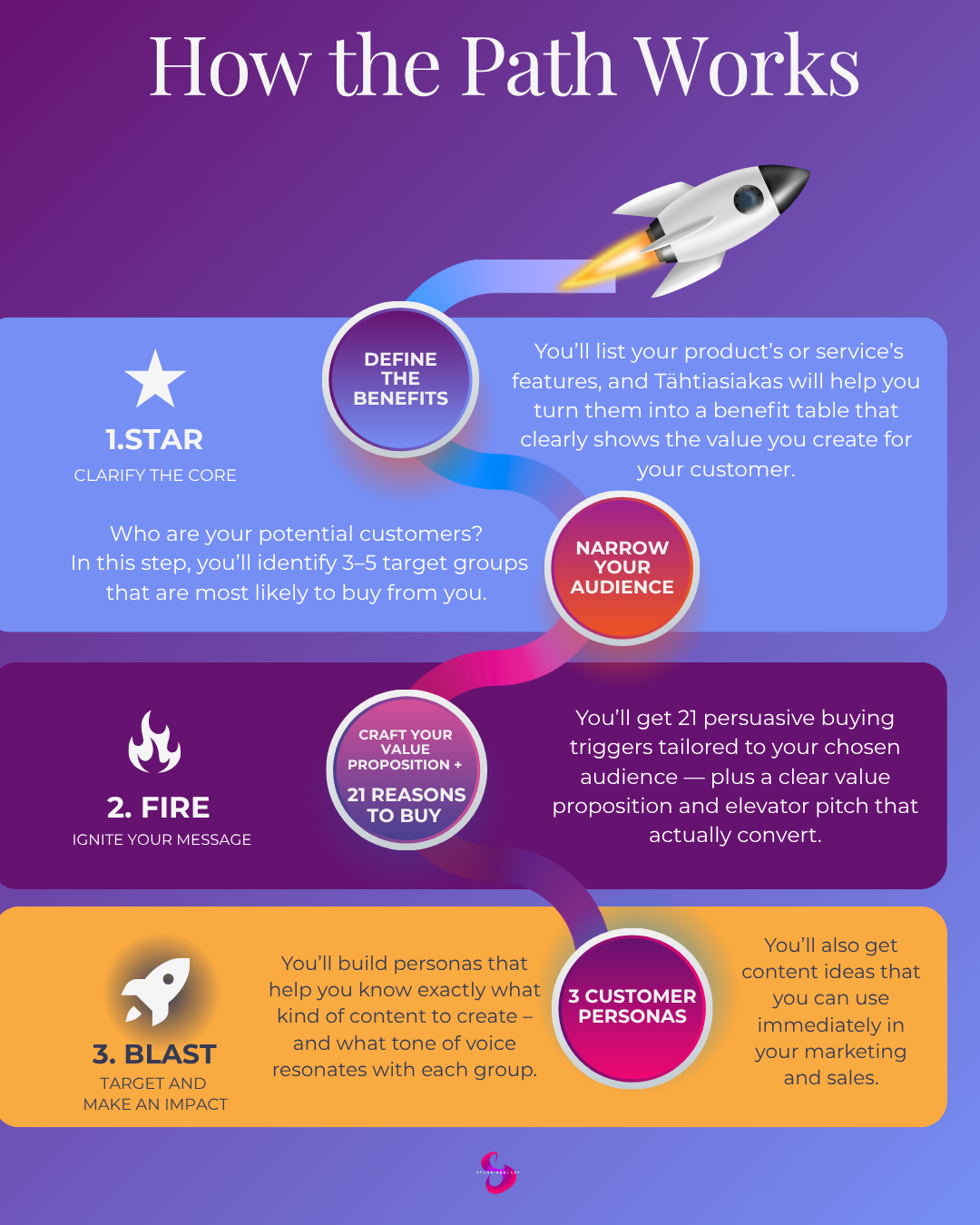
Starfireblast is built for founders who want to move from sustainability as a concept to sustainability as a working business system. The Customer StarMap™ Power Workshop helps you identify exactly who you are building for and what they value most, so your sustainability strategy connects directly to customer decisions rather than sitting in a separate document. For founders ready to apply these frameworks at scale, the sustainable growth strategies resource provides a practical roadmap for 2026 and beyond.
Frequently asked questions
What is the triple bottom line in sustainable entrepreneurship?
The Triple Bottom Line is a framework balancing profit, people, and planet to ensure businesses are economically viable, socially responsible, and environmentally sound. It replaces single-metric profit thinking with a three-part measurement system.
How does sustainable entrepreneurship benefit my business financially?
Evidence from a 57-study meta-analysis shows sustainable practices boost company value, attract customers, and improve risk management, leading to stronger long-term profitability. The correlation data supports green orientation as a genuine financial strategy.
What are the main challenges for founders in sustainable entrepreneurship?
Founders face tensions between profit and impact, higher startup costs for sustainable materials, and the ongoing need to align personal and business values across every growth stage.
What’s the difference between conventional and sustainable entrepreneurship?
Conventional entrepreneurship focuses mainly on profit, while sustainable entrepreneurship integrates people, planet, and profit through a holistic design approach that treats social and environmental value as core business outcomes.
Recommended
- Why sustainable entrepreneurship matters for solopreneurs – Starfireblast
- Business sustainability fundamentals for small entrepreneurs in 2026 – Starfireblast
- Planetary Productivity Explained: Sustainable Progress for Entrepreneu – Starfireblast
- Your guide to sustainable growth: balanced, profitable, responsible – Starfireblast
- We care about sustainability
- Sustainability in Signage: Boosting Brand & Eco Impact -