What is human-centered branding for entrepreneurs in 2026
Most entrepreneurs think branding is about picking the right colors or crafting catchy slogans. They invest in logos, websites, and social media campaigns, hoping these elements will magically attract customers. But human-centered branding prioritizes human needs and experiences, creating authentic connections that drive meaningful behavior change and sustainable value. This guide clarifies what human-centered branding truly means, introduces practical frameworks like Brand Ikigai, and shows you how purpose-driven entrepreneurs can build brands that resonate deeply while remaining financially viable.
Table of Contents
- Understanding The Core Of Human-Centered Branding
- Frameworks That Guide Human-Centered Branding For Entrepreneurs
- Balancing Purpose And Profitability: Challenges And Strategies
- Human-Centered Branding In Action: Patagonia’s Example And Modern Design-Led Strategies
- Explore Starfireblast’s Customer Starmap™ AI Power Workshop
- Frequently Asked Questions About Human-Centered Branding
Key takeaways
| Point | Details |
|---|---|
| Human-centered focus | Branding that prioritizes authentic human connections over visual identity alone creates sustainable value. |
| Brand Ikigai framework | Aligns passion, skills, market needs, and financial viability for purpose-driven clarity. |
| Purpose and profit balance | Sustainable brands blend authentic mission with financial health to avoid burnout and maintain impact. |
| Design-led ecosystems | Integrating physical and digital experiences enhances brand relevance and human connection. |
| Patagonia’s success model | Demonstrates how activism and sustainability create exceptionally loyal customer relationships. |
Understanding the core of human-centered branding
Human-centered branding focuses on creating authentic connections by understanding and addressing genuine human needs, experiences, and values. Unlike traditional branding that often emphasizes visual elements or clever marketing tactics, this approach builds relationships rooted in empathy and shared purpose. Building human-centered brand ecosystems means designing every touchpoint around what matters most to the people you serve.
This matters because customers today see through superficial marketing. They want brands that understand their challenges, respect their values, and contribute positively to their lives and communities. When you prioritize human needs over sales tactics, you create loyalty that transcends transactions. Your brand becomes a trusted partner rather than just another vendor competing on price or features.
Traditional branding often starts with what you want to sell and works backward to find customers. Human-centered branding flips this completely. You begin by deeply understanding the people you serve, their aspirations, frustrations, and contexts. Only then do you shape your brand identity, messaging, and offerings to genuinely serve those needs. This shift transforms how you make every business decision.
Empathy and community engagement form the foundation of this approach. You actively listen to your audience, involve them in your evolution, and build authentic relationships that benefit everyone. This creates what experts call brand ecosystems where physical and digital experiences seamlessly support human connection and meaningful interaction.
Core principles of human-centered branding include:
- Inclusive Access: Designing for diverse needs and removing barriers that exclude people
- Authentic Purpose: Aligning business goals with genuine human and planetary well-being
- Humanity First: Prioritizing people’s experiences and values over short-term metrics
- Community Co-creation: Involving your audience in shaping brand evolution
- Transparent Communication: Building trust through honest, clear dialogue
“The most powerful brands in 2026 are those that treat customers as partners in a shared mission, not targets in a marketing campaign.”
For purpose-driven entrepreneurs, this approach aligns perfectly with your values. You’re not trying to manipulate people into buying. You’re creating solutions that genuinely improve lives while building a sustainable business. Authentic branding and trust become natural outcomes when you consistently prioritize human needs in every decision.
Frameworks that guide human-centered branding for entrepreneurs
Practical frameworks transform human-centered branding from abstract concept to actionable strategy. Two powerful models help purpose-driven entrepreneurs define and express their brand identity with clarity and intention.
The Brand Ikigai framework adapts the Japanese concept of ikigai to branding, helping you find the overlap between what you love doing, what you are good at, what people need or value, and what you can realistically be paid for. This intersection becomes your brand’s reason for being. When all four elements align, you create a brand that energizes you, serves others meaningfully, and sustains your business financially.
Each circle in the Brand Ikigai model represents a critical question. What you love reveals your passion and intrinsic motivation. What you’re good at identifies your unique skills and strengths. What the world needs points to genuine market gaps and human challenges. What you can be paid for grounds your purpose in economic reality. Finding where these four overlap gives you a clear, compelling brand foundation.
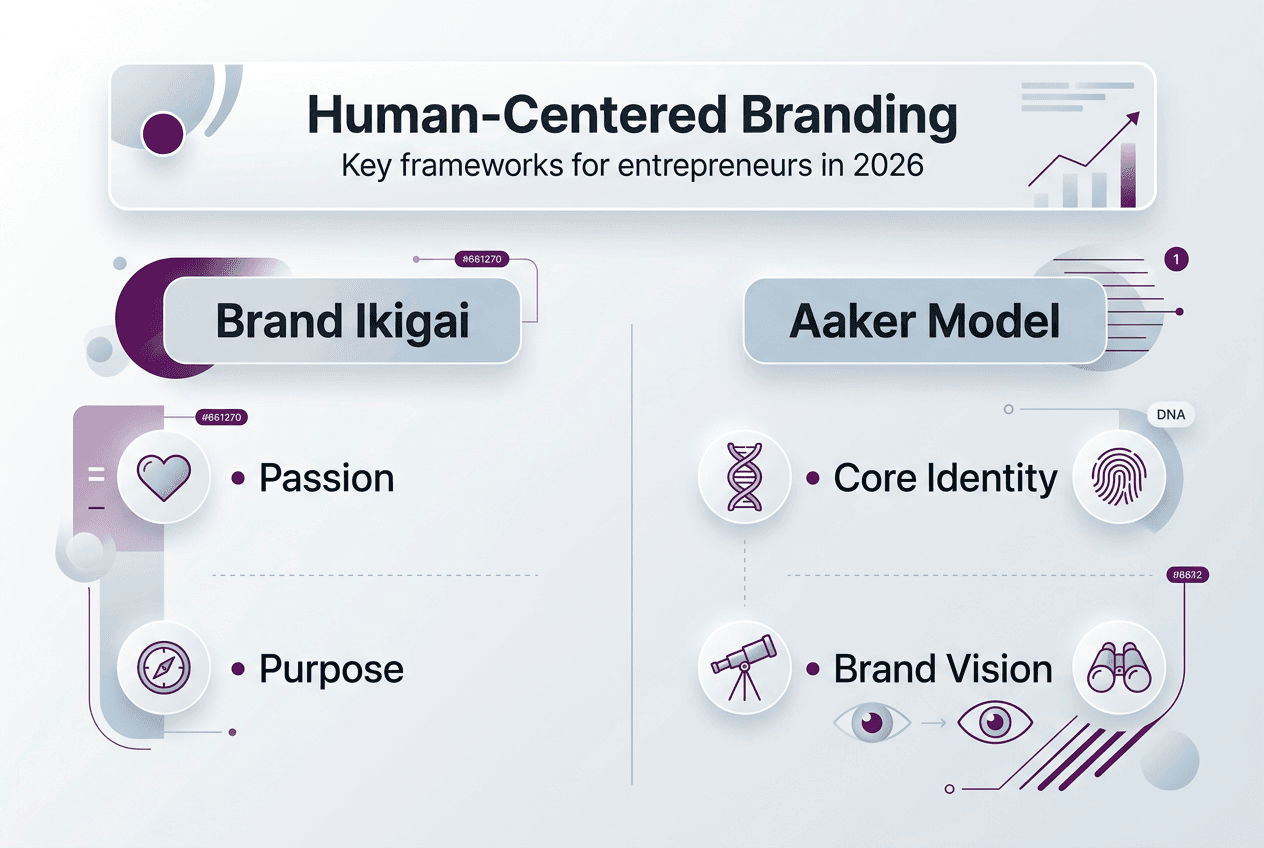
The Aaker Brand Identity Model provides another essential framework. It helps leaders articulate a brand’s core and extended identity, the value proposition it delivers, and the role it plays in customers’ lives. This model organizes brand identity into four perspectives: product, organization, person, and symbol. Each perspective offers different ways to express and differentiate your brand.
Here’s how these frameworks compare:
| Framework | Focus Areas | Primary Purpose | Key Outcomes | | — | — | — | | Brand Ikigai | Passion, skills, needs, viability | Find purpose intersection | Clarity on brand reason for being | | Aaker Model | Product, organization, person, symbol | Articulate identity dimensions | Comprehensive brand expression |
Applying these models to develop your human-centered brand identity involves several practical steps:
- Map your Brand Ikigai by honestly assessing each circle and identifying overlaps
- Define your core identity using Aaker’s framework, starting with what makes you fundamentally different
- Articulate your extended identity by exploring how your brand shows up across all four perspectives
- Test your brand identity against real customer needs and feedback
- Refine continuously as you learn what resonates and what falls flat
Both frameworks work together beautifully. Brand Ikigai helps you find your authentic center, while Aaker’s model helps you express that center consistently across all brand touchpoints. Purpose in branding for entrepreneurs becomes concrete and actionable rather than vague aspiration.
Pro Tip: Use Brand Ikigai quarterly to check if you’re drifting too far into passion without profit, or profit without purpose. Both extremes lead to unsustainable brands. The sweet spot requires constant balancing, and this framework makes that balance visible and manageable.
The branding process for entrepreneurs becomes more intentional when you ground it in these proven frameworks. You’re not guessing about your brand identity or copying what competitors do. You’re building from a foundation of self-awareness, market understanding, and strategic clarity.
Balancing purpose and profitability: challenges and strategies
Purpose-driven businesses often struggle to balance passion with financial sustainability. You started your business because you care deeply about solving a problem or serving a community. But caring doesn’t pay bills, and financial pressure can slowly erode the very purpose that motivated you.

Leaning too heavily on passion creates real risks. Emotional burnout happens when you pour everything into your mission without adequate compensation or rest. Financial stress builds when revenue doesn’t match expenses, forcing difficult choices between your values and survival. You might undercharge because you feel guilty asking for fair payment, or overextend yourself trying to help everyone.
Conversely, focusing solely on profit hollows out your brand. You make decisions based purely on revenue potential, gradually disconnecting from the human needs you originally wanted to serve. Your marketing becomes transactional rather than relational. Customers sense the shift and disengage. What started as purpose-driven becomes just another business chasing short-term gains.
Practical strategies for maintaining balance include:
- Continuous market validation: Regularly confirm that what you love creating is what people actually need and will pay for
- Diversified revenue streams: Build multiple income sources so you’re not dependent on any single model
- Purpose alignment checks: Monthly reviews ensuring business decisions still serve your core mission
- Sustainable pricing: Charge what your value is worth, not what you think people can afford
- Strategic saying no: Decline opportunities that pay well but misalign with your purpose
- Financial literacy: Understand your numbers deeply so purpose and profit inform each other
The Brand Ikigai framework helps visualize and manage this balance. When you map all four circles, you immediately see where you’re strong and where you’re weak. Maybe you’re excellent at what you do and passionate about it, but struggling to get paid fairly. Or perhaps you’ve found profitable work that doesn’t energize you anymore. These insights guide specific actions to restore balance.
Pro Tip: Watch for these common scaling pitfalls: saying yes to every opportunity because you need revenue, copying competitors’ tactics that conflict with your values, or expanding so fast you lose connection with your community. Growth should amplify your purpose, not dilute it.
As your business evolves, regularly revisit your Ikigai and brand identity. What you loved three years ago might not energize you today. Market needs shift. Your skills develop. Financial requirements change with life circumstances. Purpose-driven strategy isn’t static; it’s a living practice of continuous alignment.
The entrepreneurs who build lasting impact understand that purpose-driven business requires both idealism and pragmatism. Your purpose gives you direction and motivation. Your profitability gives you sustainability and reach. Neither alone creates the impact you seek. Together, they form the foundation for brands that matter and endure.
Human-centered branding in action: Patagonia’s example and modern design-led strategies
Patagonia demonstrates human-centered branding at scale. The outdoor clothing company’s commitment to sustainability, activism, and ethical business practices has cultivated an exceptionally loyal customer base that sees the brand as a partner in environmental protection. Patagonia doesn’t just sell jackets; they invite customers into a movement.
Their approach integrates purpose into every business decision. They publicly oppose policies that harm the environment, even when it costs them customers. They repair products for free to extend their life and reduce waste. They donate profits to environmental causes and encourage customers to buy less. This radical authenticity creates trust that no marketing campaign could manufacture.
Patagonia’s success reveals a crucial insight: customers reward brands that prioritize values over short-term profit. When you consistently demonstrate genuine commitment to human and planetary well-being, you attract people who share those values. These customers become advocates, spreading your message organically and defending your brand during challenges.
Design-led organizations have a distinct advantage in human-centered branding due to their people-first approach. They start every project by understanding human needs, contexts, and experiences. This foundation ensures that brand expressions whether digital interfaces, physical spaces, or service interactions genuinely serve people rather than just looking good.
Entrepreneurs can adopt these design-led strategies:
- Conduct regular customer interviews to understand evolving needs and contexts
- Map customer journeys to identify pain points and opportunities for meaningful connection
- Prototype brand experiences quickly and gather feedback before full implementation
- Design for accessibility, ensuring your brand serves diverse human needs
- Create consistent experiences across all touchpoints, physical and digital
- Measure success by human outcomes, not just business metrics
The difference between traditional and human-centered branding becomes clear when you compare approaches:
| Dimension | Traditional Branding | Human-Centered Branding |
|---|---|---|
| Primary Focus | Company goals and sales | Human needs and experiences |
| Strategy Foundation | Market positioning and differentiation | Empathy and authentic purpose |
| Customer Relationship | Transactional and campaign-driven | Relational and community-based |
| Success Metrics | Revenue and market share | Impact and sustainable loyalty |
“Brand ecosystems in 2026 must bridge physical and digital realms seamlessly, creating coherent experiences that enhance rather than fragment human connection.”
This integration matters more than ever. Your customers interact with your brand across multiple channels and contexts. A disjointed experience where your website promises one thing, your email another, and your in-person interaction something else entirely erodes trust. Human-centered branding ensures consistency rooted in authentic values rather than marketing messages.
Community-driven brands recognize that their audience isn’t passive consumers but active participants. They involve customers in product development, seek feedback openly, and adapt based on what they learn. This co-creation strengthens both the brand and the community it serves.
Authentic branding approaches like Patagonia’s require courage. You’ll face pressure to compromise, to prioritize growth over values, to follow conventional business wisdom. Resisting that pressure and staying true to your human-centered foundation distinguishes brands that create lasting impact from those that chase temporary trends.
Explore Starfireblast’s Customer StarMap™ AI Power Workshop
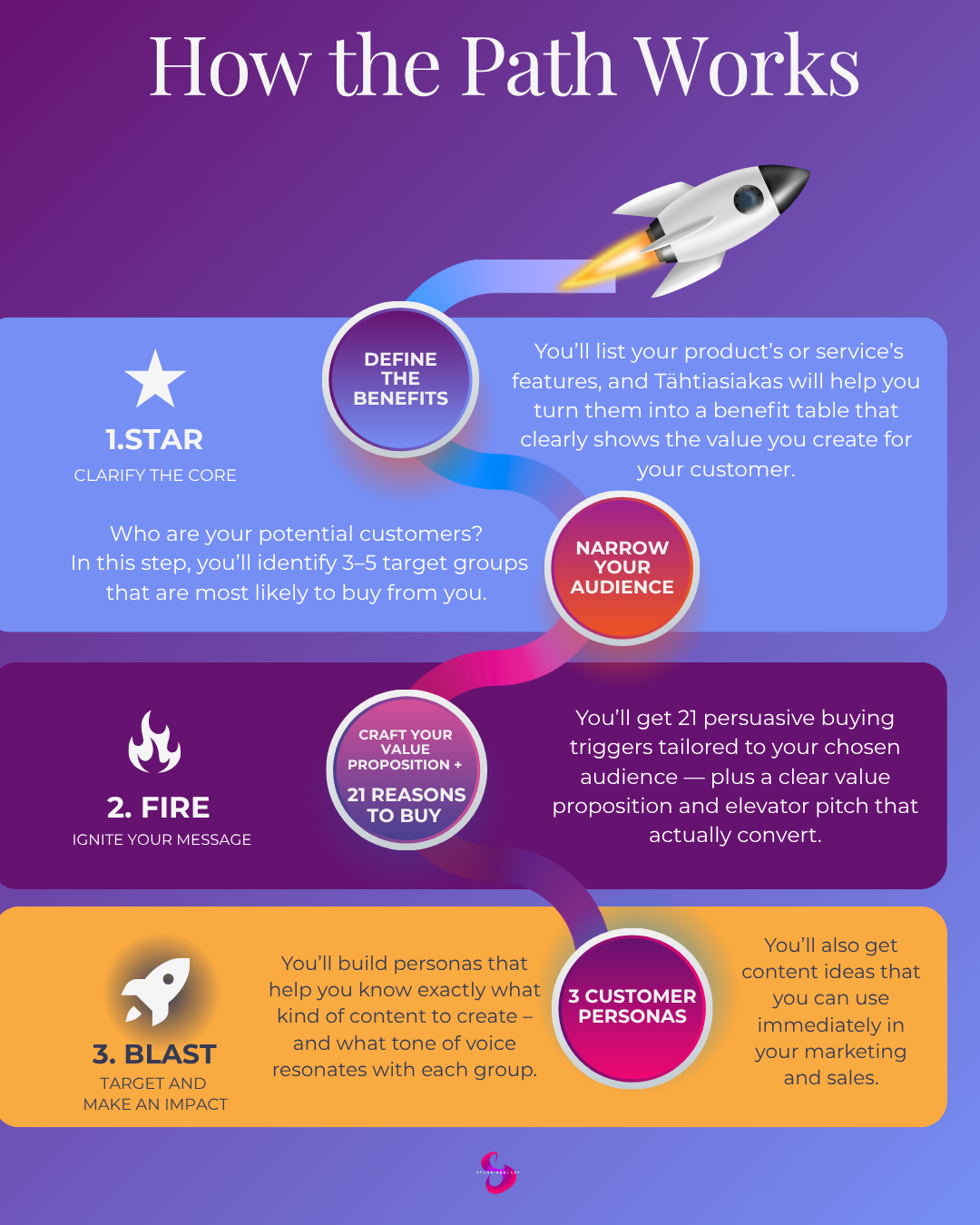
Ready to apply these human-centered branding concepts to your business? The Customer StarMap™ AI Power Workshop helps you identify and align customer needs with your brand purpose using AI-powered insights. This workshop guides you through mapping your ideal customers’ challenges, values, and aspirations, then connects those insights to your unique strengths and mission.
You’ll gain clarity on who you’re truly serving and why it matters, enabling you to create targeted strategies that resonate authentically. The workshop combines the frameworks discussed in this article with practical tools for immediate implementation. Instead of guessing about your brand positioning, you’ll build it on deep customer understanding and purpose alignment. This foundation supports sustainable growth rooted in genuine human connection rather than marketing gimmicks.
Frequently asked questions about human-centered branding
What is human-centered branding?
Human-centered branding is an approach that prioritizes authentic human needs, experiences, and values in every brand decision. It focuses on building genuine connections and meaningful relationships rather than just visual identity or marketing tactics. This creates sustainable value through empathy, community engagement, and purpose alignment.
How does human-centered branding differ from traditional branding?
Traditional branding often starts with company goals and works backward to find customers, emphasizing differentiation and market positioning. Human-centered branding begins by deeply understanding the people you serve, then shapes brand identity to genuinely address their needs. The relationship shifts from transactional to relational, from campaign-driven to community-based.
Why should purpose-driven entrepreneurs adopt human-centered branding?
Purpose-driven entrepreneurs naturally align with human-centered values, making this approach authentic rather than forced. It helps you build brands that energize you personally while serving others meaningfully and sustaining your business financially. This alignment prevents the burnout and disconnection that comes from pursuing profit without purpose or purpose without viability.
What role does community engagement play in human-centered branding?
Community engagement transforms customers from passive consumers into active partners in your brand’s evolution. By involving your audience in co-creation, seeking their feedback openly, and adapting based on what you learn, you build trust and loyalty that transcends transactions. This creates advocates who spread your message organically and defend your brand during challenges.
How can I start implementing a human-centered branding strategy?
Begin by deeply listening to the people you want to serve through interviews, surveys, and observation. Map your Brand Ikigai to find the intersection of your passion, skills, market needs, and financial viability. Use frameworks like the Aaker Brand Identity Model to articulate how your brand shows up consistently across all touchpoints. Test everything with real customer feedback and refine continuously based on what you learn.