What is authentic marketing? Build trust and drive growth
TL;DR:
- Authentic marketing is honest communication supported by consistent actions and operational transparency.
- Genuine authenticity builds trust and sustainable growth by aligning messaging with real practices.
- Performative authenticity relies on curated content and superficial signals, eroding trust over time.
Authentic marketing gets talked about constantly, yet so much of what brands call “authentic” feels scripted, hollow, or calculated. The word itself has become diluted. Purpose-driven entrepreneurs face a real tension: how do you communicate your values honestly without turning honesty into a performance? This article breaks down what authentic marketing actually means, why it produces measurable business results, how to spot the fakes, and what practical steps you can take to build trust that compounds over time. Understanding the difference between real and performative authenticity is now a competitive advantage.
Table of Contents
- What is authentic marketing?
- Why authenticity matters for sustainable growth
- Recognizing performative vs real authenticity
- Practical steps to create authentic marketing
- Why most “authentic” marketing misses the mark: Our take
- Take your authentic marketing further
- Frequently asked questions
Key Takeaways
| Point | Details |
|---|---|
| True authenticity builds trust | Being genuinely aligned with your values and transparent in marketing wins customer loyalty. |
| Authenticity drives growth | Purpose-driven campaigns like Dove’s prove authentic marketing can increase sales and brand equity. |
| Avoid performative traps | Overdoing or faking authenticity undermines trust, especially with AI-powered content. |
| Make actions match words | Consistency between messaging and real-world practices is the core of authentic marketing. |
| Start small and stay real | Incremental, honest campaigns and openness to imperfection help you build authenticity over time. |
What is authentic marketing?
Authentic marketing is honest communication backed by consistent action. It means your messaging reflects what your business actually does, values, and stands for. No polished veneer over a hollow core.
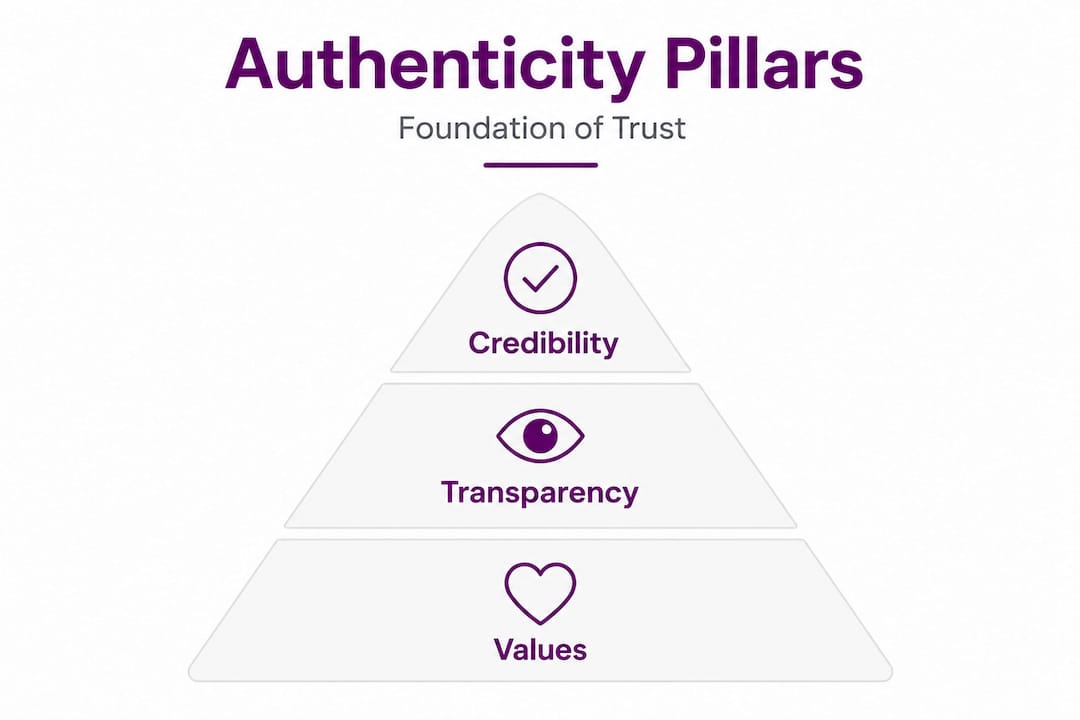
At its foundation, authentic marketing rests on three pillars: transparency about how you operate, value-aligned storytelling that represents your real customer base, and a commitment to ensuring your internal practices match what you say publicly. This last point matters more than most businesses realize. You can write the most heartfelt brand manifesto, but if your supply chain, customer service practices, or pricing model contradicts it, people notice.
Authentic marketing also balances self-expression with audience purpose. It is not just about expressing who you are. It is about building real connection with the people you are building for. That requires listening before broadcasting.
One critical hallmark: authentic marketing avoids performative gestures. A brand that donates 1% of profits to charity while publicly positioning itself as environmentally responsible, but ships products in excessive plastic, sends conflicting signals. Audiences pick up on that inconsistency fast, and trust erodes quickly.
As authenticity cannot be automated, human imperfection and verifiable actions are what differentiate brands in the AI era. Automated content can mimic tone and style, but it cannot replicate the consistency between what a brand says and what it does. That consistency is the actual signal.
“Authenticity is the only KPI that cannot be faked at scale. Operations must match messaging, or the brand loses the one asset no algorithm can manufacture: trust.”
Hallmarks of authentic marketing include:
- Messaging that reflects your actual business practices, not aspirational ones
- Honest communication about pricing, limitations, and tradeoffs
- Featuring real customers and real outcomes, not curated perfection
- Sharing the process, not just the polished result
- Personal branding clarity that reflects who you genuinely are, not who the market wants you to be
- Transparency when things go wrong, not just when they go right
Each of these elements reinforces the others. When they work together, the brand builds a kind of credibility that advertising spend cannot buy.
Why authenticity matters for sustainable growth
The business case for authentic marketing is concrete and measurable. This is not a soft concept. It produces revenue.

Dove’s Real Beauty campaign grew sales from $2.5 billion to $4 billion over a decade by featuring real women and addressing self-esteem directly. The campaign did not use traditional beauty advertising. It challenged it. That positioning shift translated into sustained customer loyalty and significant revenue growth. The Ordinary, a skincare brand, built trust by staging pop-up events that exposed competitor pricing alongside their own, demonstrating transparency through action rather than just messaging.
These examples share a common structure: the brand identified a genuine tension their audience experienced, took a clear position grounded in their actual values, and then acted consistently with that position. No bait-and-switch. The result was trust, and trust converts.
| Brand | Strategy | Impact |
|---|---|---|
| Dove | Real Beauty campaign featuring actual women | Sales grew from $2.5B to $4B over 10 years |
| The Ordinary | Pricing transparency via pop-up events | Significant trust growth, strong word of mouth |
| Patagonia | Anti-consumerism campaign (“Don’t Buy This Jacket”) | Increased brand loyalty and long-term sales |
| Ben & Jerry’s | Public stance on social issues, consistent with operations | High customer retention and media reach |
The pattern across these brands is not coincidence. When messaging matches operations, customers become advocates. And advocates generate growth that paid acquisition cannot sustain long-term.
Statistic to note: Dove’s sustained revenue trajectory over ten years demonstrates that authentic campaigns produce compounding returns, not just short-term spikes. One campaign, rooted in real customer insight, delivered 60% revenue growth over a decade.
Pro Tip: You do not need a massive budget to start. Pick one real customer story, one honest position your brand holds, or one behind-the-scenes process you can share transparently. A single authentic touchpoint can shift how your audience perceives your entire brand. Small and sustainable growth strategies start exactly like this.
Recognizing performative vs real authenticity
Knowing what authentic marketing looks like is only half the work. Knowing what it does not look like is equally important.
Overuse or performative authenticity erodes trust. When brands adopt the aesthetic of authenticity without the substance, it reads as manipulation. This includes sanitized vulnerability, trend-chasing values statements, and AI-generated content designed to feel human. The audience does not always know exactly what is off, but they feel it.
There is a documented authenticity paradox in branding: the more deliberately a brand signals authenticity, the less genuine it appears. This is a real strategic trap. The moment your “authentic” content starts following a formula, you have stopped being authentic and started performing it.
“Curated authenticity filters genuine expression strategically. But when the curation becomes too visible, the signal collapses. Audiences in 2026 are sophisticated enough to see the architecture behind the vulnerability.”
The rise of AI in branding has accelerated this problem. AI-generated content can now replicate empathetic language, conversational tone, and personal storytelling formats. Without transparency about its use and human oversight on emotional content, it produces exactly the kind of performative authenticity that erodes trust fastest.
Side-by-side comparison:
| Real authenticity | Performative authenticity |
|---|---|
| Sharing actual failures with context and learning | Scripted “vulnerability” with polished resolution |
| Taking a values position that costs something | Adopting trending cause language without operational change |
| Featuring real customers with real results | Stock photo diversity and fictional testimonials |
| Transparent pricing with clear reasoning | Complicated pricing with “honest” language as cover |
| Admitting limitations of your product | Listing weaknesses that are actually strengths in disguise |
Red flags of performative marketing:
- Values statements that appeared only after a public controversy
- “Behind the scenes” content that looks professionally produced
- AI-generated “real stories” with no verifiable source
- Cause alignment that disappears when it becomes commercially inconvenient
- Apology posts that focus more on brand reputation than the actual harm caused
- Constant messaging about authenticity without any operational evidence
The distinction comes down to cost. Real authenticity costs something. It requires saying things your market might not want to hear, sharing information that could be used against you, and holding positions that may reduce short-term sales. Performative authenticity costs nothing, which is exactly why it does not work.
Practical steps to create authentic marketing
Understanding and avoiding performative patterns is necessary. But you still need a working process. Here is a framework that applies whether you are a solo creator or a small team.
-
Listen before you speak. Survey your actual customers. Read reviews of both your brand and your competitors. Look for the real language people use to describe their problems. Authentic marketing starts with customer vocabulary, not brand vocabulary. Use community marketing tactics to gather that intelligence directly from your audience.
-
Clarify your values with specificity. “We care about sustainability” is not a value. “We use compostable packaging and publish our carbon offset data annually” is a value. Specificity makes values verifiable, and verifiability is what makes them credible. Work through defining brand strategy before you scale any marketing effort.
-
Audit your operations against your messaging. Take every major claim in your current marketing and ask: can we prove this? Is there evidence that customers can access? If there is a gap between what you say and what you do, fix the operation before fixing the messaging.
-
Show imperfection with context. This does not mean publicly spiraling or oversharing. It means showing the process, including the parts that did not work, with enough context for the audience to understand what you learned. A creator sharing a failed product launch with clear data and reasoning builds more trust than one who only shares wins.
-
Be transparent about your tools and processes. If you use AI to draft content, say so. If you use data from your community to shape your product roadmap, show that connection. Transparency about your methods signals confidence in your values. It also distinguishes you from brands using the same tools while pretending they do not.
-
Maintain consistency across channels. Your email tone, social voice, customer service responses, and sales conversations should reflect the same values and commitments. Inconsistency across touchpoints is one of the fastest ways to signal inauthenticity, even if each individual piece is well-crafted.
Pro Tip: If you use AI in your content process, add a short disclosure and pair AI-drafted content with a genuine human perspective or personal data point. Authentic marketing differentiates through human imperfection and verifiable action. Let the AI handle the draft. You handle the truth.
Why most “authentic” marketing misses the mark: Our take
Surface-level authenticity has become its own genre. There is now a recognizable format: the founder origin story, the “we almost failed” post, the values-first mission statement, the carefully lit imperfect workspace photo. These formats exist because they worked. Then they got copied. Now they are a formula, and formulas are the opposite of authentic.
The brands and creators that actually build sustained trust do something harder. They let their systems speak. Not just their content. Their return policy, their response time, their pricing structure, their hiring practices, these operational choices communicate values more clearly than any campaign ever could. Authenticity at this level is not a marketing strategy. It is a business design choice.
Genuine vulnerability is rare because it carries real commercial risk. Sharing a perspective that a significant portion of your audience might disagree with, publishing pricing that makes your margins visible, or naming a mistake before a customer does requires actual courage. That is why it resonates. It is rare. And the rarity of it is precisely what makes it credible.
There is also a structural trap in the authenticity movement: the more you optimize for appearing authentic, the less authentic you become. Real authenticity does not need a content calendar. It needs operational alignment and the willingness to attract clients authentically by saying what you actually believe, not what the algorithm rewards.
Sustainable brands treat authenticity as infrastructure, not marketing. It shows up in how they onboard customers, how they handle complaints, and what they choose not to sell. That is where the real differentiation lives. Content is just the surface. The work is underneath it.
Take your authentic marketing further
Building authentic marketing requires more than good intentions. It requires knowing who you are building for, what they actually need, and whether your current messaging matches your real operations.
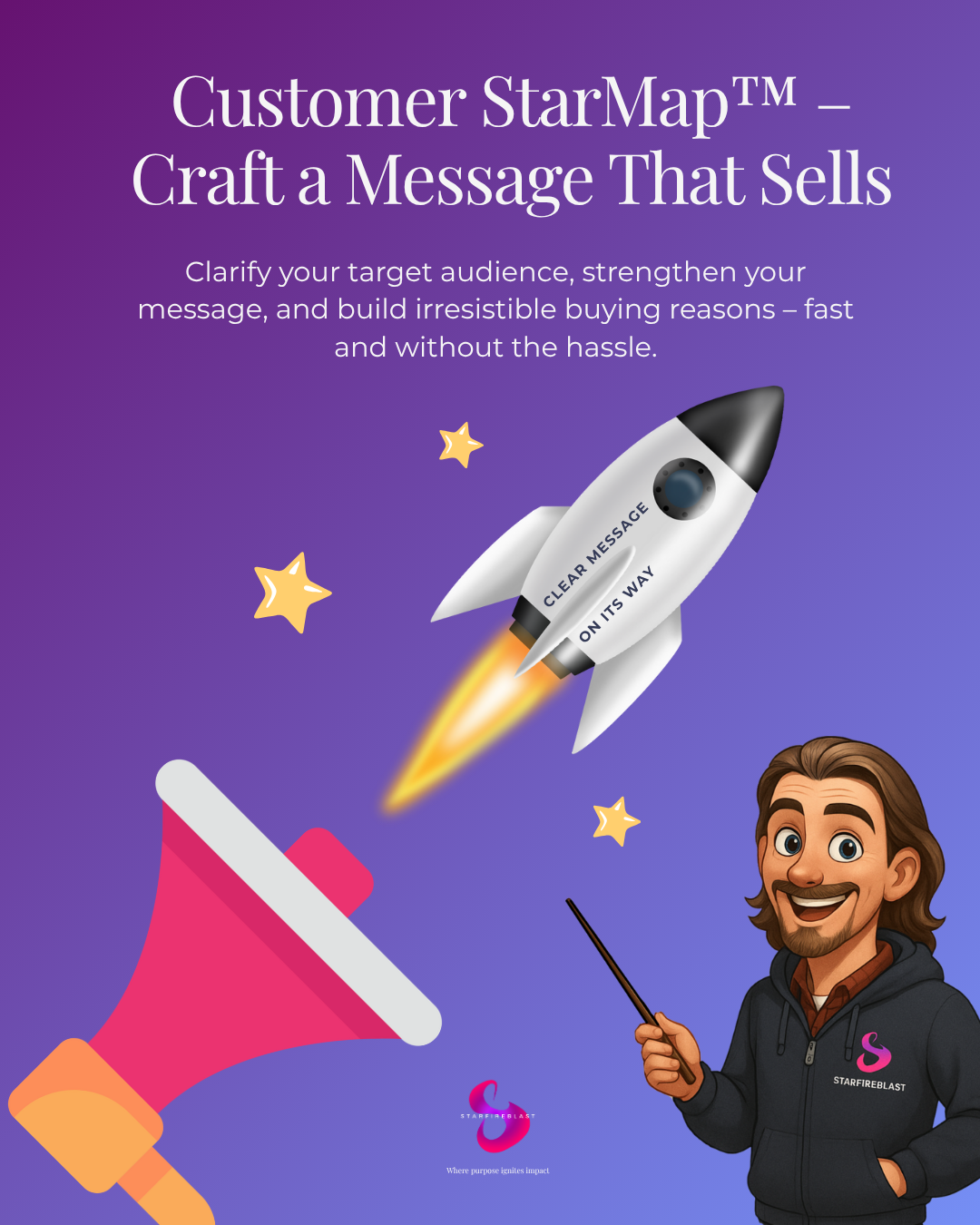
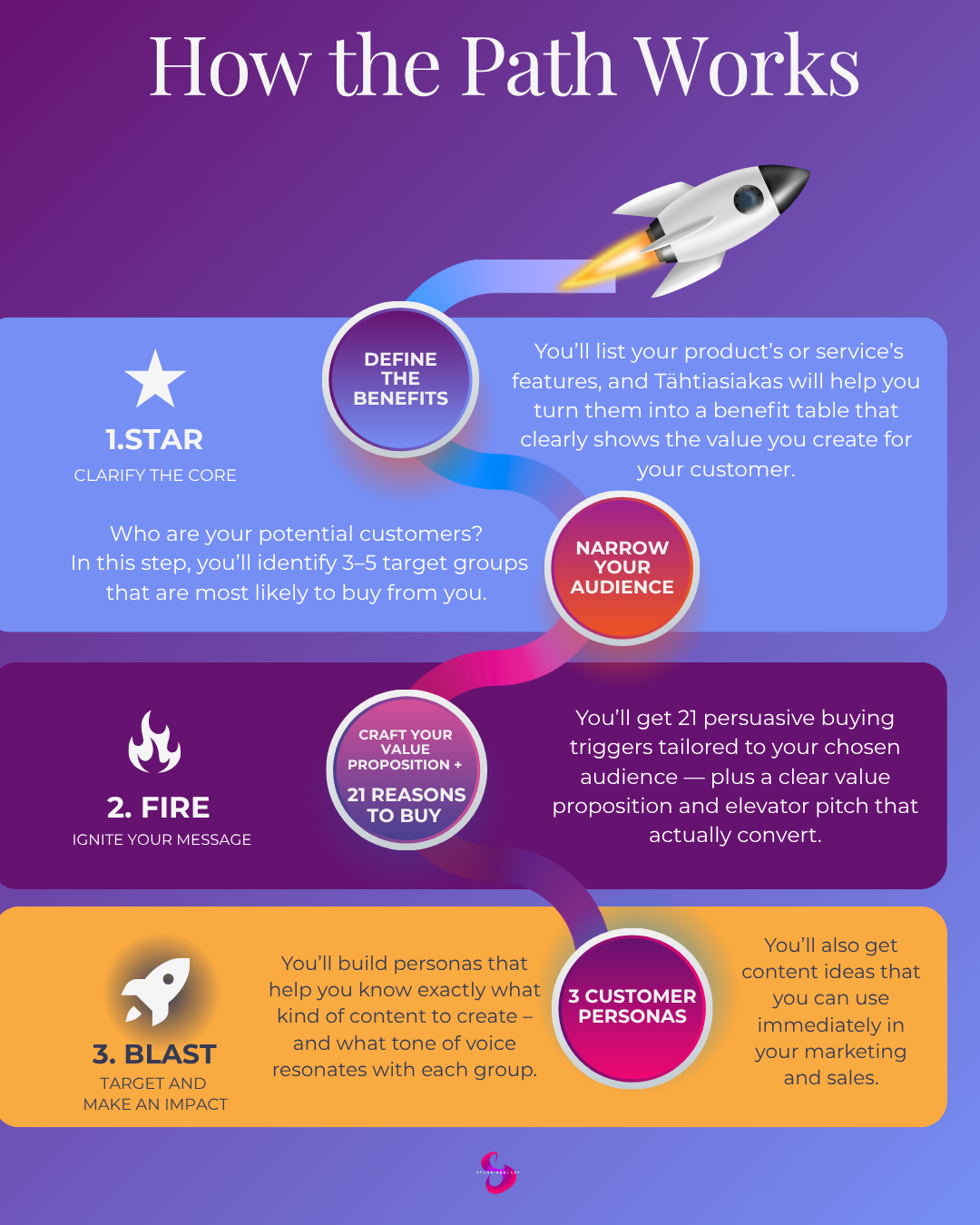
The Customer StarMap™ workshop on Starfireblast is built exactly for this kind of clarification work. It helps you identify your real customer, map your positioning with precision, and verify that your marketing reflects your actual values before you scale anything. This is not a content tool. It is a strategic foundation for purpose-driven growth. If you are ready to stop performing authenticity and start practicing it, this is where the work begins.
Frequently asked questions
What is the difference between authentic and traditional marketing?
Authentic marketing prioritizes genuine values and transparent messaging, while traditional marketing focuses on persuasion and polished brand image. Authentic marketing differentiates through verifiable human actions rather than crafted impressions.
How can small businesses stay authentic as they grow?
Small businesses can preserve authenticity by consistently aligning operations with their core values and communicating transparently about any changes. Operations matching messaging is the baseline standard for sustainable authenticity at any scale.
Can AI-powered marketing be authentic?
AI can support authentic marketing, but emotional content requires transparency about its use and human oversight to remain credible. AI challenges require transparency and a clear human voice alongside the generated content.
What are signs of performative authenticity?
Common signs include scripted vulnerability, values statements tied to trending causes without operational proof, and AI-generated content presented as genuine personal expression without disclosure.