Well-being entrepreneurship: sustainable success guide
Many entrepreneurs believe building a well-being business means choosing values over profits. That’s wrong. Well-being ventures outperformed financial benchmarks by 12% over 5 years. This guide clarifies what well-being entrepreneurship actually means, explores its measurable benefits, debunks common myths, and shows you practical frameworks to integrate people, planet, and profit into your venture without burning out.
Table of Contents
- Defining Well-Being Entrepreneurship: Principles And Foundations
- Why Well-Being Entrepreneurship Matters: Impacts And Benefits
- Common Misconceptions And Realities About Well-Being Entrepreneurship
- Frameworks And Tools For Implementing Well-Being Principles In Business
- Bridging Well-Being Entrepreneurship With Sustainable Business Practices
- Next Steps: Applying Well-Being Entrepreneurship To Your Venture
- Explore Starfireblast Tools For Well-Being Entrepreneurs
Key takeaways
| Point | Details |
|---|---|
| Well-being entrepreneurship balances people, planet, and profit simultaneously | Holistically integrates human, economic, and ecological well-being rather than prioritizing profit alone. |
| Entrepreneurs report significantly better outcomes | 40% less burnout and 25% more long-term satisfaction compared to traditional business models. |
| It works across all industries, not just wellness | Applicable to tech, manufacturing, retail, and services through authentic stakeholder engagement. |
| Financial performance often exceeds conventional models | Can outperform traditional business models financially when implemented with strategic discipline. |
| Practical frameworks exist for immediate implementation | Triple bottom line thinking, stakeholder mapping, and community-driven growth methods guide action. |
Defining well-being entrepreneurship: principles and foundations
Well-being entrepreneurship represents a fundamental shift in how you build and run your business. It holistically integrates human, economic, and ecological well-being into every strategic decision. Unlike conventional entrepreneurship that prioritizes financial returns above everything else, this approach treats people, profit, and planet as equally important.
The triple bottom line framework sits at the core. You measure success across three dimensions: social impact on employees and communities, environmental sustainability, and economic viability. None gets sacrificed for the others. This requires genuine commitment to sustainability values, not just superficial marketing claims.
Implementing these principles demands specific knowledge. You need to understand sustainable business practices, stakeholder engagement methods, and how to balance competing priorities without compromising your mission. The human-centered productivity explained approach helps entrepreneurs maintain this balance while scaling.
Key foundational elements include:
- Stakeholder focus that values employees, customers, communities, and ecosystems equally
- Regenerative practices that restore rather than deplete natural and social resources
- Transparent accountability for social and environmental impacts alongside financial metrics
- Long-term thinking that prioritizes resilience over short-term extraction
- Values-driven decision making that aligns operations with stated principles
Your success depends on embedding these principles into daily operations. Surface-level commitments fail. Authentic integration creates lasting value for everyone involved.
Why well-being entrepreneurship matters: impacts and benefits
The data tells a compelling story about why this approach works. Entrepreneurs embracing well-being principles report 40% less burnout and 25% more long-term satisfaction than their conventional counterparts. These aren’t trivial improvements. They represent the difference between sustainable growth and exhausted collapse.
Financial viability doesn’t suffer when you prioritize people and planet. Businesses built on well-being principles often outperform traditional models because they attract loyal customers, retain talented employees, and avoid costly regulatory penalties or reputational damage. You’re building resilience into your foundation.

Employee retention improves dramatically when your team believes in the mission. People stay longer, contribute more creatively, and advocate for your brand authentically. Customer loyalty follows similar patterns. Communities notice when businesses genuinely invest in their well-being rather than extracting value.
Ecological responsibility creates operational advantages too. Reducing waste cuts costs. Energy efficiency lowers overhead. Sustainable supply chains prove more stable during disruptions. You’re not sacrificing profit by caring about environmental impact. You’re protecting your business from future shocks.
Key measurable benefits include:
- Reduced founder and team burnout leading to sustained productivity
- Higher customer lifetime value from values-aligned relationships
- Better access to impact investors and sustainability-focused capital
- Stronger brand reputation that withstands market volatility
- Improved regulatory compliance as sustainability standards tighten
40% reduction in entrepreneurial burnout when integrating well-being principles into business operations, with corresponding 25% increase in long-term satisfaction and venture sustainability.
These outcomes compound over time. The longer you operate with well-being principles, the more advantages accumulate. Short-term thinking misses this compounding effect entirely.
Common misconceptions and realities about well-being entrepreneurship
Myth number one: well-being entrepreneurship reduces profitability. Reality? It can outperform traditional business models financially when executed with strategic discipline. Profit doesn’t disappear when you care about people and planet. It often grows more sustainably.
Myth two: this approach only applies to wellness startups or health businesses. Wrong again. Well-being entrepreneurship works across every sector. Manufacturing, technology, retail, professional services, all benefit from integrating social and environmental considerations into operations. The principles adapt to your industry context.
Myth three: you sacrifice growth for ideals. This false dichotomy assumes growth and values oppose each other. Smart well-being entrepreneurs integrate growth sustainably, building ventures that scale without exploitation or depletion. Growth happens differently, not slower.
Common implementation mistakes:
- Using well-being language as marketing without operational changes
- Treating sustainability as a separate initiative rather than core strategy
- Ignoring financial viability while pursuing social missions
- Failing to measure and report on triple bottom line outcomes
- Neglecting stakeholder engagement and feedback mechanisms
Pro Tip: Avoid treating well-being entrepreneurship as branding. Embed authentic practices throughout operations, from hiring to supply chains to product development. Stakeholders quickly recognize performative sustainability.
The confusion stems from misunderstanding what integration means. You’re not adding well-being principles on top of conventional business. You’re building them into the foundation. That structural difference creates entirely different outcomes.
Entrepreneurs who align their values closely with business operations report higher satisfaction and lower stress. The coherence matters psychologically and strategically. Living your principles daily feels better and works better than compartmentalizing them.
Frameworks and tools for implementing well-being principles in business
The triple bottom line framework provides your strategic foundation. Evaluate every major decision across people, planet, and profit dimensions. Use stakeholder mapping to identify who your business affects and how. This visibility prevents blind spots that undermine well-being commitments.
Iterative learning cycles keep you adapting effectively. Test small changes, gather stakeholder feedback, adjust based on evidence, and scale what works. This approach reduces risk while building knowledge about what your specific venture needs. Community-driven growth models replace ad-driven scale here.
AI tools can reduce operational burnout and improve business insights when used cautiously. Automate routine tasks to free mental energy for strategic thinking and relationship building. But maintain human oversight to preserve authentic connections and values-aligned decision making.
Diversifying income streams enhances financial resilience without compromising mission. Multiple revenue sources protect against market volatility and give you flexibility to maintain standards even when one channel struggles. This sustainability principle applies directly to business finances.
Practical implementation methods:
- Start with 7 steps purpose-driven entrepreneurship checklist to clarify mission and stakeholder priorities
- Map current operations against triple bottom line criteria to identify gaps
- Engage stakeholders regularly for qualitative feedback on your impact
- Track quantitative metrics across social, environmental, and financial dimensions
- Review and adjust quarterly based on data and stakeholder input
- Connect with the purpose-driven entrepreneurship impact community for peer learning
- Develop a resilient entrepreneur mindset that handles complexity without burnout
Pro Tip: Regularly evaluate AI tool impacts on your business to ensure they’re enhancing human-centered values rather than eroding them. Technology should serve your principles, not replace them.
These frameworks work because they translate abstract principles into concrete practices. You’re not guessing what well-being entrepreneurship looks like. You’re systematically building it into how you operate.
Bridging well-being entrepreneurship with sustainable business practices
Well-being entrepreneurship shares significant overlap with sustainable and regenerative business models. All three prioritize ecological health and social benefit alongside financial performance. Understanding these connections helps you leverage existing sustainability frameworks and communities.
Regenerative practices go beyond sustainability’s “do less harm” approach. They actively restore ecosystems and communities. Well-being entrepreneurship adopts this regenerative mindset when designing systems that give back more than they take. Sustainable growth strategies improve ecological, social, and financial outcomes simultaneously.
European sustainability incentives and frameworks increasingly support well-being businesses. Regulatory environments favor companies demonstrating genuine triple bottom line commitments. This policy context creates competitive advantages for early adopters who build compliance into their foundations.
| Business Model | Primary Focus | Time Horizon | Stakeholder Priority | Ecological Approach |
|---|---|---|---|---|
| Conventional | Profit maximization | Quarterly/annual | Shareholders first | Externalized costs |
| Sustainable | Reduced harm | Multi-year | Balanced interests | Minimize impact |
| Well-being | Holistic thriving | Generational | People, planet, profit equal | Regenerative systems |
| Regenerative | Positive impact | Ecosystem cycles | Nested relationships | Restore and enhance |
Diversified income streams appear across all sustainability-focused models. This shared principle reflects the understanding that resilience requires multiple revenue sources and stakeholder relationships. AI tools entrepreneurs automate workloads 2026 support this diversification by reducing operational overhead.
Key distinctions matter for implementation:
- Well-being entrepreneurship explicitly centers human thriving alongside ecological health
- Sustainable business may prioritize environment over social dimensions
- Regenerative models focus heavily on ecosystem restoration
- Conventional models treat people and planet as constraints rather than priorities
You can integrate action planning for entrepreneurs sustainable progress methods regardless of which model you emphasize. The practical tools translate across these related approaches.
Next steps: applying well-being entrepreneurship to your venture
Start by assessing your current stakeholder impacts honestly. Who does your business affect? How? What needs aren’t you meeting? This stakeholder audit reveals gaps between your stated values and actual operations. Ecological impact deserves equal scrutiny. Measure your resource consumption, waste generation, and supply chain sustainability.
Clarify your mission beyond profit metrics. Why does your venture exist? What change do you want to create? Engaging your community authentically around this mission builds the relationships that sustain well-being businesses. Listen more than you broadcast during this engagement.
Implementation steps:
- Complete the 7 steps purpose-driven entrepreneurship checklist to establish strategic clarity
- Map your stakeholders and their needs using participatory methods that give them voice
- Identify quick wins where well-being principles improve operations immediately
- Design iterative feedback loops that keep stakeholder input flowing continuously
- Choose appropriate metrics for tracking triple bottom line performance
- Set realistic targets that balance ambition with sustainability
- Build accountability structures that ensure follow-through on commitments
Use AI and automation tools carefully to maintain human connection and judgment. Technology should free you for relationship building and strategic thinking, not replace the personal engagement that creates authentic well-being impacts. Balance matters here.
Develop learning mechanisms that capture what works and what doesn’t. Regular retrospectives with your team and stakeholders surface insights that pure data misses. This qualitative knowledge guides smarter adjustments.
Pro Tip: Consistent stakeholder dialog prevents common pitfalls and entrepreneurial burnout. When you stay connected to the people and ecosystems you serve, you maintain motivation and catch problems early.
Your well-being entrepreneurship journey is iterative, not linear. Expect to adjust course frequently as you learn what your specific context requires. That flexibility represents strength, not weakness, in complex adaptive systems.
Explore starfireblast tools for well-being entrepreneurs
You’ve learned the principles and frameworks. Now you need practical tools that translate understanding into action without overwhelming your limited time and energy.
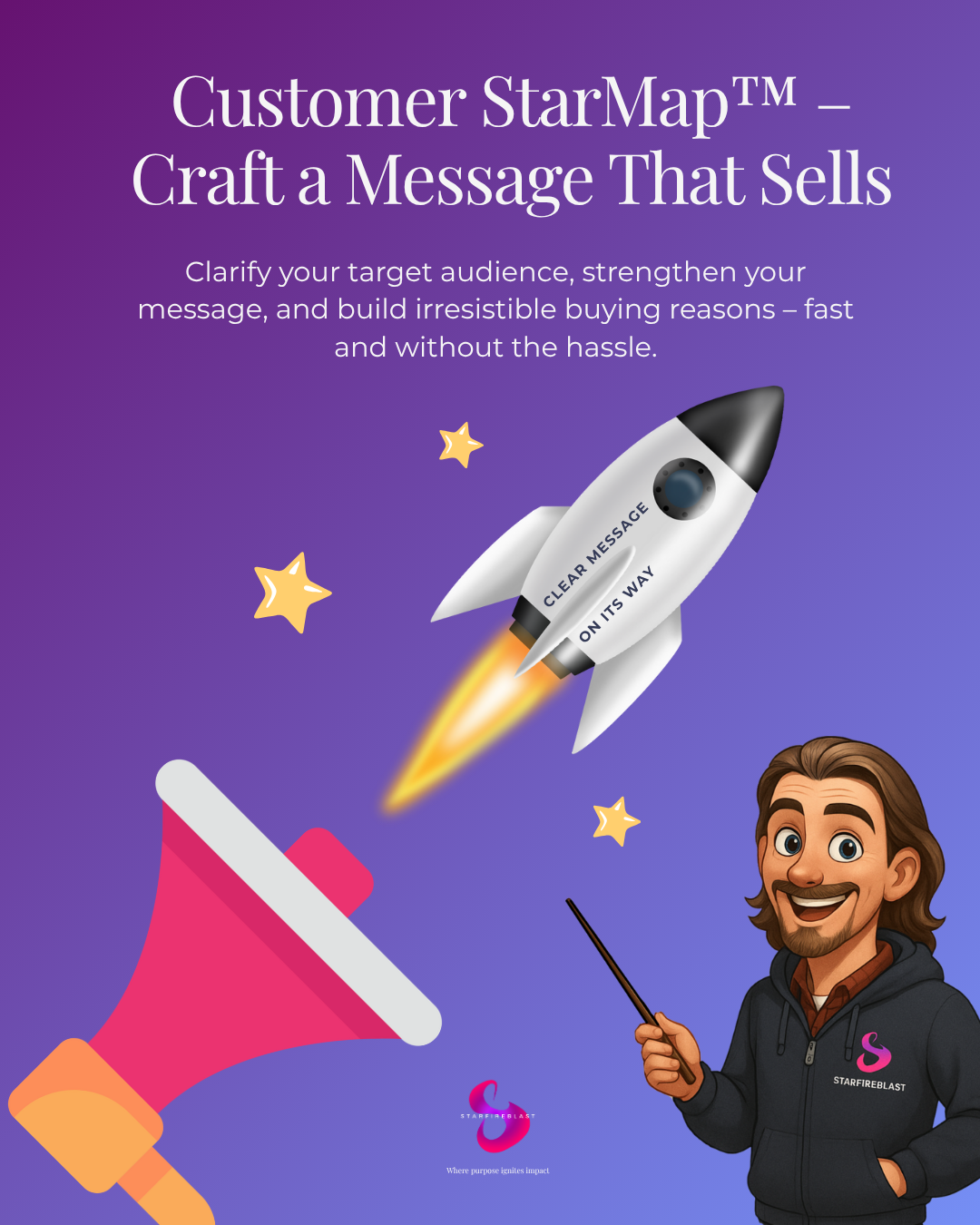
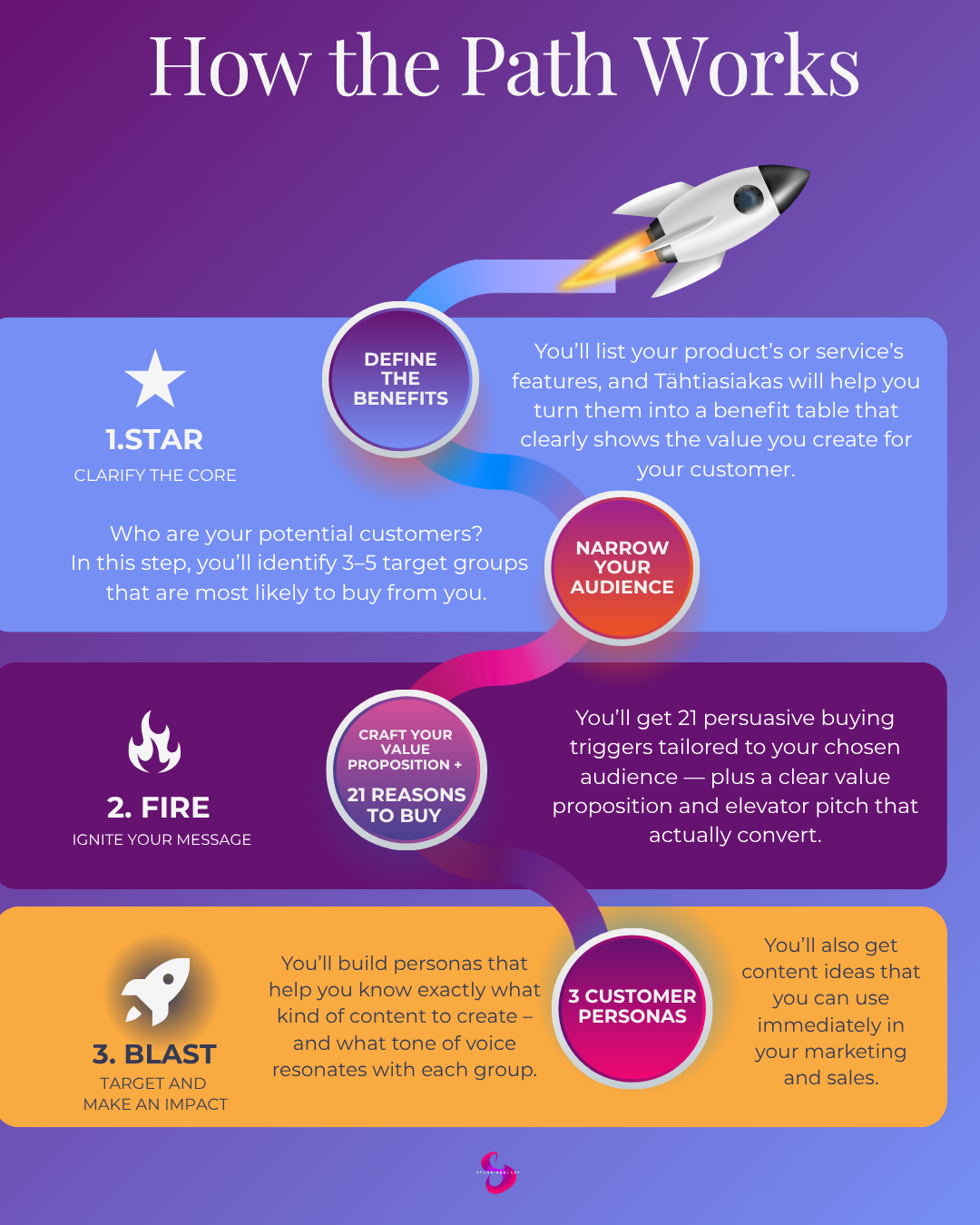
Starfireblast offers AI-powered resources designed specifically for entrepreneurs building sustainable, well-being focused ventures. The Customer StarMap™ AI power workshop helps you clarify exactly who you’re serving and what they need, aligning your customer understanding with well-being principles from the start. This strategic clarity prevents the misalignment that causes burnout and mission drift.
Our platform combines customer positioning, brand strategy, and AI-assisted execution tools that automate routine work while preserving human judgment for values-driven decisions. You get smarter operational support without sacrificing the authentic relationships that make well-being entrepreneurship work. Community-driven growth replaces exhausting ad-driven scale.
Explore Starfireblast to discover how planetary productivity principles can accelerate your venture while protecting your well-being and amplifying your positive impact.
FAQ
What is the triple bottom line in well-being entrepreneurship?
The triple bottom line means measuring success across people, planet, and profit equally rather than prioritizing financial returns alone. You evaluate social impact on employees and communities, environmental sustainability, and economic viability as interconnected outcomes. This framework prevents sacrificing stakeholder well-being or ecological health for short-term profits.
How can AI tools support well-being entrepreneurship without causing burnout?
AI automates routine operational tasks like scheduling, data analysis, and content drafting, freeing your mental energy for strategic thinking and relationship building. Cautious implementation with strong human oversight prevents overdependence that erodes authentic values and connections. The key is using technology to enhance rather than replace human judgment in stakeholder interactions.
Is well-being entrepreneurship only for wellness startups?
No, it applies across all industries and sectors through holistic integration of social, environmental, and financial goals. Manufacturing, technology, retail, professional services, and other ventures benefit from stakeholder-centered approaches and regenerative practices. The principles adapt to your specific industry context rather than limiting you to health or wellness niches.
What are common challenges when implementing well-being entrepreneurship?
Ignoring ecological impacts while focusing only on social dimensions creates incomplete well-being strategies. Treating well-being principles as marketing rather than operational reality undermines credibility and effectiveness. Regular stakeholder engagement and authentic integration throughout your business systems prevent these pitfalls. Measuring and reporting transparently on triple bottom line outcomes builds accountability that sustains genuine implementation.
Recommended
- Action Planning for Entrepreneurs: Achieve Sustainable Progress – Starfireblast
- 7 Steps to a Purpose-Driven Entrepreneurship Checklist – Starfireblast
- Purpose-Driven Entrepreneurship: Building Impactful Businesses – Starfireblast
- Business Evolution Explained: Sustainable Growth for Entrepreneurs – Starfireblast
- The Biscuit Factory | Ireland’s Independent Creative Community | The Biscuit Factory