Purposeful growth for sustainable entrepreneurs 2026
Purposeful growth is not about scaling revenue at all costs. It’s about expanding your business in ways that honor your mission, serve your community, and protect the planet. Many entrepreneurs mistakenly equate growth with profit alone, ignoring social and environmental responsibilities. This guide helps you balance sustainability with business expansion, so you can build a venture that thrives long-term without burning out or compromising your values.
Table of Contents
- Prerequisites For Purposeful Growth
- Clarifying Purpose And Audience: The First Step
- Foundations Of Purposeful Growth: Sustainability At The Core
- Stepwise Guide To Purposeful Growth Implementation
- Avoiding Common Pitfalls In Purposeful Growth
- Community-Driven Growth Vs Ad-Driven Scale
- Measuring Success In Purposeful Growth
- Explore Our Customer Starmap™ – Ai Power Workshop
- Frequently Asked Questions
Key takeaways
| Point | Details |
|---|---|
| Purposeful growth aligns mission, resources, and sustainability for lasting success | Integrating financial, social, and environmental goals creates resilient businesses that withstand market shifts. |
| Clear customer understanding and values drive authentic engagement | Knowing who you serve and why builds trust and shifts relationships from transactional to relational. |
| Stepwise execution with digital tools boosts sustainable scaling | Phased implementation using AI and community insights reduces burnout and improves efficiency. |
| Avoid pitfalls like resource misallocation and greenwashing | Deliberate planning and transparent communication prevent common failures that dilute impact. |
| Measuring impact through triple bottom line KPIs is essential | Tracking ecological, social, and economic metrics ensures progress and supports ongoing refinement. |
Prerequisites for purposeful growth
Before scaling your sustainable business, you need the right mindset and tools. Rushing into growth without preparation leads to wasted resources and mission drift. Start by clarifying your mission so it aligns with sustainable values. This clarity guides every decision and keeps you focused when challenges arise.
Operational readiness matters too. You need baseline sustainability knowledge and systems that support responsible practices. Embedding sustainability into core business strategy leads to 40% higher confidence and 1.5x board effectiveness. This integration creates stability and resilience, making growth smoother.
Commit to deliberate resource allocation. Growth requires investment, but throwing money at problems without strategy backfires. Leadership engagement is critical. You and your team must own the sustainability mission, not treat it as a side project.
Key preparations include:
- Defining a clear mission that reflects your values and sustainability goals
- Building operational systems that track impact and resource use
- Securing team buy-in and training on sustainable practices
- Investing in tools for customer understanding and impact measurement
Customer understanding tools help you identify who benefits most from your work. Impact measurement tools provide data to guide decisions and prove progress. Together, these enable data-driven growth that stays true to your purpose.
Pro Tip: Start small with one sustainability metric you can track weekly. This builds momentum and creates accountability without overwhelming your team. Over time, expand to a full triple bottom line dashboard.
Explore how purpose-driven entrepreneurship impact shapes resilient businesses. Cultivating a growth mindset business sales success approach also supports sustainable scaling.
Clarifying purpose and audience: the first step
Growth without clear purpose and audience is like sailing without a compass. You might move fast, but you’ll likely drift off course. Define your business purpose first. What change do you want to create? Who benefits most from your work? Answering these questions grounds your growth strategy in authenticity.
Use customer understanding to identify your target audience. Purpose-driven entrepreneurs prioritize customer understanding and values-based marketing to connect authentically and shift from transactional to relational engagement. This means going beyond demographics. Understand their values, challenges, and aspirations. When you know what matters to them, you can serve them better.
Authentic storytelling builds community and trust. Share your mission, the problems you solve, and the impact you create. Transparency matters. Don’t exaggerate or hide challenges. People connect with honest journeys, not perfect facades.
Avoid greenwashing at all costs. Greenwashing is when businesses overstate their sustainability efforts or make misleading claims. It damages trust and dilutes your mission. Communicate clearly and back claims with evidence. If you’re working toward a goal but haven’t achieved it yet, say so. Honesty builds credibility.
Steps to clarify purpose and audience:
- Write a one-sentence mission statement that reflects your values and impact goals
- Conduct interviews or surveys to understand your audience’s values and needs
- Map your audience’s journey to identify where your business adds the most value
- Develop messaging that speaks to shared values, not just product features
Pro Tip: Create a simple values alignment exercise. List your top three business values and ask potential customers to rank their own. When there’s overlap, you’ve found your people. This exercise filters out mismatches early and saves time.
Learn more about clarifying business purpose growth and discover how to clarify brand purpose effectively. Also explore strategies to clarify business vision sustainability growth for long-term impact.
Foundations of purposeful growth: sustainability at the core
Sustainability isn’t an add-on. It’s a foundation that supports resilient, long-term growth. The triple bottom line approach integrates economic, social, and ecological goals. This means measuring success by profit, people, and planet. Businesses that adopt this model navigate challenges better and build lasting competitive advantage.
Sustainable businesses integrating environmental and social responsibility alongside economic objectives can better navigate global challenges and achieve long-term resilience. This integration reduces risk and opens new opportunities. Customers, investors, and partners increasingly prioritize sustainability. When it’s core to your business, you attract aligned stakeholders.

Circular economy principles improve resource efficiency. Instead of a linear take-make-dispose model, circular systems reuse, repair, and recycle. This lowers costs, reduces waste, and helps you comply with evolving regulations. In Central Europe, SMEs adopting circular economy principles see improved resource efficiency and regulatory compliance helping sustainable growth.
Regional strategies also matter. In Central Europe, support programs help SMEs embed sustainability into growth plans. These programs provide funding, training, and networks. If you’re in a region with similar initiatives, take advantage. They reduce barriers and accelerate progress.
Key sustainability foundations:
- Adopting the triple bottom line to measure economic, social, and ecological impact
- Implementing circular economy practices to improve resource efficiency
- Staying informed on regional sustainability programs and regulations
- Building partnerships with aligned suppliers and community organizations
The table below shows how different sustainability pillars support growth:
| Sustainability Pillar | Growth Benefit | Example Metric |
|---|---|---|
| Economic | Stable revenue and cost control | Profit margin, customer lifetime value |
| Social | Community trust and loyalty | Employee retention, community feedback |
| Ecological | Resource efficiency and compliance | Carbon footprint reduction, waste diverted |
Integrating these pillars creates a foundation that withstands economic downturns, regulatory changes, and shifting customer expectations. It also protects your mission from dilution as you scale.
Stepwise guide to purposeful growth implementation
Implementing purposeful growth requires a clear, phased approach. Rushing leads to burnout and mistakes. Follow these steps to scale sustainably and stay aligned with your mission.
-
Clarify purpose and audience before scaling. Don’t skip this. Growth magnifies what you already do. If your purpose is unclear or your audience is misaligned, scaling makes problems worse. Spend time defining your mission and understanding your customers. This step sets the direction for everything that follows.
-
Embed sustainability as a core pillar. Integrate sustainability into strategy, operations, and culture. Train your team, update processes, and set clear sustainability goals. Make it non-negotiable. When sustainability is core, it guides decisions automatically.
-
Allocate resources and build supportive teams deliberately. Map out what you need: budget, tools, people, time. Don’t overcommit. Build a team that shares your values and has the skills to execute. Invest in training and create a culture of collaboration and accountability.
-
Implement growth initiatives using AI and digital tools. Integrating AI and digital tools improves execution efficiency and customer insight application for purposeful growth in small businesses. Use AI to analyze customer data, automate repetitive tasks, and personalize communication. Digital tools streamline operations and free up time for strategic work.
-
Measure success and iterate based on impact metrics. Set KPIs for economic, social, and ecological impact. Track them regularly. Use data to spot what’s working and what’s not. Iterate quickly. Purposeful growth is about learning and adapting, not rigid plans.
Pro Tip: Break each step into 30-day sprints. Set one clear goal per sprint and review progress weekly. This keeps momentum high and prevents overwhelm. Celebrate small wins to maintain motivation and team morale.
Explore sustainable growth strategies entrepreneurs for regional insights. Use the purpose-driven entrepreneurship checklist to stay on track. Learn about action planning for entrepreneurs and discover growth strategies for creators sustainable brand development.
Avoiding common pitfalls in purposeful growth
Even with the best intentions, entrepreneurs stumble. Knowing common pitfalls helps you navigate challenges and keep growth on track.
Execution gaps often come from inadequate resource allocation. More than 60% of sustainable growth failures involve resource misallocation and rushing without clear purpose. Underestimating costs, time, or team capacity creates bottlenecks. Plan realistically and build buffers. Overcommitting is tempting, but it leads to burnout and poor execution.
Burnout risk increases when you rush growth without a phased approach. Scaling too fast strains you and your team. Stress rises, quality drops, and mission clarity fades. Pace yourself. Growth is a marathon, not a sprint. Build rest and reflection into your schedule.
Neglecting sustainability integration leads to greenwashing and impact dilution. If sustainability is just marketing talk, customers notice. Authentic integration requires real changes in operations, supply chains, and culture. Don’t fake it. Do the work or don’t make the claim.
Over-reliance on paid ads reduces authenticity and increases burnout risk. Ads can scale reach quickly, but they’re expensive and require constant optimization. They also create distance between you and your audience. Community-driven growth builds deeper relationships and reduces dependence on paid channels.
Common pitfalls to avoid:
- Misallocating resources by underestimating costs or overcommitting capacity
- Rushing growth without phased planning, leading to burnout and errors
- Greenwashing by overstating sustainability without operational changes
- Relying heavily on paid ads instead of building authentic community engagement
Understand business evolution explained to anticipate growth stages. Avoid shortcuts that compromise your mission. Sustainable growth takes time, but it builds a resilient foundation that lasts.
Community-driven growth vs ad-driven scale
Choosing the right growth approach shapes your business culture and sustainability. Ad-driven and community-driven growth offer different paths with distinct trade-offs.
Ad-driven growth delivers faster audience reach but at higher costs and risks. You pay for visibility, which can scale quickly if budgets allow. However, ads require constant optimization and spending. When you stop paying, growth often stalls. This model also creates transactional relationships. People see your ad, click, maybe buy, but they don’t build loyalty.
Community-driven models build authentic engagement and sustainable relationships. Community-driven growth fosters authenticity, lowers burnout risk, and creates stronger brand loyalty compared to ad-driven scaling. You invest time in conversations, content, and shared value. Growth is slower but more stable. Community members become advocates who spread your message organically.
Community growth reduces burnout and mission dilution risks. You’re not chasing algorithms or bidding wars. You’re building relationships rooted in shared values. This alignment protects your mission and creates a support network that sustains you during challenges.
Central European SMEs illustrate the sustainable advantage of community focus. Many prioritize local networks, partnerships, and customer co-creation over aggressive ad spending. This approach builds resilience and deepens market penetration without high costs.
| Growth Approach | Speed | Cost | Relationship Depth | Sustainability |
|---|---|---|---|---|
| Ad-driven | Fast | High | Low (transactional) | Risky, dependent on budget |
| Community-driven | Moderate | Low to moderate | High (relational) | Stable, builds loyalty |
For sustainable entrepreneurs, community-driven growth aligns better with values and resources. It takes patience, but the payoff is a loyal, engaged audience that supports your mission long-term.
Measuring success in purposeful growth
You can’t improve what you don’t measure. Purposeful growth requires metrics that track progress across economic, social, and ecological dimensions. This is the triple bottom line in action.
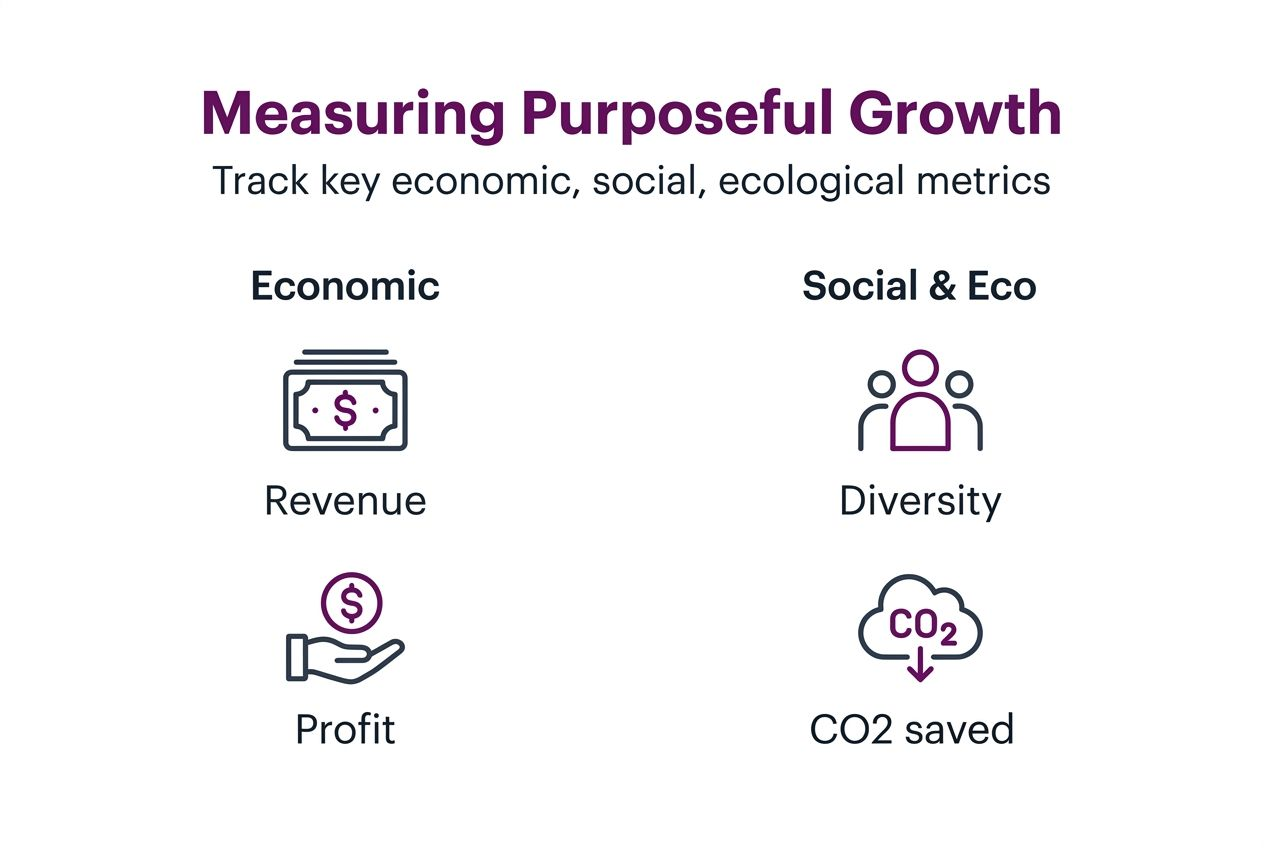
Use ecological indicators like carbon emission reduction percentages. Track energy use, waste diverted from landfills, and resource efficiency gains. These metrics show your environmental impact and highlight areas for improvement. Set targets and review progress quarterly.
Track social indicators including community feedback and impact projects. Measure employee retention, diversity, and satisfaction. Gather customer feedback on values alignment and social impact. Count partnerships with community organizations and projects supported. Social metrics reveal how well you’re serving people.
Measure economic metrics balancing revenue with sustainability outcomes. Profit matters, but so does how you earn it. Track customer lifetime value, retention rates, and revenue from aligned customers. Monitor cost savings from efficiency improvements. Economic metrics ensure financial viability supports your mission.
Regularly review KPIs to iterate and refine your growth strategy. Tracking KPIs such as ecological footprint reductions, social impact, and economic performance enables effective measurement of purposeful growth. Monthly or quarterly reviews help you spot trends, celebrate wins, and adjust tactics.
Key KPIs for purposeful growth:
- Ecological: Carbon emissions reduction, waste diversion rate, renewable energy use
- Social: Employee retention, community partnerships, customer satisfaction on values
- Economic: Revenue growth, customer lifetime value, cost savings from sustainability
The table below provides a sample KPI dashboard:
| KPI Category | Metric | Target | Frequency |
|---|---|---|---|
| Ecological | Carbon footprint reduction | 10% annually | Quarterly |
| Social | Employee retention rate | 85% or higher | Annually |
| Economic | Customer lifetime value | Increase 15% | Quarterly |
Measuring across all three dimensions keeps you accountable and ensures growth stays purposeful. Data guides decisions and proves impact to stakeholders, customers, and yourself.
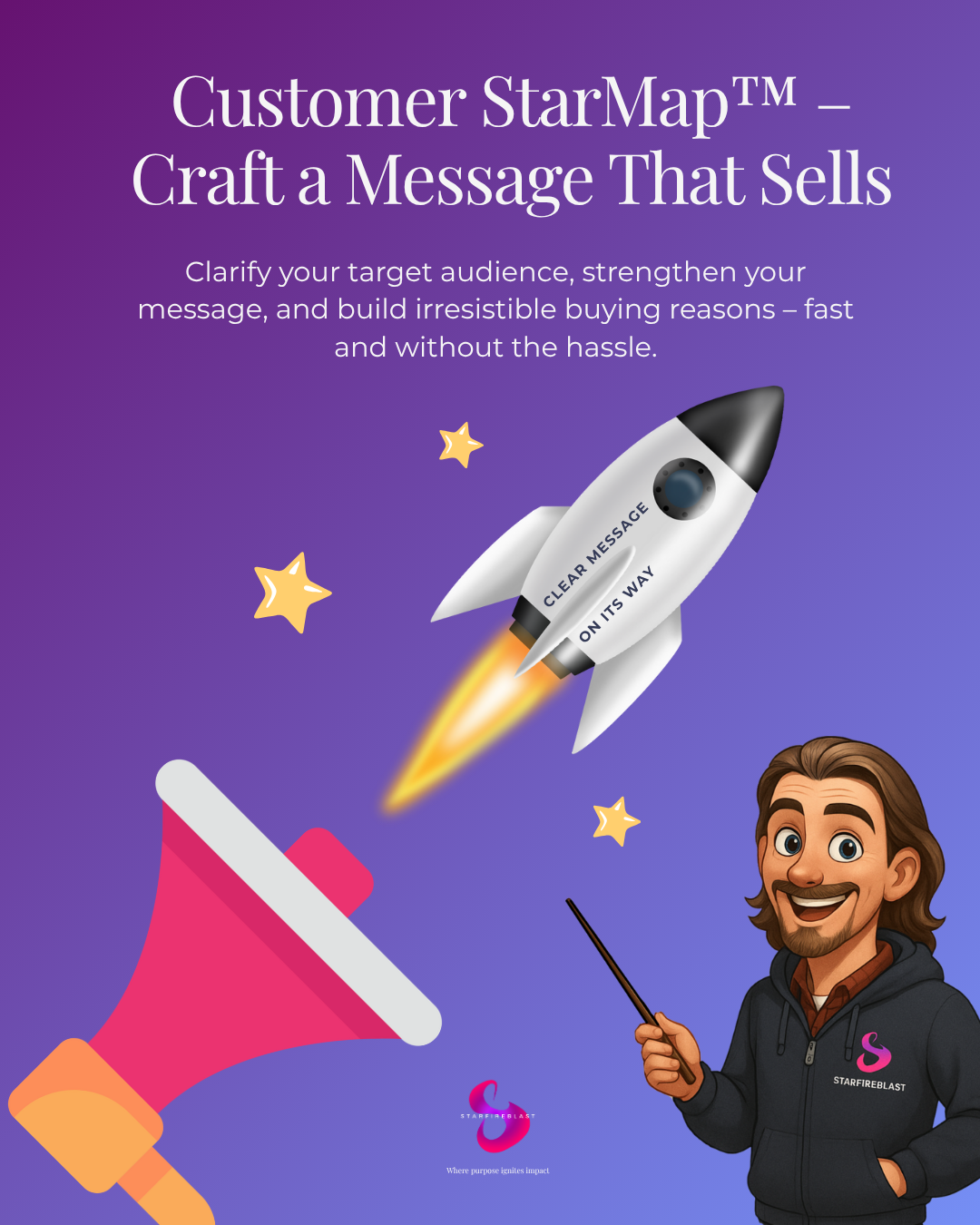
Explore our Customer StarMap™ – AI Power Workshop
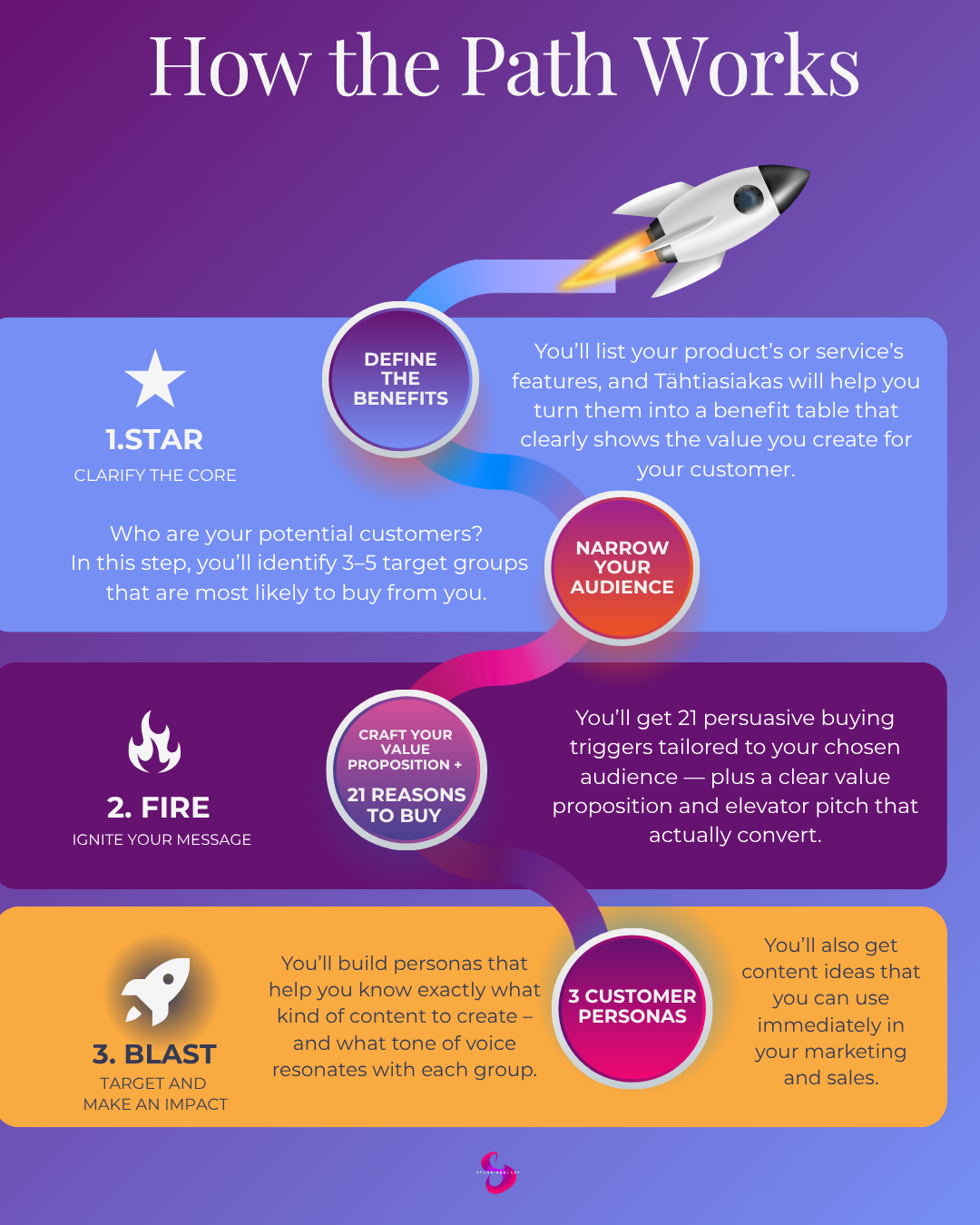
Ready to accelerate your purposeful growth with AI-driven clarity? Our Customer StarMap™ AI workshop helps you clarify who you serve, why it matters, and how to act next.
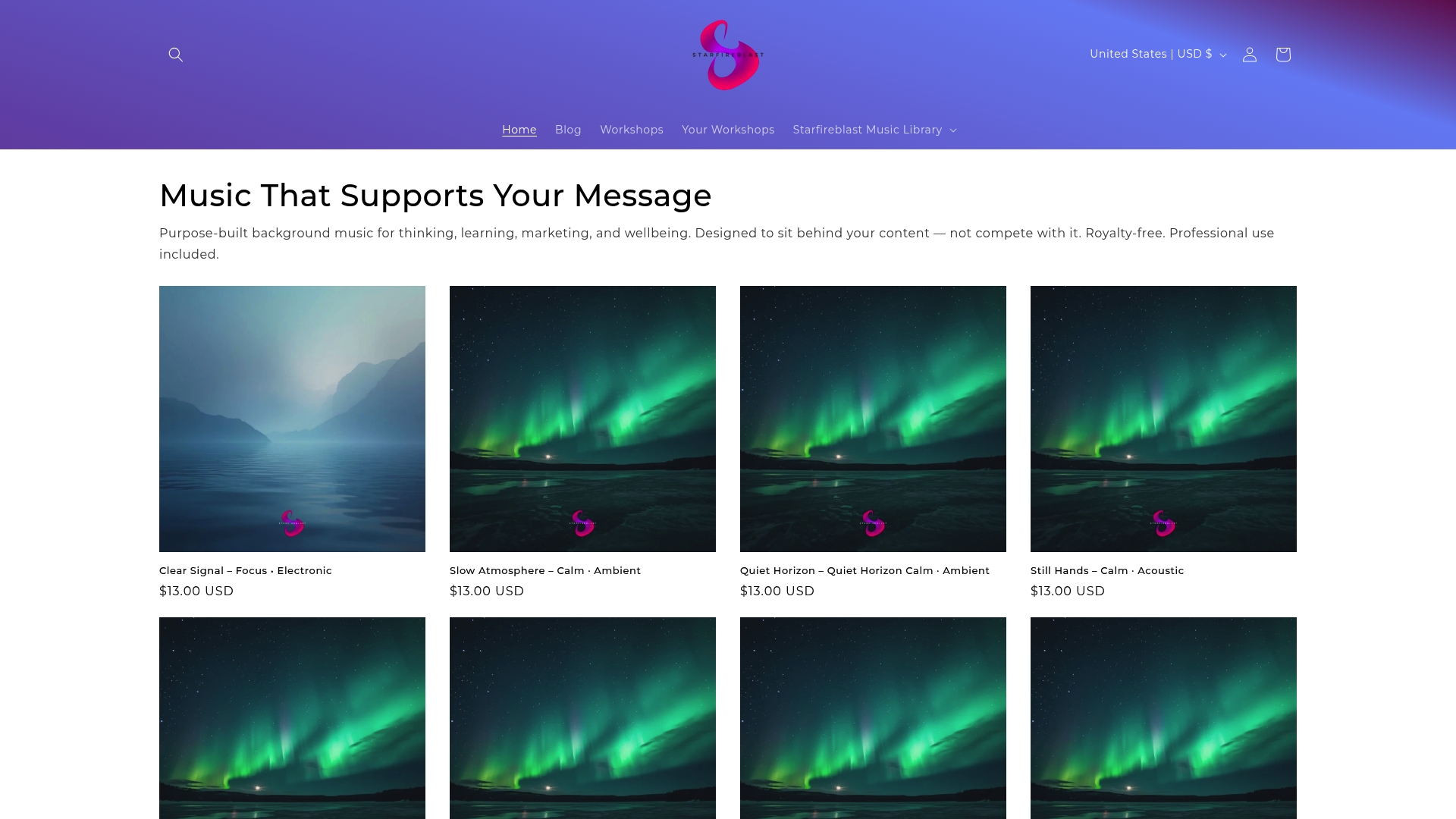
This workshop leverages AI tools to analyze customer insights, refine your positioning, and create actionable steps aligned with your mission. You’ll gain efficiency, sharpen focus, and measure impact more effectively. It’s designed for entrepreneurs building resilient, sustainable ventures without burning out or compromising values. Join Starfireblast to turn purposeful ideas into meaningful action.
Frequently asked questions
What is purposeful growth in entrepreneurship?
Purposeful growth integrates financial, social, and environmental objectives for lasting impact. It differs from traditional growth by emphasizing sustainability and mission alignment, not just revenue expansion. This approach builds resilience and attracts stakeholders who share your values.
How can entrepreneurs avoid burnout when scaling sustainably?
Use phased scaling with deliberate resource planning and community engagement to reduce strain. Leverage digital tools to improve execution efficiency and automate repetitive tasks. Build rest into your schedule and celebrate small wins to maintain motivation and prevent exhaustion.
What metrics best track purposeful growth success?
Measure ecological footprint reductions, social impact indicators, and customer retention alongside economic performance. Regular KPIs review supports ongoing strategy adjustment and ensures you’re progressing across all three triple bottom line dimensions. Set quarterly targets and iterate based on data.
Why is community-driven growth better than ad-driven scale for sustainable businesses?
Community-driven growth fosters stronger engagement and loyalty, lowering burnout risk and mission dilution. Ad-driven scale often leads to higher costs, transactional relationships, and dependence on continued spending. Community models build authentic connections that sustain your business long-term without constant financial pressure.
Recommended
- Sustainable growth strategies for entrepreneurs in 2026 – Starfireblast
- Business Evolution Explained: Sustainable Growth for Entrepreneurs – Starfireblast
- Action Planning for Entrepreneurs: Achieve Sustainable Progress – Starfireblast
- Founder Vision Drives 40% More Community Growth in 2026 – Starfireblast
- Sales Growth Strategies 2026: 30% Boost for UK Firms