Innovative marketing strategies for sustainable growth in 2026
TL;DR:
- Small businesses should build connected marketing systems focused on attracting, converting, and retaining customers.
- Community-driven marketing and AI-enhanced content strategies provide sustainable, measurable growth.
- Simplified, verifiable sustainability messaging and choice architecture outperform complex environmental claims.
Marketing tactics that once worked are now producing diminishing returns for small business owners. Disconnected campaigns, isolated ad spends, and channel-specific thinking no longer generate the sustained growth that entrepreneurs need. The shift happening in 2026 is structural. Businesses that build connected systems — ones that attract, convert, and retain customers through community participation and clear positioning — are outperforming those still chasing algorithm changes. This article walks you through a practical evaluation framework and three validated marketing strategies to help you build something durable.
Table of Contents
- How to evaluate marketing strategies for 2026
- 1. Community-driven marketing: From performance to participation
- 2. Content marketing and AI: Sustainable business outcomes
- 3. Sustainability marketing: Behavioral design and simplified messaging
- Summary comparison: Key marketing strategies for 2026
- A fresh perspective: Why clarity wins over complexity
- Take your sustainable marketing to the next level
- Frequently asked questions
Key Takeaways
| Point | Details |
|---|---|
| Community matters most | Community-driven strategies create lasting brand loyalty and outperform short-lived campaigns. |
| Combine content and AI | Effective content marketing amplified by AI leads to sustainable business growth in 2026. |
| Behavioral design is key | Simplified labels and retail changes influence sustainable consumer decisions more than messaging alone. |
| Clarity beats complexity | Clear, measurable marketing systems drive retention and conversion better than scattered, complex tactics. |
How to evaluate marketing strategies for 2026
Most entrepreneurs pick marketing channels based on what feels popular. That approach creates fragmented activity with no clear connection to business outcomes. A better starting point is asking what each strategy actually does for your business at each stage of the customer journey.
Small-business marketing is shifting from channel-first tactics to connected systems tied to measurable outcomes: attract, convert, and retain. That means every strategy you evaluate should map directly to one or more of those three outcomes. If you cannot explain how a tactic moves a customer from awareness to loyalty, it probably does not belong in your plan.
Use these three criteria to evaluate any marketing strategy before committing resources:
- Connectivity: Does this strategy connect to others in your system, or does it function as a standalone promotion?
- Measurability: Can you track a concrete outcome tied to revenue, retention, or referral?
- Community potential: Does this strategy create ongoing relationships, or does it generate one-time traffic?
Customer journey mapping is the tool that ties these criteria together. When you map the full path a customer takes from first awareness through repeat purchase, you can place each strategy at the right stage. This prevents the common mistake of running top-of-funnel content when your actual gap is in conversion or retention.
Pro Tip: Before adding any new marketing channel in 2026, map where your current customer drop-off happens. Fix the leak before filling the bucket with new traffic.
Explore sustainable strategy tips to understand how this framework applies across different business models. The goal is not to run more campaigns. The goal is to build a system where each part reinforces the others.
1. Community-driven marketing: From performance to participation
Community-driven marketing is not a trend. It is a structural shift in how trust gets built between brands and buyers. Where paid performance marketing delivers traffic in short bursts, community marketing compounds over time through ongoing participation and social proof.
Community-driven marketing is described in 2026 commentary as “performance marketing with a longer memory,” where ongoing participation and social proof outperform one-off paid bursts for durability. That framing is precise. A single ad campaign produces a spike. A community of engaged customers produces a baseline that does not disappear when the budget runs out.
“Performance marketing with a longer memory” is a useful test to apply to any tactic. If the tactic stops working the moment you stop paying for it, it belongs in the short-term column, not your core strategy.
The practical building blocks of community-driven marketing for 2026 include:
- Micro-communities: Small, focused groups organized around a shared need or identity. These can live inside platforms like Discord, Slack, or Circle, or simply in an active email thread or private group.
- Local and digital ambassadors: Real customers who share their experience organically. An ambassador ecosystem does not require a formal affiliate program. It starts by identifying who already recommends you and giving them something worth sharing.
- Founder visibility: People trust people before they trust brands. When the founder communicates publicly, answers questions, and shares process, the brand earns credibility that paid ads cannot manufacture.
- User-generated content (UGC): Content created by real customers about real experiences. UGC builds trust because it is not produced by the business itself. A photo from a customer, a short review, or a video reaction all carry more weight than a polished brand asset.
The comparison between campaign spikes and sustained community engagement is important for budgeting. A paid campaign might convert well for two weeks. A community of 500 engaged members generates referrals, content, and retention value every week without additional ad spend.

Learn how community brand building works at the brand level and how community-driven growth connects to long-term business sustainability.
2. Content marketing and AI: Sustainable business outcomes
Content marketing is not new. What is new in 2026 is the empirical evidence linking it directly to sustainability outcomes for small and medium enterprises, and the measurable role AI plays in amplifying that effect.
Research on SMEs provides direct evidence: marketing strategies and AI adoption together influence business sustainability outcomes, with AI acting as a mediator that strengthens the relationship between content marketing and sustainable performance. In practical terms, this means businesses using AI-assisted content creation and distribution are seeing stronger sustainability metrics than those using content marketing alone.
The table below outlines how content marketing and AI tools work at each stage of the marketing system:
| Stage | Content marketing role | AI tool application |
|---|---|---|
| Attract | Blog posts, social content, SEO articles | AI keyword research, topic generation |
| Convert | Case studies, product explainers, email sequences | AI-personalized email drafts, A/B test copy |
| Retain | Newsletters, community updates, tutorials | AI content scheduling, response automation |
| Measure | Content performance reports | AI analytics summaries, trend identification |
The practical steps for integrating content marketing and AI into your 2026 system are direct:
- Identify the one customer segment you serve best. Create a content series built entirely around their specific questions and challenges.
- Use an AI writing tool to generate first drafts, then edit for accuracy and brand voice. This cuts production time without cutting quality.
- Repurpose each piece of content across at least two formats. A written article becomes a short video script. A social post becomes an email intro.
- Track one metric per content piece that connects to a business outcome. Page time, email click rate, or direct reply rate all work better than vanity metrics like views.
Pro Tip: AI tools work best when you give them precise context. Instead of asking an AI to “write a blog post about marketing,” tell it your customer type, their main frustration, and the one outcome they want. The output quality improves significantly.
For practical frameworks on applying content marketing for growth, and specific growth techniques for creators, both resources provide applied guidance beyond general theory.
3. Sustainability marketing: Behavioral design and simplified messaging
Most businesses treat sustainability marketing as a messaging problem. They assume that if they communicate their environmental or social commitments clearly enough, customers will respond. Research shows this assumption is often wrong.
Documented interventions from choice-architecture and on-pack data show that simplified, comparable labels and retail display changes outperform complex sustainability messaging. Per-use carbon labels placed directly on packaging, and strategic positioning of sustainable products at eye level in retail displays, changed purchasing behavior more effectively than detailed environmental statements.
Customers do not process complex sustainability claims at the point of purchase. They respond to simple, comparable data placed in the right context at the right moment.
This principle, called choice architecture (designing the environment to make a better choice the easier choice), applies directly to digital and physical marketing for entrepreneurs. Here is how to apply it in practice:
- Simplify your sustainability claim to one comparable data point. Instead of “we use sustainable materials,” show “this product uses 40% less water than the industry standard.” One comparable number outperforms a paragraph of commitment language.
- Design your website and product pages using defaults. Set the sustainable product option as the pre-selected choice in your checkout. Most customers accept defaults without changing them.
- Position your most sustainable products prominently. Whether in an online catalog or a physical display, placement influences selection. The first item in a list or the center position in a grid receives disproportionate attention.
- Test simplified labels against detailed descriptions. Run a direct comparison on your own audience. Most entrepreneurs are surprised to find that less copy produces better results when the core data point is clear.
- Keep sustainability claims transparent and verifiable. Claims that cannot be checked are now a liability. Customers and regulators are increasingly skeptical of vague environmental language.
For more on applying sustainable practices at the operational level, and for guidance on positioning for sustainability as a brand differentiator, both resources provide structured next steps.
Comparison: Traditional messaging vs. behavioral design
| Approach | Method | Customer response | Measurability |
|---|---|---|---|
| Traditional messaging | Long-form sustainability copy | Low engagement at purchase point | Difficult to isolate |
| Behavioral design | Simplified label plus placement | Higher sustainable product selection | Direct and trackable |
Summary comparison: Key marketing strategies for 2026
Having explored each strategy in depth, the table below shows how they compare across the dimensions most relevant to small business decisions.
| Strategy | Primary outcome | Scalability | Time to results | Cost level |
|---|---|---|---|---|
| Community-driven marketing | Retention and referral | Moderate, organic | 3 to 6 months | Low to medium |
| Content marketing plus AI | Attract and convert | High with AI tools | 1 to 4 months | Low to medium |
| Sustainability behavioral design | Convert and retain | Moderate | 1 to 3 months | Low |
| Combined connected system | All three outcomes | High | 3 to 9 months | Medium |
The operational approach for 2026 small-business marketing is to design an end-to-end system covering entry, capture, education and nurture, conversion, and follow-up retention, rather than running disconnected promotions. Measurement comes through conversion rate and retention outcomes, not channel-level impressions.
For sustainability claims specifically, treating messaging as behavioral design with transparent and comparable labels produces better results than complex environmental statements. This applies whether you are selling a physical product or a digital service.
Key selection guidance based on business model:
- Solo creators and consultants: Start with community-driven marketing and content. Build audience before adding AI tools.
- Product-based small businesses: Prioritize behavioral design in your packaging and product pages alongside content marketing.
- Service businesses with repeat clients: Focus on retention-oriented community marketing and AI-assisted nurture sequences.
- Early-stage startups: Build the end-to-end system before investing in paid channels. Fix the conversion path first.
For foundational context, business sustainability basics and the triple bottom line framework both explain the broader context within which these strategies operate.
A fresh perspective: Why clarity wins over complexity
The dominant assumption in marketing is that more tactics, more channels, and more tools produce better results. The data and practical experience from sustainable startups tell a different story.
Businesses that build clear positioning, a defined customer, and a simple conversion path consistently outperform businesses running complex multi-channel campaigns without a unified system. Simplicity is not a limitation. It is a competitive advantage that most entrepreneurs underestimate because complexity feels like progress.
The uncomfortable reality is that most marketing problems are positioning problems in disguise. When a business cannot convert traffic into customers, the instinct is to run more ads or try a new platform. But the actual cause is usually that the offer is unclear, the audience is too broad, or the message does not match what the customer already believes.
Sustainable startups that last do one thing consistently well: they know exactly who they are building for, and every marketing action connects back to that person. That clarity compounds. It makes content easier to create, community easier to build, and sustainability claims easier to frame in terms that actually matter to the customer.
Balanced growth guidance reinforces this point directly. Profitable, responsible growth is not an accident. It results from deliberate decisions about who you serve, what you offer, and how you communicate. Complexity in messaging and tactics is often a symptom of unclear positioning, not a strategy.
The practical takeaway: before adding any new marketing strategy, ask whether your current positioning is clear enough to make that strategy work. If the answer is uncertain, clarity is the strategy.
Take your sustainable marketing to the next level
Building a connected marketing system takes more than reading about it. You need practical tools, a clear customer definition, and a structure that holds your strategy together across channels and time.
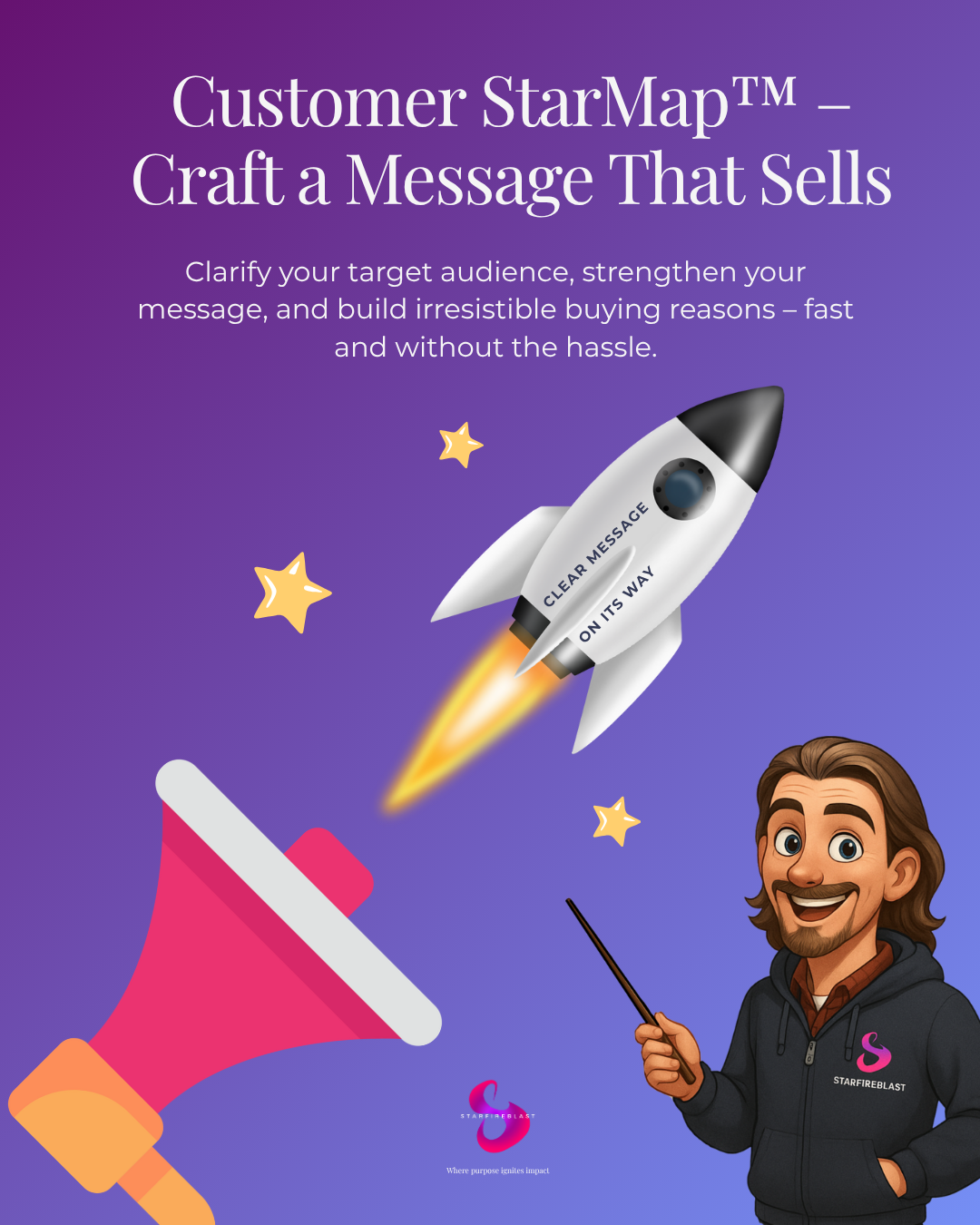
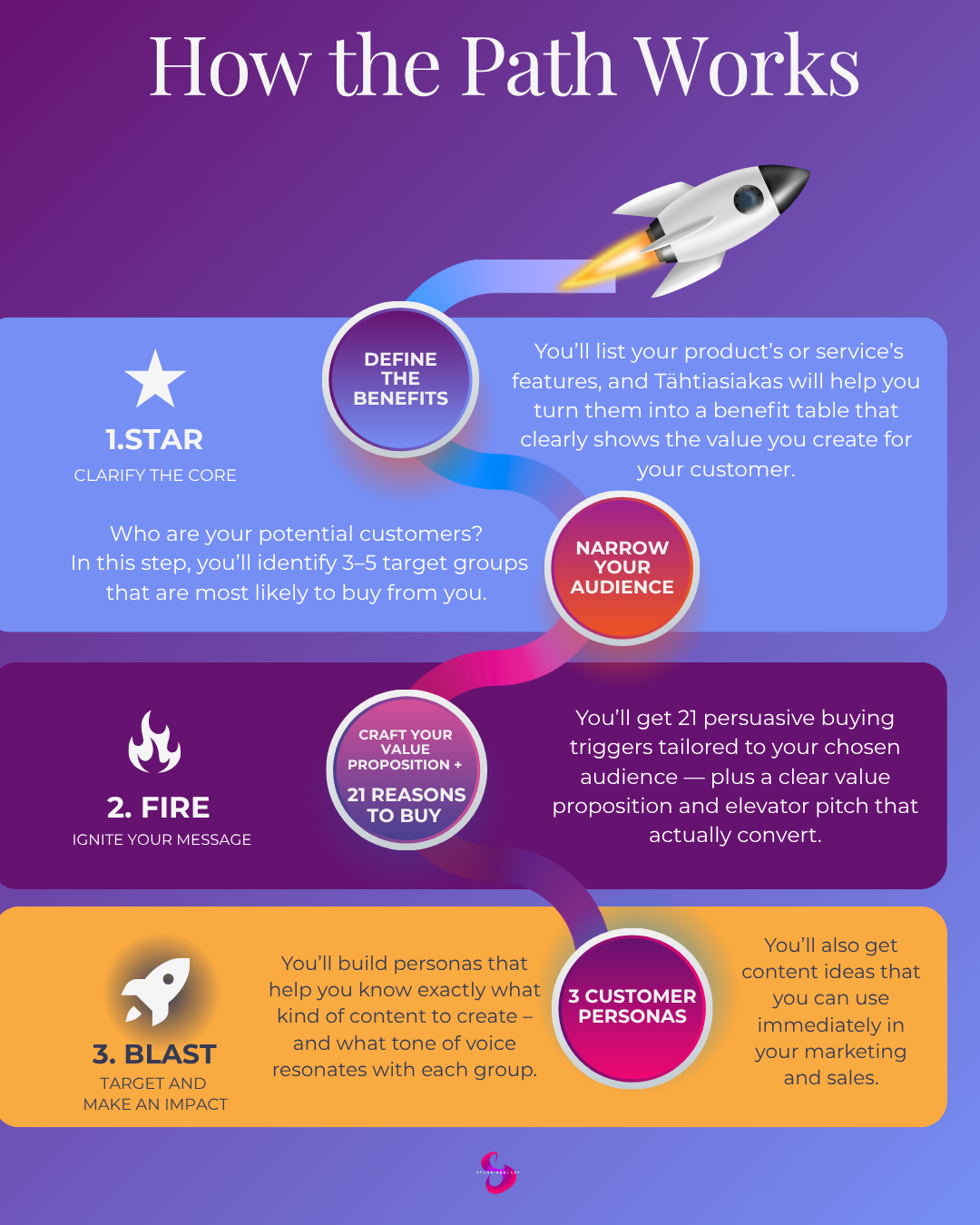
The Customer Starmap Power Workshop is designed specifically for entrepreneurs who want to clarify their positioning, map their customer journey, and build a marketing system that is sustainable by design. It combines AI-assisted tools with structured exercises to move you from scattered tactics to a coherent, measurable approach. Explore everything available at Starfireblast to find the resources that match where you are right now in building your business.
Frequently asked questions
What is the best marketing strategy for small businesses in 2026?
A connected system combining community-driven engagement, content marketing, and AI offers measurable outcomes and sustainable growth, since small-business marketing is shifting from channel-first tactics to connected systems tied to measurable outcomes.
How does community-driven marketing outperform paid campaigns?
Community-driven marketing builds durable brand loyalty and social proof over time, while ongoing participation and social proof outperform one-off paid bursts for durability.
Do AI tools really improve sustainability marketing strategies?
Empirical evidence shows AI amplifies the effect of content marketing on business sustainability outcomes in SMEs, since AI can mediate the marketing-to-sustainability relationship in measurable ways.
What is the role of packaging and retail design in sustainability marketing?
Simplified comparative data and choice architecture on packaging and retail displays drive sustainable product decisions better than traditional messaging, because on-pack data and choice architecture can outperform messaging alone at the point of purchase.
Recommended
- Sustainable growth strategies for entrepreneurs in 2026 – Starfireblast
- How community drives sustainable business growth in 2026 – Starfireblast
- 7 Growth Strategies for Creators to Build Sustainable Brands – Starfireblast
- Business sustainability fundamentals for small entrepreneurs in 2026 – Starfireblast