How to Build a Sustainable Strategy for Lasting Business Impact
TL;DR:
- Small businesses should set clear, SMART sustainability goals aligned with their mission and values.
- Conduct a baseline audit to identify quick wins and measure progress effectively.
- Engaging stakeholders and maintaining flexibility are essential for long-term sustainable growth.
Most entrepreneurs want their business to grow without burning out their team, harming their community, or ignoring the environment. The challenge is that balancing profit, people, and planet feels abstract until you have a concrete process to follow. This article breaks that process into four clear steps: setting goals, auditing your current state, engaging stakeholders, and monitoring results. Each step is practical and sized for small teams working with limited time and resources. If you have been putting off sustainability planning because it felt too big or too vague, this guide gives you a starting point you can act on today.
Table of Contents
- Define your sustainable strategy goals and principles
- Audit your business and map quick wins
- Engage stakeholders and foster a culture of sustainability
- Implement, monitor, and adapt your strategy for long-term results
- A practical perspective: Rethinking sustainability for small business owners
- Turn your sustainable strategy into action with Starfireblast
- Frequently asked questions
Key Takeaways
| Point | Details |
|---|---|
| Start with clear goals | Define what sustainability means for your business and set time-bound, measurable objectives. |
| Map and act on quick wins | An audit can reveal practical, high-ROI actions you can take right away. |
| Involve stakeholders early | Employee, customer, and community engagement drive long-term success. |
| Track progress and adapt | Monitor implementation, refine your strategy, and stay resilient to change. |
| Think holistic, not just incremental | Embedding sustainability in your business model leads to deeper, more lasting impact. |
Define your sustainable strategy goals and principles
Before you take any action, you need to know what you are working toward. Sustainability means different things to different businesses. For a product company, it might mean reducing packaging waste. For a service firm, it might mean fair pay and flexible work. Start by writing down what sustainability means for your specific mission.
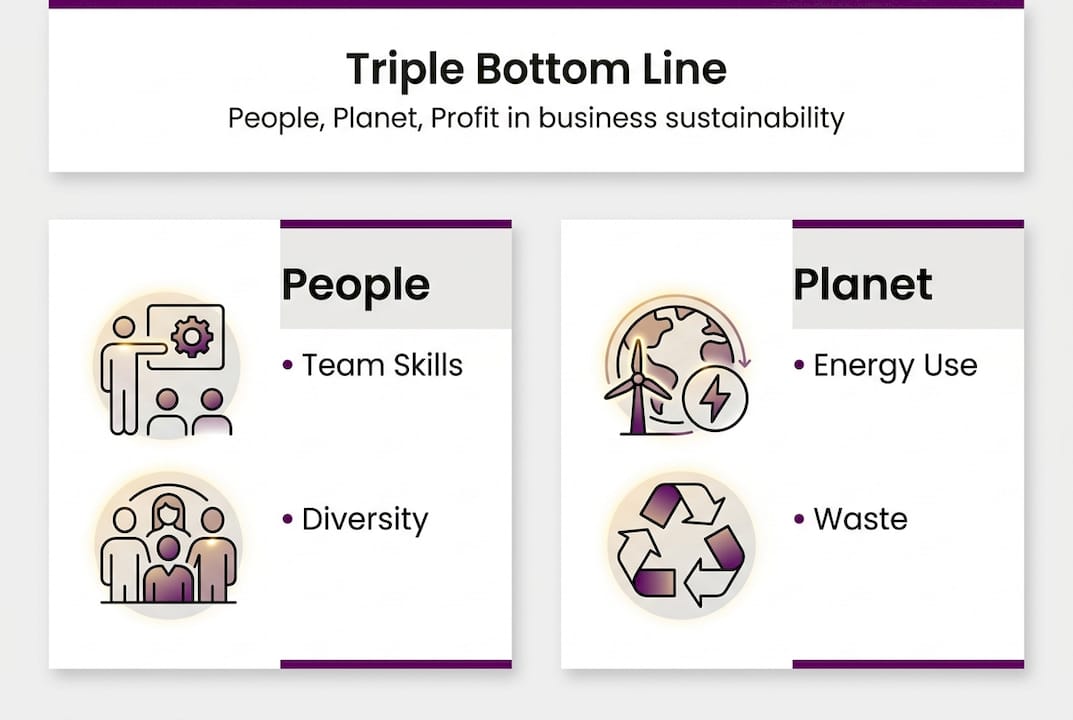
A widely used structure is the Triple Bottom Line, which stands for People, Planet, and Profit. It asks you to measure success across three dimensions, not just revenue. Triple Bottom Line (People, Planet, Profit) is a core approach that integrates with frameworks like B Corp certification and the UN Sustainable Development Goals (SDGs). These frameworks give your strategy external credibility and internal structure.
Once you have a framework, set goals that are SMART: Specific, Measurable, Achievable, Relevant, and Time-bound. Set SMART sustainability goals, like reducing emissions or increasing social impact, to anchor your planning. Vague goals like “be more sustainable” are hard to track and easy to abandon.
Here are examples of SMART sustainability goals for small businesses:
| Goal area | Example SMART goal | Timeline |
|---|---|---|
| Energy use | Reduce electricity consumption by 20% | 12 months |
| Waste reduction | Eliminate single-use plastics from operations | 6 months |
| Community impact | Partner with 2 local nonprofits for employee volunteer days | 9 months |
| Supply chain | Source 50% of materials from certified sustainable suppliers | 18 months |
You can also explore the SCALE framework as a practical tool for structuring your sustainability priorities from the start.
Key principles to guide your goal-setting:
- Align goals with your existing business values, not just external pressure
- Choose goals that are visible to your team and customers
- Review and update goals at least once per year
- Connect goals to specific roles or departments for accountability
For deeper context on why these foundations matter, review sustainability fundamentals before moving to the next step. You can also explore this guide to sustainable growth for a broader view of what balanced strategy looks like in practice.
Pro Tip: Pick one high-impact area for your first year. Trying to tackle energy, waste, hiring, and supply chain at the same time spreads your team too thin. One focused goal with real results builds more momentum than five goals with partial progress.
Audit your business and map quick wins
Once your objectives are clear, the next step is to audit where you stand and uncover immediate opportunities. A sustainability audit identifies where you stand and highlights the fastest improvements you can make. Without a baseline, you cannot measure progress.
Here is how to conduct a basic sustainability audit:
- Map your resource use. List your top energy sources, water consumption, and material inputs. Check utility bills and supplier invoices for data.
- Review your waste streams. Identify what your business throws away, recycles, or reuses. Note what goes to landfill versus what gets repurposed.
- Assess your social impact. Look at pay equity, working conditions, community involvement, and supplier relationships.
- Check your digital footprint. Cloud storage, data centers, and digital tools all have environmental costs. Audit your software stack for redundancy.
- Document your findings. Use a simple spreadsheet to record current numbers. This becomes your baseline for tracking change.
Assessing your baseline is the essential first step, and digital tools can speed this process significantly. Free or low-cost tools like Google Sheets, Notion, or purpose-built platforms can help you organize audit data without a large budget.

Here is a comparison of quick wins versus longer-term initiatives:
| Action | Cost | Impact | Time to results |
|---|---|---|---|
| Switch to LED lighting | Low | Medium | 1 to 3 months |
| Go paperless with digital invoicing | Very low | Medium | 1 month |
| Start a supplier review process | Low | High | 6 to 12 months |
| Install solar panels | High | High | 2 to 5 years |
| Develop a community partnership program | Low | High | 6 months |
For guidance on balancing priorities when resources are limited, that resource offers practical frameworks for small teams. You can also read about business evolution for growth to understand how audits fit into a larger transformation process.
Additional lessons from practitioners are available through ten lessons for effective strategy, which covers common audit pitfalls and how to avoid them.
Pro Tip: Small wins like switching to efficient lighting or moving to digital paperwork often pay for themselves within months. These early ROI wins build internal support for larger, more complex changes down the road.
Engage stakeholders and foster a culture of sustainability
With a clear roadmap and baseline, sustainable change cannot happen alone. It requires involvement from employees, customers, suppliers, and the broader community. Stakeholder engagement, employee upskilling, and community ties drive sustained impact over time.
Practical ways to engage key stakeholder groups:
- Employees: Hold quarterly sustainability check-ins. Invite team members to propose improvements. Offer training on sustainable practices relevant to their roles.
- Customers: Share your sustainability goals publicly. Report progress in newsletters or on your website. Ask for feedback through surveys.
- Suppliers: Include sustainability criteria in your vendor selection process. Ask suppliers about their own practices and certifications.
- Community: Partner with local organizations on shared initiatives. Participate in community events. Prioritize local hiring where possible.
Transparent communication is a core driver of adoption. When your team understands why sustainability matters to the business, they are more likely to support it. Partnerships, materiality assessments, and internal communication are key for effective implementation at every stage.
Research from Duke University shows that small firms help build sustainable local economies by creating jobs, sourcing locally, and reinvesting profits in their communities.
Internal upskilling is often overlooked. Training your team on sustainability practices reduces the need for outside consultants and builds long-term organizational capacity. This is especially important for solo entrepreneurs and small teams who cannot afford to hire specialists.
For more on why this matters at a foundational level, see sustainable entrepreneurship. You can also explore how community drives growth in practical terms for small businesses in 2026.
Implement, monitor, and adapt your strategy for long-term results
After mobilizing people and partnerships, the next task is to put plans into action and adapt as you grow. Implementation is where most strategies stall. The key is to start small, measure early, and build from what works.
Implementation steps from pilot to scale:
- Pilot one initiative. Choose a low-risk, high-visibility action. Run it for 60 to 90 days and document results.
- Measure your key metrics. Track environmental indicators (energy use, waste), social indicators (employee satisfaction, community reach), and economic indicators (cost savings, revenue tied to sustainable products).
- Review and adjust. Hold a monthly review to assess what is working. Drop or modify initiatives that are not delivering results.
- Scale what works. Once a pilot shows results, expand it across the business. Allocate budget and assign ownership.
- Report publicly. Share progress with your audience annually. Transparency builds trust and holds your team accountable.
Monitor progress, scale up high-impact actions, and adjust as needed for lasting success. The World Economic Forum’s roadmap for SMEs emphasizes that flexibility is as important as ambition.
Adaptive strategies and organizational transformation deliver results, especially amid crises or backlash. Markets shift. Regulations change. Customer expectations evolve. Your strategy needs to move with them.
For a detailed walkthrough of planning cycles, the action planning guide covers how to structure quarterly reviews. You can also find sector-specific examples in sustainable growth strategies for entrepreneurs in 2026.
A broader overview of frameworks and standards can help you choose the right reporting tools for your business size and industry.
Pro Tip: Use affordable tools like Notion, Airtable, or Google Data Studio to build a simple sustainability dashboard. Tracking three to five core metrics consistently is more valuable than tracking twenty metrics inconsistently.
A practical perspective: Rethinking sustainability for small business owners
The conventional view is that sustainability adds cost and slows growth. That view is outdated. Sustainability as an enabler improves efficiency and employee retention, not just compliance scores.
Small businesses that treat sustainability as a cost center miss the real opportunity. Energy efficiency reduces operating expenses. Transparent values attract and retain talent in competitive markets. Community partnerships open doors that paid advertising cannot. These are concrete business advantages, not idealistic extras.
The most common mistake is waiting for perfect conditions. Entrepreneurs delay action because they feel they need more resources, more staff, or more clarity. Incremental change is valuable. A business that reduces waste by 10% this year and 15% next year is building real momentum. Waiting for a perfect plan produces no results.
The best strategies are flexible, values-driven, and community-aware. They are built by people who know their customers, understand their local context, and are willing to adjust. For entrepreneurs working to clarify your vision, that clarity is the foundation everything else is built on.
Turn your sustainable strategy into action with Starfireblast
You now have a framework for building a sustainable strategy. The next step is putting it into practice with the right support.
Starfireblast is built for entrepreneurs who want to grow with purpose. The Customer StarMap™ Workshop helps you clarify who you are building for and why it matters, before you scale. It connects strategy to real customer understanding so your sustainability goals are grounded in your actual market. Explore all available tools and resources at Starfireblast to find the right starting point for your business stage and goals.
Frequently asked questions
What is the first step in building a sustainable strategy for my small business?
Begin by setting specific, measurable sustainability goals aligned with your business mission and values. SMART sustainability goals give your strategy a clear anchor from day one.
How can I assess if my business practices are sustainable?
Conduct a sustainability audit to map your environmental, social, and economic impacts using digital tools for a comprehensive baseline. A baseline audit is the essential first step for small and medium enterprises.
Are there affordable ways to start making my business more sustainable?
Yes. Begin with low-cost quick wins like improving energy efficiency, going paperless, or forming local partnerships. Quick ROI actions like energy efficiency help build early momentum without large upfront investment.
How do I keep my team motivated to achieve sustainability goals?
Involve your team in strategy planning, provide training, and celebrate milestones to keep everyone engaged. Stakeholder engagement and employee upskilling keep momentum strong over time.
Why is adaptability important in sustainable business strategy?
Adaptability allows your business to respond to changing regulations, market conditions, and stakeholder expectations, ensuring your strategy remains effective. Adaptive strategies and a focus on resilience are key amid changing headwinds.
Recommended
- How to Define Brand Strategy for Lasting Impact – Starfireblast
- Your guide to sustainable growth: balanced, profitable, responsible – Starfireblast
- Business Positioning Workflow for Sustainable Impact – Starfireblast
- Sustainable growth strategies for entrepreneurs in 2026 – Starfireblast
- Why Agency Profitability Is Invisible Until It’s Too Late