Founder productivity hacks for sustainable success in 2026
TL;DR:
- Protect deep work blocks during peak energy to maximize high-quality output.
- Focus on energy management and deliberate rest as core strategies for sustainability.
- Tailor productivity hacks based on energy patterns, team size, and specific work priorities.
Founder productivity hacks for sustainable success in 2026
Most solo founders hit a wall. Not from lack of ambition or ideas, but from running a system designed to burn them out. Burnout affects 72% of entrepreneurs, yet hustle culture keeps selling more hours as the answer. This article takes a different approach. The strategies here are evidence-based, tested by real founders, and built for sustainable output over the long term. No generic time-blocking tips. No motivational filler. Just the specific productivity hacks that help you grow without sacrificing your health, focus, or creative edge.
Table of Contents
- Define your productivity criteria: what actually matters
- Top founder productivity hacks: evidence-based strategies
- How different hacks stack up: comparison table
- Customize your workflow: practical steps for founders
- Why most founder productivity advice misses the point
- Unlock your founder edge with Starfireblast resources
- Frequently asked questions
Key Takeaways
| Point | Details |
|---|---|
| Sustainable over hustle | Focusing on energy management and avoiding burnout drives long-term results. |
| Deep work delivers outsized gains | Scheduling focused blocks of work during your energy peaks multiplies your productivity. |
| Personalized workflow wins | Tailoring hacks to your situation boosts success more than copying others. |
| Solo founders can thrive | With the right systems, solo founders match and even exceed team performance. |
Define your productivity criteria: what actually matters
Before you adopt any productivity hack, you need a clear standard for what counts as a good one. Busy is not productive. Moving fast is not the same as moving forward. For solo founders and small creative teams, the right framework separates genuine leverage from exhausting activity.
Start with a working definition. Sustainable productivity means consistently producing high-impact output without degrading your energy, health, or judgment over time. That definition rules out a lot of popular advice. Waking up at 4 a.m. every day, running 12-hour sprints, or filling every gap with tasks does not qualify.
Solo founders face specific challenges that most productivity systems ignore. Two of the biggest are isolation and energy management. Isolation removes the natural feedback loops that teams provide. You have no one to flag when you are spiraling into low-value work. Energy management becomes critical because you are often the sole operator, decision maker, and creative lead all at once. A bad energy day costs you across every function.
Here is a practical filter. Every productivity hack you consider should meet these four criteria:
- Impact: Does it move a key business metric or protect your most valuable output?
- Effort: Is the cost of implementing it proportional to the return?
- Sustainability: Can you maintain it for months without burnout?
- Adaptability: Does it flex with your creative cycles and business seasons?
According to research, burnout affects 72% of entrepreneurs, with 65% citing isolation as a major contributing factor. That data matters because it tells you the problem is structural, not personal. Your system needs to be designed differently from the start. Starfireblast’s approach to sustainable entrepreneur productivity anchors this idea: build the system first, then scale what works.
Pro Tip: Instead of tracking tasks completed, track your daily energy on a scale of 1 to 10 each morning and evening. After two weeks, you will see patterns in when your sharpest thinking happens, which is far more useful than any checklist.
Top founder productivity hacks: evidence-based strategies
With your criteria set, here are the high-impact hacks that actually work for real founders. Each one is backed by research and comes with practical steps for immediate use.
-
Deep work blocks. This is the single highest-leverage habit for founders who do creative or strategic work. Deep work blocks of 90 minutes to 4 hours daily, protected during your peak energy window, produce more output per hour than any other method. Implementation: identify your peak energy window, usually morning for most people, and block it completely. No email, no Slack, no calls. Use a timer. Start with 90 minutes and expand from there.
-
The 80/20 audit. Not all work is equal. A consistent 80/20 audit eliminates 50% of low-impact tasks from most founders’ weekly schedules. List every task you did last week. Mark the 20% that drove 80% of your results. Cut, delegate, or automate the rest. Repeat monthly.
-
Energy tracking. Before scheduling anything, know when you are sharp and when you are not. High-cognitive tasks go in high-energy windows. Admin, email, and routine work go in low-energy slots. This one change, done consistently, prevents the common mistake of spending your best hours on your worst tasks.
-
Maker/manager day split. If you lead even a small team or collaborate with contractors, this is critical. Maker days are for deep, focused creation. Manager days are for meetings, reviews, and communication. Mixing them destroys the flow state that creative work requires. Many experienced founders reserve three maker days and two manager days per week.
-
Parkinson’s Law: set tighter deadlines. Work expands to fill the time available. Most founders give tasks too much runway. If a task would take you a full day, try scheduling it for three hours. The artificial constraint forces prioritization and removes perfectionism.
-
Sleep and exercise as performance inputs. These are not lifestyle choices. They are performance variables. Consistent 7 to 8 hours of sleep and regular physical activity directly improve cognitive performance, decision quality, and emotional regulation.
The most counterintuitive finding in founder productivity research: doing less, on purpose, produces more. Founders who protect recovery time outperform those who fill every hour. Rest is not the opposite of productivity. It is a core input.
For work smarter productivity tips that connect directly to your creative output, the key is sequencing. Pair deep work blocks with strong creative brainstorming sessions during your peak hours to generate your highest-quality ideas before any reactive work begins.
Pro Tip: Reserve the first two hours of your workday strictly for your most creative or strategic task. Do not check email or messages until that block is complete. This single habit compounds significantly over a full quarter.
How different hacks stack up: comparison table
Which hack should you actually try first? Not every strategy suits every founder. Your stage, team size, and work type all affect which approach gives you the highest return fastest. Here is a direct comparison.
| Hack | Impact | Ease to start | Best for | Sustainability |
|---|---|---|---|---|
| Deep work blocks | Very high | Medium | Solo founders, creatives | High |
| 80/20 audit | High | Easy | All founder types | High |
| Energy tracking | High | Easy | Solo founders, burnout risk | Very high |
| Maker/manager split | High | Medium | Small teams, creative leads | High |
| Parkinson’s Law | Medium | Easy | Perfectionists, all types | Medium |
| Sleep and exercise | Very high | Hard to start | All founder types | Very high |
The data on solo versus team dynamics is worth noting here. Solo founders reach $10K MRR in 22.4 months compared to 20.4 months for teams, a gap that shrinks with the right systems in place. Importantly, 51% of successful founders operate solo, which means flying alone is not a disadvantage. It is a design challenge. The right solo founder strategy accounts for your constraints from the start.
Here is quick guidance on when to pick each approach:
- Pick deep work blocks first if your core output is writing, design, strategy, or code.
- Pick the 80/20 audit first if you feel constantly busy but cannot identify what is actually moving the needle.
- Pick energy tracking first if you regularly hit afternoon walls or feel drained before the day ends.
- Pick maker/manager days first if you have team members or contractors and find meetings fragmenting your creative time.
- Apply Parkinson’s Law to any task you have been procrastinating or over-engineering.
- Prioritize sleep and exercise immediately if you are already showing burnout symptoms.
The most important insight from this comparison: sustainability scores high across the most impactful hacks. That is not a coincidence. The strategies that produce the most output over time are also the ones that protect your capacity to keep working.
Customize your workflow: practical steps for founders
You have seen the options and how they stack up. Now here is how to build your own productivity system using these hacks in a way that fits your actual life.

Step 1: Audit your current week. Track every activity for five days. Note the task, time spent, and energy level during it. Do not change anything yet. Just observe.
Step 2: Identify your energy pattern. From your audit, mark the three to four hours where you consistently felt most focused. That window becomes protected time. Nothing else goes there.
Step 3: Run your 80/20 filter. Look at last month’s results. What activities directly produced revenue, client satisfaction, or creative output? Those are your high-value tasks. Everything else gets reduced, batched, or eliminated.
Step 4: Choose two hacks to start. Do not overhaul everything at once. Pick the two hacks most aligned with your current bottleneck. If energy is the issue, start with energy tracking plus sleep protection. If output is the issue, start with deep work blocks plus the 80/20 audit.
Step 5: Review and adjust weekly. Every Friday, spend 15 minutes reviewing what worked and what did not. Adjust one variable. Over six weeks, you will have a system that is genuinely tuned to how you work.
Research on deep work for entrepreneurs highlights a critical edge case for creative teams: maker/manager days structured as five hours of deep work and two hours of shallow work produce significantly better creative output than mixed schedules. For solopreneurs, the same source notes an average workweek of 38 hours alongside a 72% burnout risk, which means the problem is rarely the number of hours. It is how those hours are structured.
| Founder type | Recommended hack blend |
|---|---|
| Solo creator | Deep work + energy tracking + 80/20 audit |
| Solo operator | Parkinson’s Law + 80/20 audit + sleep/exercise |
| Small creative team | Maker/manager split + deep work + energy tracking |
| Hybrid (solo + contractors) | Maker/manager split + 80/20 audit + Parkinson’s Law |
For structured action planning for entrepreneurs that connects daily habits to long-term goals, a consistent weekly review is the engine. Pair that with the principles behind planetary productivity to ensure your system supports your well-being alongside your business metrics.
Pro Tip: If you are already feeling burned out, do not add more systems. Instead, shift immediately to energy-based planning. Protect sleep first, reduce your active task list to three items per day, and give yourself two weeks before adding any new productivity structure.
Why most founder productivity advice misses the point
Here is the uncomfortable reality most productivity content avoids. The real ceiling on your output is not your to-do list, your tools, or your morning routine. It is your energy and your ability to focus deeply on the work that only you can do.
Most advice either pushes you toward more (more systems, more hours, more optimization) or gives you vague guidance that works in theory but fails when you are also handling customer support, finances, and product decisions simultaneously. Neither approach addresses the core problem.
The founders who build sustainable, growing businesses share one pattern. They treat energy management and deliberate rest as core business operations, not indulgences. They design their days around output quality, not output volume. They understand that a two-hour focused session on the right problem is worth more than an eight-hour scattered day.
True leverage for solo founders comes from non-linear, high-impact work. One well-designed offer, one clear positioning statement, one automated system. Not 50 tasks done adequately. This shift in thinking, from volume to leverage, is what most productivity advice never reaches. For more on balancing priorities for sustainable growth, the framework matters as much as the tactics.
Unlock your founder edge with Starfireblast resources
Ready to make these hacks part of your routine? Here is where to start.
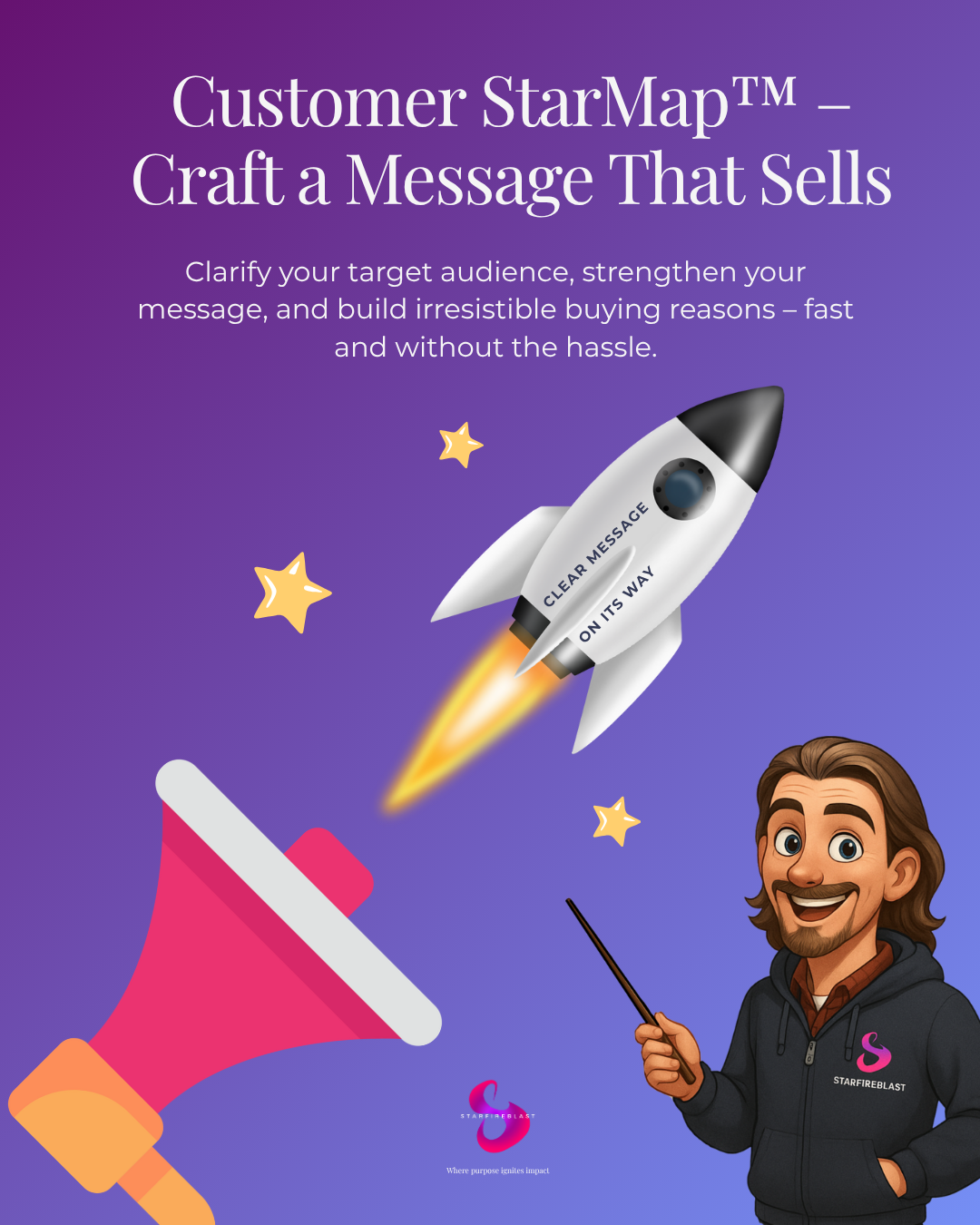
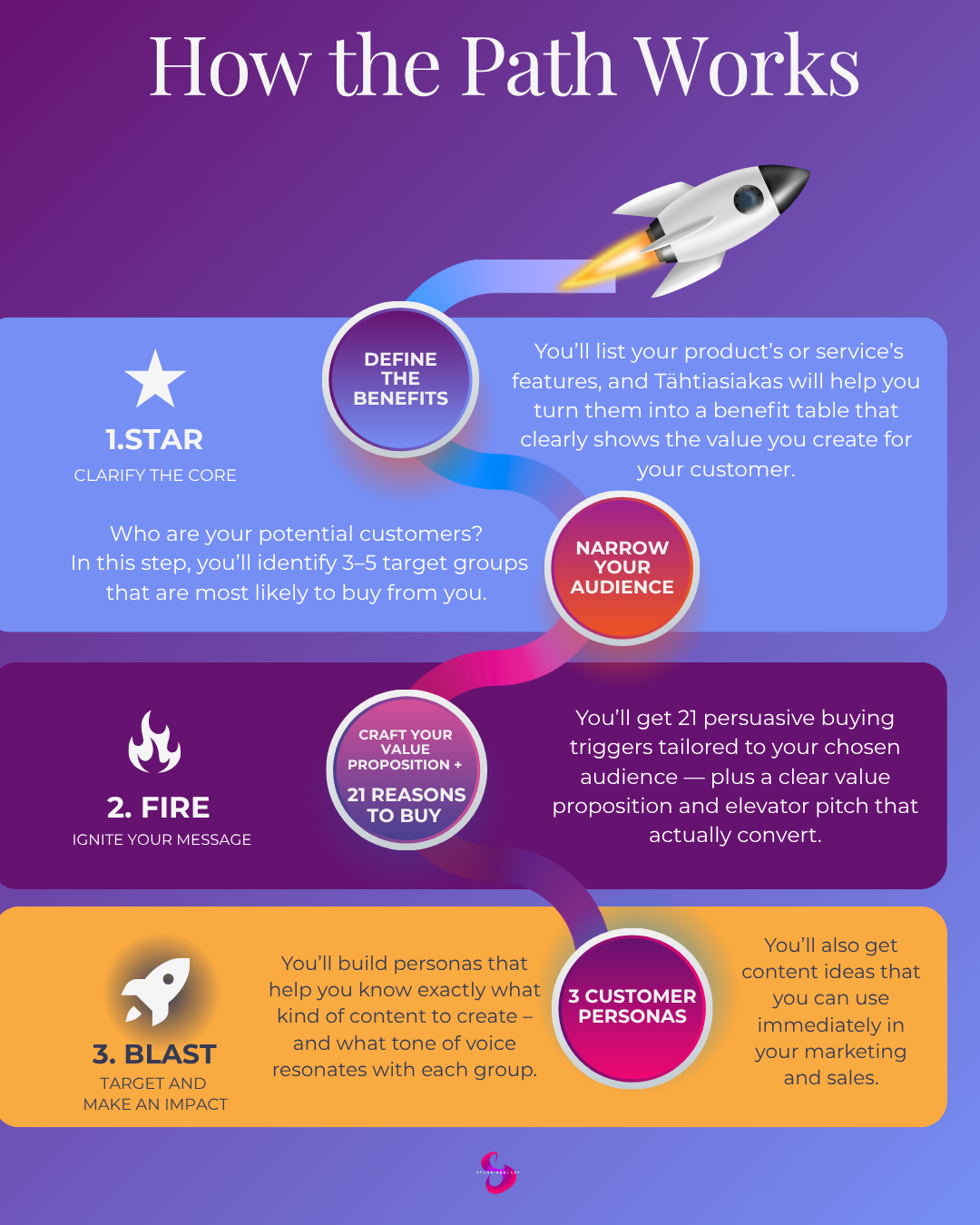
Starfireblast is built specifically for founders and creators who want to grow without burning out or chasing algorithms. If you are ready to operationalize the strategies in this article, the Customer StarMap™ Power Workshop gives you a structured process for clarifying who you are building for and what actions to take next. It is the foundation that makes every productivity hack more effective, because you stop spending energy on the wrong priorities entirely.
For founders looking to reduce workload through automation and smarter tooling, the guide on AI tools for entrepreneurs shows exactly which tools are delivering real results in 2026 and how to integrate them without adding complexity to your stack.
Frequently asked questions
What is the most important productivity hack for solo founders?
Protecting deep work blocks during your peak energy period is the most consistently effective method. Peak deep work produces significantly more quality output per hour than any other scheduling approach.
How do founders avoid burnout while staying productive?
Track your daily energy levels, maintain 7 to 8 hours of sleep, exercise regularly, and take at least one full day off per week. Burnout prevention requires treating recovery as a scheduled business activity, not an optional reward.
Are solo founders less successful than teams?
No. 51% of successful founders operate solo, and AI-augmented solo founders reach up to 3x median revenue compared to non-augmented peers. Solo is a design challenge, not a disadvantage.
How much deep work is sustainable per day for founders?
Up to 4 hours daily is sustainable for most founders. Maximum sustainable deep work beyond that threshold tends to produce diminishing returns and accelerates mental fatigue over time.