Entrepreneur productivity tips: work smarter in 2026
Solo entrepreneurs face a productivity paradox. Work harder and you risk burning out. Work without a clear system and you stay busy but make little real progress. 76% of workers face burnout risk, and entrepreneurs are not immune. The good news is that evidence-based frameworks exist to help you work smarter, protect your energy, and build a business that lasts. This article walks through prioritization, deep focus, daily routines, burnout prevention, and the surprising role of play in keeping your output high.
Table of Contents
- Identify what matters: Prioritization strategies for entrepreneurs
- Master your day: Proven deep work and focus techniques
- Keep your edge: Routines and rituals that fuel peak performance
- Preventing burnout: Sustainable strategies for lasting success
- Boosting morale: The surprising productivity power of play and flexibility
- Take the next step: Sustainable success starts with you
- Frequently asked questions
Key Takeaways
| Point | Details |
|---|---|
| Prioritization is power | Frameworks like Eat the Frog and MIT help entrepreneurs focus on what truly matters. |
| Deep work beats multitasking | Carving out 90-minute focus blocks can multiply output and cut distractions. |
| Build burnout barriers | Proactive workload monitoring and regular breaks are vital for long-term sustainability. |
| Routine shapes results | Consistent sleep and morning habits drive daily productivity gains. |
| Culture boosts performance | Integrating play and flexibility can increase team productivity by up to 30%. |
Identify what matters: Prioritization strategies for entrepreneurs
Not all tasks are equal. Spending eight hours on low-value work is not the same as spending three hours on the tasks that actually move your business forward. Task prioritization frameworks help entrepreneurs prevent overload and focus on high-impact work. The challenge is choosing the right framework for your situation.
Here are five frameworks worth knowing:
- Eat the Frog: Do your hardest or most dreaded task first thing in the morning.
- MIT (Most Important Task): Identify one to three tasks each day that must get done, no matter what.
- ABCDE Method: Label tasks A through E by consequence. A tasks are critical. E tasks can be eliminated.
- 1-3-5 Rule: Plan each day around one big task, three medium tasks, and five small tasks.
- Pareto Principle (80/20): Focus on the 20% of actions that produce 80% of your results.
| Framework | Best for | Pros | Cons |
|---|---|---|---|
| Eat the Frog | Procrastinators | Builds momentum early | Can feel heavy at the start |
| MIT | Daily clarity | Simple and fast | May miss longer-term priorities |
| ABCDE | Complex workloads | Detailed prioritization | Takes time to set up |
| 1-3-5 Rule | Mixed task days | Balanced structure | Rigid if plans change |
| 80/20 Rule | Strategic planning | High-leverage focus | Requires honest self-assessment |
For balancing business priorities across multiple roles, combining MIT with the 80/20 rule works well. Use 80/20 to identify your highest-leverage activities for the week, then use MIT to pick your daily focus from that shortlist.
Pro Tip: Review your task list every Sunday evening. Assign each item a framework label. You will start Monday with clarity instead of chaos. For more ideas, explore creative solopreneur tips and sustainable entrepreneurship advice to build habits that hold.
Master your day: Proven deep work and focus techniques
Knowing what to work on is only half the equation. You also need uninterrupted time to actually do it. Deep work means focused, distraction-free effort on cognitively demanding tasks. It is the opposite of checking email, attending back-to-back calls, or toggling between apps.
90-minute focus sessions align with your brain’s natural ultradian rhythm and are one of the most effective ways to boost output. Pair that with time-blocking, where you assign specific tasks to specific time slots, and your calendar becomes a productivity tool rather than a reactive schedule.

Context switching is a silent productivity killer. Each interruption costs 23 minutes to recover from. For solo entrepreneurs juggling multiple roles, this adds up fast.
Here is how to build a deep work practice:
- Schedule two 90-minute focus blocks per day, one in the morning and one in the afternoon.
- Turn off all notifications during those blocks. Use airplane mode if needed.
- Keep a distraction list nearby. When a random thought appears, write it down and return to your task.
- Use a consistent start ritual, such as making coffee or putting on headphones, to signal your brain it is time to focus.
- End each block with a two-minute review of what you completed.
“The ability to perform deep work is becoming increasingly rare at exactly the same time it is becoming increasingly valuable.” — Cal Newport
For more on how entrepreneur productivity success connects to focused work, and how to build resilience tips into your daily structure, these resources offer practical next steps. A resilient mindset for entrepreneurs also plays a direct role in sustaining focus over time.
Keep your edge: Routines and rituals that fuel peak performance
Focus techniques work best when your body and mind are prepared. Structured routines reduce decision fatigue and increase daily productivity. When you automate the small decisions, you preserve mental energy for the work that matters.
Foundational habits for entrepreneurs:
- Sleep: Seven to nine hours is not optional. Sleep deprivation cuts cognitive performance significantly.
- Hydration: Drink water before coffee. Even mild dehydration affects concentration.
- Movement: A 10-minute walk before your first focus block improves alertness and mood.
- Simple breakfast: Avoid decision fatigue by keeping breakfast predictable and nutritious.
- Morning ritual: A short, consistent sequence of two to three actions signals your brain that work is starting.
| Working style | Suggested routine |
|---|---|
| Early riser | 6am movement, 7am deep work block, 9am email |
| Night owl | 9am light tasks, 11am deep work block, 2pm second block |
| Parent or caregiver | Deep work during school hours, admin during nap times |
| Remote team lead | Async check-in first, then solo focus block before calls |
For action planning strategies that fit your schedule, and creative morning routines that actually stick, small adjustments to your daily structure can produce measurable results.
Pro Tip: Track your energy levels for one week. Note when you feel sharpest and when you feel sluggish. Then schedule your most demanding work during your peak window. Most people have a two to three hour window of peak cognitive performance each day.
Preventing burnout: Sustainable strategies for lasting success
Burnout is not just exhaustion. It is a state of chronic stress that leads to physical and emotional depletion, reduced performance, and disengagement. Burnout affects 76% of workers, and solo entrepreneurs are especially vulnerable because there is no team to absorb the overflow.
Practical anti-burnout tactics:
- Monitor your workload: Track hours and task volume weekly. If you consistently exceed your planned hours, something needs to change.
- Delegate or outsource: Identify tasks that do not require your specific skills. Hand them off. Automation and delegation are essential for sustainable businesses.
- Set non-negotiable boundaries: Define your work hours and protect them. Communicate them to clients and collaborators.
- Automate repetitive tasks: Use tools to handle scheduling, invoicing, and follow-ups so your attention stays on high-value work.
- Celebrate wins: Acknowledge progress, even small steps. Recognition, even self-directed, reinforces motivation.
Stat to know: 76% of employees report burnout at work. For solo founders, the number is likely higher because there is no built-in support structure.
For a deeper look at burnout prevention tactics used by leaders in high-demand fields, the patterns are consistent: boundaries, systems, and recovery time are non-negotiable. Explore automation tips for entrepreneurs to reduce the manual load on your plate.
Pro Tip: Calculate your utilization rate each week. Divide billable or focused hours by total working hours. If you are consistently above 80%, you are in the burnout danger zone. Adjust before you hit the wall.
Boosting morale: The surprising productivity power of play and flexibility
Sustainable productivity is not just about systems and schedules. Culture matters too, even when your team is just you. Playfulness and humor can boost productivity by 30%, according to research on entrepreneurial well-being. That is not a trivial number.
Ways to bring play and flexibility into your work:
- Schedule unstructured time: Block 30 minutes a week with no agenda. Let your mind wander. Ideas often surface here.
- Use humor in team communication: A lighthearted message or a funny gif in a team chat reduces tension and builds connection.
- Rotate creative challenges: Give yourself or your team a low-stakes creative prompt once a week. It builds lateral thinking.
- Flexible scheduling: Let output define success, not hours logged. Flexible schedules increase satisfaction and reduce resentment.
- Celebrate small wins publicly: In a solo context, share progress with a peer group or community. External acknowledgment matters.
“Entrepreneurs who build joy and play into their work report higher resilience, better decision-making, and stronger long-term output.” — Forbes, 2025
For a broader look at human-centered productivity and why it outperforms grind-based approaches over time, the evidence is clear. Flexibility and positive culture are not soft perks. They are performance levers.
Take the next step: Sustainable success starts with you
The strategies in this article work. But applying them consistently requires clarity about who you are building for and why. That is where structure and support make the difference.
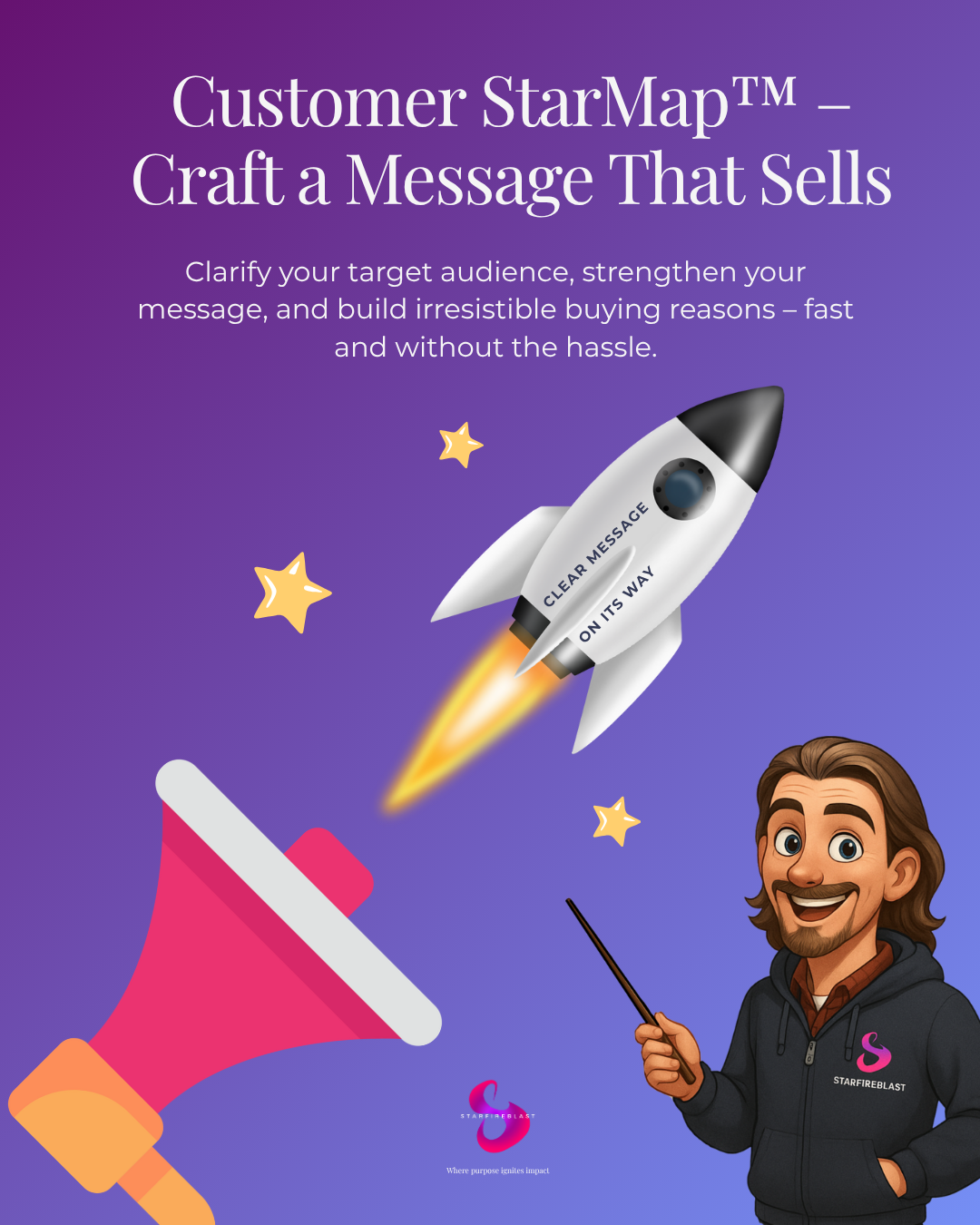
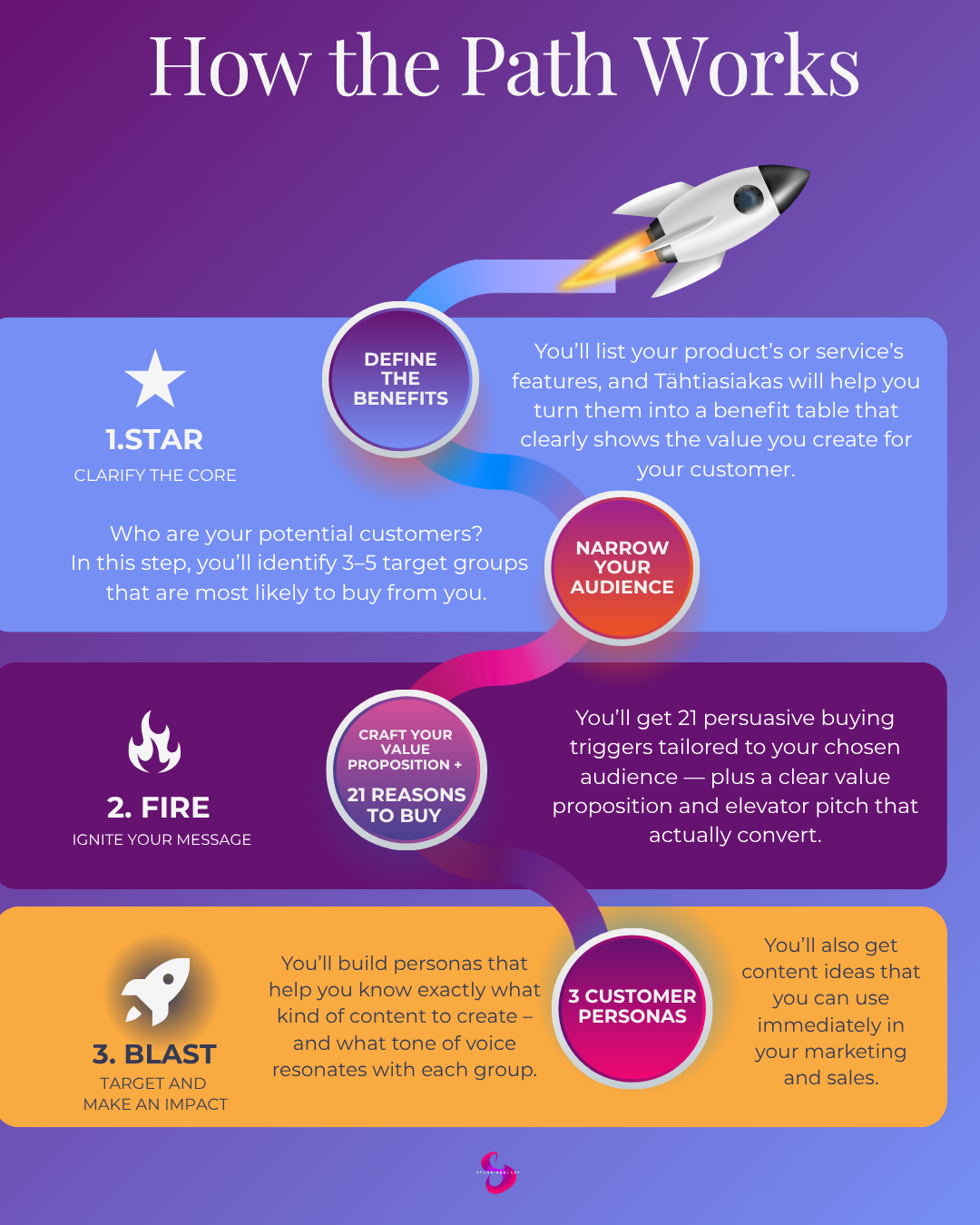
The Customer StarMap™ workshop at Starfireblast is built for solo entrepreneurs and small teams who want to move from scattered effort to focused, purposeful action. It helps you clarify your positioning, understand your audience, and build a foundation that makes every productivity strategy more effective. Explore more tools, frameworks, and resources at Starfireblast to support both your business goals and your personal well-being.
Frequently asked questions
What is the most effective productivity hack for solo entrepreneurs?
Prioritization frameworks such as Eat the Frog or MIT keep you focused on high-impact work rather than just staying busy. Pick one framework and apply it consistently for at least two weeks before switching.
How can I prevent burnout while growing my business?
Monitor your workload weekly, use automation and boundaries to manage overflow, and schedule recovery time as a non-negotiable part of your calendar. Burnout is easier to prevent than to recover from.
What daily routines actually improve productivity for founders?
Structured routines built around sleep, hydration, movement, and a short morning ritual reduce decision fatigue and set a productive tone for the day. Consistency matters more than complexity.
Is flexible scheduling really better for small teams?
Yes. Flexible schedules and playful culture increase both satisfaction and output, especially when success is measured by results rather than hours. Output-focused scheduling reduces resentment and improves focus quality.