Why build customer-first: sustainable growth for small teams
TL;DR:
- Customer-first focuses on understanding and serving customer needs rather than just increasing sales or product features.
- Building retention, organic referrals, and making informed product decisions drive sustainable growth for small teams.
- Avoid common pitfalls like scope creep and reactive cycles by setting clear boundaries and prioritizing strategic leadership.
Most small businesses assume growth is about reaching more people. Run more ads. Close more deals. Hire a sales rep. But customer-first companies consistently outperform growth-obsessed competitors, even with fewer resources. This is not a strategy reserved for enterprise brands with dedicated CX teams. Solo entrepreneurs and small teams can apply it immediately, and the returns compound quickly. This article breaks down what customer-first really means, what the data shows, and how to build it into your daily operations without losing your product vision or burning yourself out.
Table of Contents
- What does ‘customer-first’ really mean?
- Why building customer-first drives growth (with evidence)
- Hidden pitfalls: When ‘customer-first’ goes wrong
- How can small teams put customer-first into practice?
- Why the best small teams don’t just listen—they lead
- Ready to build a smarter customer-first strategy?
- Frequently asked questions
Key Takeaways
| Point | Details |
|---|---|
| Retention powers growth | Small teams achieve sustainable results by prioritizing existing customers over constant acquisition. |
| Balance is essential | A true customer-first mindset combines listening to customers with confidently leading with your vision. |
| Data proves the impact | Companies with strong customer experience strategies outperform their peers in profit and loyalty. |
| Pitfalls can be avoided | Understanding boundaries keeps your business agile and focused when implementing customer-centric practices. |
What does ‘customer-first’ really mean?
Customer-first is a business approach where decisions start with one question: what does our customer actually need? Not what is easiest to build. Not what generates the fastest sale. The customer’s outcome drives the process.
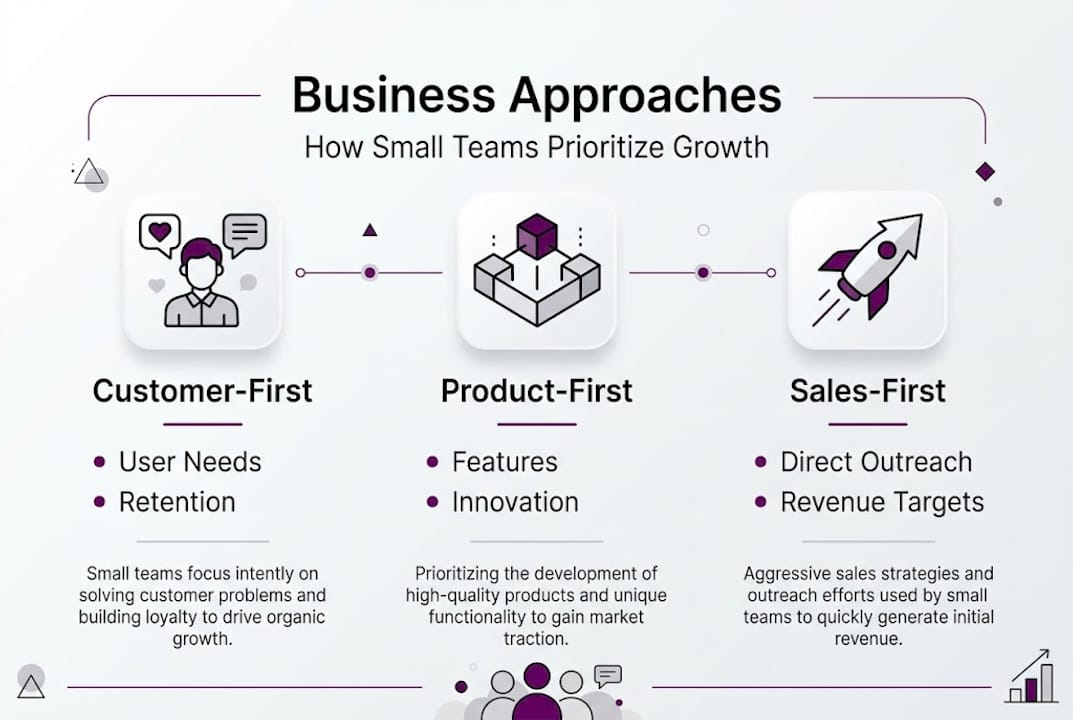
This is different from two other common approaches. A product-first team builds what they believe is best, then finds buyers. A sales-first team optimizes for conversion and revenue above all else. Customer-first sits between them, using real customer insight to guide both product development and go-to-market decisions.
| Approach | Primary focus | Risk for small teams |
|---|---|---|
| Product-first | Features and innovation | Builds things no one wants |
| Sales-first | Revenue and conversion | Short-term gains, high churn |
| Customer-first | Customer outcomes | Can slow innovation if misapplied |
One myth worth addressing: customer-first does not mean the customer is always right. That phrase leads to scope creep, unrealistic expectations, and teams that cannot say no. Customer-first means you deeply understand what your customer is trying to accomplish, and you make informed decisions that serve that goal. You still lead. You still set boundaries.
Here are practical ways this shows up for small teams:
- A solo consultant restructures her onboarding after noticing clients consistently confused by step three
- A two-person SaaS team deprioritizes a new feature because retention data shows existing users need better documentation first
- A creator adjusts her content calendar based on which topics drive the most meaningful replies, not just clicks
As noted by Fast Company, over-focusing on customer requests can distract from innovation, so balancing growth priorities is not optional. It is part of doing this well. The goal is a business that listens carefully and still leads with conviction.
Why building customer-first drives growth (with evidence)
With customer-first now defined, here is what the numbers actually show.
Retention is the most underrated growth lever for small teams. When you keep a customer longer, their lifetime value increases without additional acquisition cost. CX leaders outperform competitors by 60% in profitability, and retention-first approaches yield 2 to 3 times higher lifetime value compared to acquisition-focused models.

The startup data reinforces this. Fast-growing startups that invest early in customer experience are 33% more likely to adopt omnichannel support, achieve faster resolution times, and operate more efficiently as they scale.
| Metric | CX leaders | CX laggards |
|---|---|---|
| Profitability advantage | +60% | Baseline |
| Customer lifetime value | 2 to 3x higher | Baseline |
| Team growth rate | Faster scaling | Slower |
| Resolution efficiency | Higher | Lower |
Pro Tip: Add one intentional touchpoint per customer per quarter. A single check-in email, a follow-up call, or a personalized resource can measurably improve renewal rates. Start small. Be consistent.
Here are the top three ways customer-first drives sustainable growth for small teams:
- Lower churn. Customers who feel understood stay longer. Longer retention means more predictable revenue.
- Organic referrals. Satisfied customers refer others. Word-of-mouth from a strong customer experience costs nothing.
- Better product decisions. Real feedback reduces wasted development time and keeps you building what actually matters.
For more on building a business that holds up under pressure, the resilience strategies and sustainable entrepreneurship resources at Starfireblast go deeper into the structural side of this work.
Hidden pitfalls: When ‘customer-first’ goes wrong
Even with all the benefits, there is a flip side. Taking customer-first too literally creates real problems.
The most common mistake: saying yes to every request. A founder who builds every feature a vocal client asks for ends up with a bloated product that serves no one well. The product loses its core identity. The team loses focus. And the original customers who loved the simplicity leave.
Common pitfalls for small teams include:
- Scope creep from key accounts. One large client’s requests reshape your entire roadmap
- Averaging out feedback. Trying to satisfy everyone produces a product that excites no one
- Reactive product cycles. You stop shipping what you believe in and only respond to complaints
- Burnout from over-service. Unlimited availability is not a customer-first strategy. It is a path to exhaustion
- Delayed innovation. Constant iteration on existing features prevents building what customers will need next
“The most resilient businesses listen closely to customers but are not controlled by them. Vision requires protecting space to think ahead.” This distinction matters more as your team gets smaller.
As Fast Company reports, an over-focus on customer input can undercut the product vision that made your work worth buying in the first place. The antidote is intentional leadership skills for innovators: knowing when to act on feedback and when to hold the line.
Pro Tip: Create a simple filter for customer requests. Ask: does this serve 30% or more of our current users? Does it align with our core positioning? If no to both, log it and move on.
How can small teams put customer-first into practice?
To avoid the pitfalls while claiming the full benefits, here is exactly how you can build customer-first into your daily operations.
Five steps to implement a customer-first culture:
- Define your customer’s primary job. What outcome are they hiring you to deliver? Write it in one sentence. Reference it before every major decision.
- Build a feedback loop. Schedule a monthly review of support tickets, replies, and cancellation reasons. Look for patterns, not outliers.
- Use AI to personalize at scale. Small teams can use AI tools for entrepreneurs to automate follow-ups, segment audiences, and surface retention risks before they become churn.
- Set response standards. Define how fast you respond and what channels you use. Customers value consistency more than speed alone.
- Review your retention metrics quarterly. SaaS benchmarks show a median renewal rate of 91%, gross revenue retention of 88% for teams at the $5 to $20 million ARR range, and net revenue retention of 101%. Use these as reference points even if you are pre-revenue.
Quick wins for solopreneurs:
- Send a short survey after every project or purchase
- Add a personal note to your first follow-up email
- Track which customers refer others and learn what they value most
- Use AI in branding to maintain a consistent voice across touchpoints without extra hours
- Read creative entrepreneurship tips to stay grounded in your original purpose as your customer base grows
Empirical data on CX results confirms that these practices are not just good habits. They directly connect to profitability and growth rate over time.
Why the best small teams don’t just listen—they lead
Here is what most guides on customer-first miss entirely.
Big-company playbooks tell you to build a CX team, run NPS surveys quarterly, and create journey maps. That framework was built for organizations with 50 people minimum. When solo founders copy it, they end up reactive. Every customer complaint becomes a crisis. Every request becomes a pivot.
The strongest small businesses do something different. They use customer insight as an input, not a directive. They listen carefully, then make a call. They know their solo founder strategy must include a point of view, not just responsiveness.
Integrating purpose with customer understanding is what builds an enduring brand. Purpose tells you which customers to serve. Customer insight tells you how to serve them better. Neither works without the other.
The hardest part is turning feedback into a product direction without losing your original conviction. Most founders either ignore feedback or surrender to it. The path worth taking is using what you hear to sharpen your vision, not replace it. Lead boldly. Stay informed. That combination is rare, and it is exactly why it works.
Ready to build a smarter customer-first strategy?
If you have made it this far, you already think differently about growth than most small business owners. You know retention matters more than acquisition at this stage. You know that listening and leading must coexist.
The next step is moving from insight to action. The Customer StarMap™ workshop at Starfireblast gives you a structured process for identifying who you are building for, what they truly need, and how to position your offer around that clarity. It is built specifically for solo entrepreneurs and small teams. Explore the full range of tools and frameworks at Starfireblast and start building a business that grows because it serves well.
Frequently asked questions
Is ‘customer-first’ only for big companies?
No. Customer-first approaches deliver outsized returns for solo entrepreneurs and small teams because retention and referrals matter more when acquisition budgets are limited.
What risks come with being too customer-focused?
Over-focusing on requests can dilute your vision and slow innovation. Balancing customer input with a clear product direction prevents this.
How do I measure success with a customer-first mindset?
Track renewal rates, retention percentages, and profit margins. Industry benchmarks show median renewal rates at 91% and net revenue retention at 101% for healthy SaaS businesses.
Can AI help my small team create better customer experiences?
Yes. Fast-growing startups using omnichannel support and AI-assisted tools resolve issues faster and scale more efficiently with smaller teams.