Creator Economy Drives €5.5B GDP Growth in Europe 2026
The creator economy has emerged as a transformative force reshaping how solo entrepreneurs and small creators build sustainable businesses. YouTube’s creator economy contributed over €5.5 billion to the EU’s GDP in 2022, demonstrating massive economic potential. This article explores how community-driven strategies and diverse monetization enable creators to achieve lasting success beyond chasing viral moments, offering practical guidance for sustainable growth for entrepreneurs in 2026.
Table of Contents
- Introduction To The Creator Economy
- Economic And Social Impact Of The Creator Economy In Europe
- The Creator Economy’s Transformation Of Work
- Sustainable Growth Through Community-Driven Support
- Common Misconceptions About The Creator Economy
- Practical Monetization Strategies And Brand Collaborations
- Innovations And Future Trends In The Creator Economy
- Conclusion And Next Steps For Creators
- Unlock Sustainable Growth With Starfireblast Solutions
- Frequently Asked Questions
Key Takeaways
| Point | Details |
|---|---|
| Economic powerhouse | Creator economy generated over €5.5 billion GDP and 150,000 jobs across the EU. |
| Community wins | Sustainable success comes from authentic relationships, not algorithm-chasing. |
| Diverse revenue | Multiple income streams and brand partnerships enable creator autonomy. |
| Tech evolution | AI and Web3 open new monetization paths for forward-thinking creators. |
| Purpose matters | Clear brand identity and community focus drive long-term creator longevity. |
Introduction to the Creator Economy
The creator economy represents a digital platform ecosystem where individuals monetize creative work directly. The creator economy is a structural shift reshaping work and business models for solo entrepreneurs, moving beyond traditional employment to creator-led ventures. Solo entrepreneurs now access global audiences through platforms like YouTube, Instagram, Substack, and Patreon without intermediaries.
This ecosystem empowers small creators worldwide with unprecedented autonomy and opportunity. You can build a business around your unique expertise, values, and creative vision. The scale is remarkable: millions of creators globally generate billions in economic value while maintaining creative control.
The ecosystem comprises five core components:
- Platforms: Social media, video sharing, and membership sites distribute content and connect creators with audiences
- Monetization tools: Payment processors, subscription services, and digital product platforms enable diverse revenue streams
- Community infrastructure: Discord servers, forums, and email lists foster direct creator-audience relationships
- Creative tools: Cameras, editing software, AI assistants, and analytics help produce and optimize content
- Support networks: Coaching, courses, and peer communities provide guidance for creative entrepreneurship tips
Understanding this ecosystem helps you navigate opportunities strategically. Success requires more than technical skills. You need clarity on who you serve, why your work matters, and how to build sustainable relationships. This foundation supports purpose-driven entrepreneurship that withstands platform changes and market shifts.
Economic and Social Impact of the Creator Economy in Europe
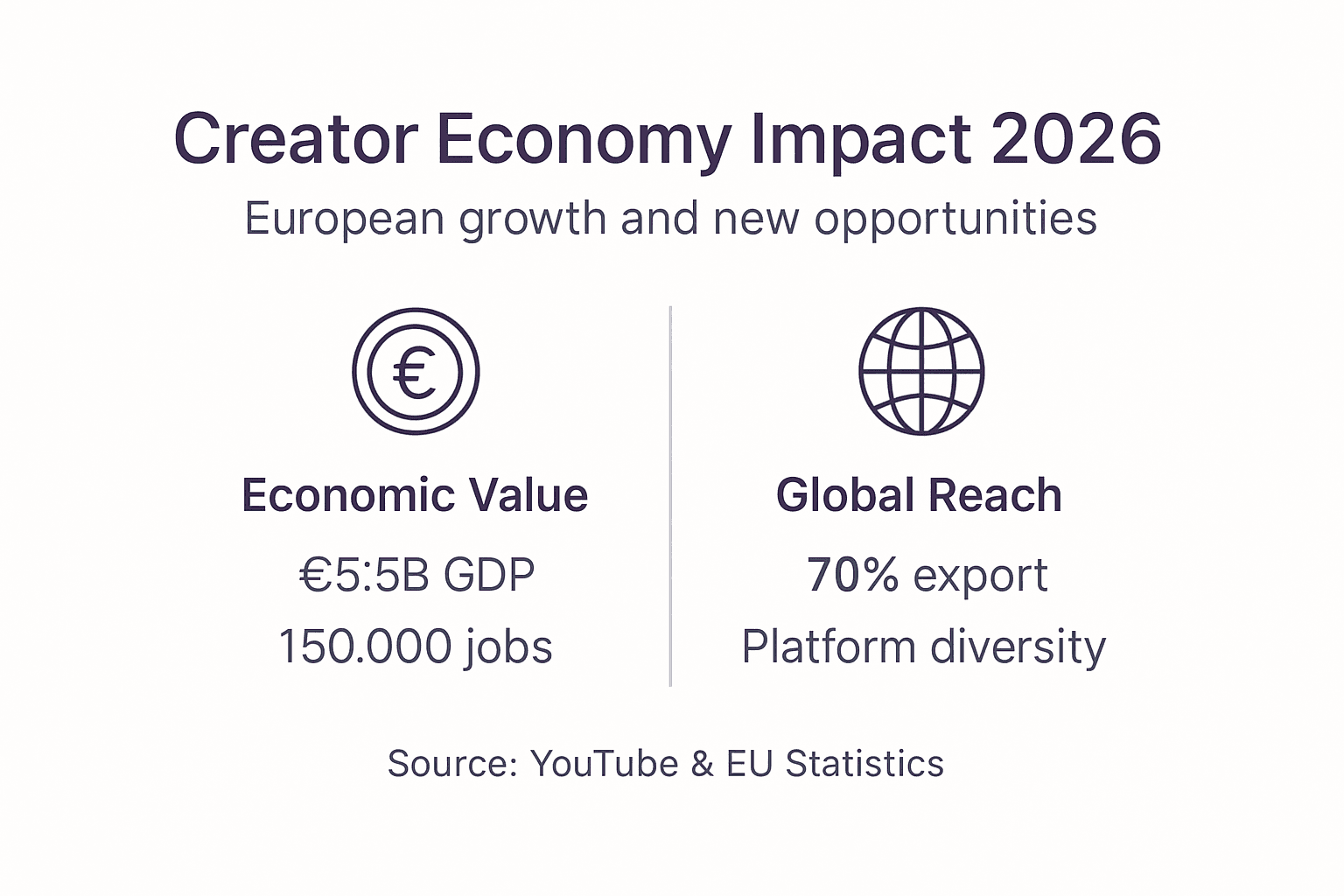
The creator economy delivers measurable economic value across Europe. YouTube’s creator ecosystem contributed over €5.5 billion to EU GDP and 150,000 jobs, representing significant employment and innovation. These numbers capture only one platform, suggesting total creator economy impact far exceeds reported figures.

Global reach defines modern creator success. 70% of European creators on YouTube export content internationally, breaking geographic barriers that limited traditional businesses. You can serve audiences worldwide from your home studio, multiplying revenue potential exponentially.
European institutions recognize this economic force. The EU allocates €2.28 billion 2021-2027 for creative industries and cultural heritage, supporting infrastructure and innovation. Cultural sectors show above-average growth and strengthen European identity, outpacing many traditional industries.
| Impact Area | Measurement | Significance |
|---|---|---|
| GDP Contribution | €5.5B+ annually | Major economic driver across EU nations |
| Job Creation | 150,000+ direct jobs | Youth employment and entrepreneurship |
| Export Activity | 70% international reach | Breaks traditional geographic limits |
| Growth Rate | Above-average sector growth | Outperforms many traditional industries |
| EU Investment | €2.28B (2021-2027) | Strategic priority for economic development |
Beyond economics, the creator economy strengthens social cohesion. Young people gain viable career paths outside traditional employment. Regional cultures reach global audiences. Niche communities find representation and connection. These social benefits compound economic value, making creator support a strategic priority for policymakers and EU funding for creative industries.
The Creator Economy’s Transformation of Work
The creator economy fundamentally disrupts traditional employment models. Instead of trading time for wages, you build equity in your own brand and audience. The creator economy enables a shift from traditional jobs to autonomous creator businesses with benefits and limits, offering unprecedented control over your professional destiny.
Key benefits include:
- Creative autonomy: You decide what to create, when to publish, and how to monetize without corporate approval
- Flexible income: Multiple revenue streams reduce dependence on single employers or clients
- Location independence: Digital platforms enable work from anywhere with internet access
- Direct audience relationships: You own connections with supporters, building durable business assets
- Values alignment: Your work can reflect personal purpose and contribute to causes you care about
Challenges exist alongside opportunity. Platform dependencies create vulnerability to algorithm changes and policy shifts. Income volatility tests financial planning skills. Lack of employer benefits means you manage health insurance and retirement independently. These realities require strategic thinking about business evolution for entrepreneurs.
The creator economy overlaps significantly with freelance and gig work. Many creators start by offering services before building content-based businesses. Others blend client work with audience building. This flexibility allows experimentation and gradual transitions from traditional employment.
Pro Tip: Build your brand and email list independently of platforms. While social media drives discovery, owning direct communication channels protects you from algorithm changes and platform shutdowns. Invest time in offline relationships and reputation that transcend digital tools.
Sustainable Growth through Community-Driven Support
Authentic community building delivers more stable growth than chasing viral moments. Ad-driven models prioritize algorithm optimization and attention capture, creating exhausting content treadmills. Community-driven approaches focus on relationships, shared values, and consistent value delivery.
Community-driven growth yields higher creator retention and revenue stability than ad-driven models. When you prioritize community, metrics shift from vanity numbers to meaningful engagement. Comments become conversations. Followers become collaborators. Customers become advocates.
Measure authentic community health through:
- Engagement rate: Comments, shares, and replies relative to audience size
- Response quality: Depth and thoughtfulness of audience interactions
- Repeat participation: How often members return and contribute
- Member initiatives: Community-led projects and peer support
- Revenue per member: Value exchange reflecting trust and perceived benefit
Consider a creator who shifted from daily social posts to weekly newsletters. Audience size dropped 30%, but revenue doubled. Why? Deeper relationships with fewer people created stronger trust and willingness to invest. This pattern repeats across successful community-driven brands.
Building community means showing up consistently, listening actively, and creating spaces where members support each other, not just consume your content. The creator becomes a facilitator, not just a performer.
Strategies for fostering authentic community:
- Define shared purpose: Articulate what brings your audience together beyond consuming content
- Create interaction opportunities: Live sessions, workshops, and forums enable connection
- Celebrate member contributions: Highlight community voices and achievements regularly
- Maintain consistent presence: Reliability builds trust more than spectacular but sporadic efforts
- Facilitate peer connections: Help members meet and support each other directly
The customer StarMap for visibility helps clarify who you serve and why they gather around your work. This clarity informs every community decision.
Pro Tip: Quality interactions matter more than follower counts. A thousand engaged community members who know your name and trust your guidance create more sustainable income than a million passive followers who scroll past your content.
Common Misconceptions about the Creator Economy
Several myths prevent creators from fully engaging with proven growth strategies. Correcting these misconceptions accelerates your progress and prevents wasted effort.
Myth 1: Viral content drives success. Reality: 62% of successful creators value community engagement over viral content for sustainable growth. Viral moments provide temporary visibility but rarely convert to lasting relationships. Consistent value delivery builds durable businesses.
Myth 2: Ad-based growth is the best path. Reality: Community monetization models yield more stable revenue. Advertising income fluctuates with platform changes and market conditions. Memberships, products, and services create predictable recurring revenue.
Myth 3: Small creators cannot reach global audiences. Reality: 70% of European YouTube creators export content internationally. Digital platforms eliminate traditional distribution barriers. Your niche expertise can serve worldwide audiences regardless of company size.
Myth 4: Creator economy is a short-term influencer trend. Reality: This represents a structural shift in how people work and businesses operate. The creator economy continues expanding as platforms mature and tools improve. Building creator skills now positions you for long-term opportunity.
Myth 5: AI and Web3 are too complex for small creators. Reality: These technologies offer accessible new monetization paths. User-friendly tools make adoption straightforward. Early movers gain competitive advantages as these innovations mature.
Understanding reality versus myth helps you allocate time and energy wisely. Focus on fundamentals like audience understanding, consistent value creation, and relationship building. These principles remain constant even as platforms and technologies evolve.
Practical Monetization Strategies and Brand Collaborations
Diversifying income protects against platform volatility and market shifts. Solo creators can combine multiple revenue streams to build stable, sustainable businesses.
Core monetization models include:
- Advertising revenue: Platform payments based on views and clicks
- Membership subscriptions: Recurring payments for exclusive content and community access
- Sponsorships: Brand partnerships promoting products to your audience
- Digital products: Courses, templates, and tools solving specific problems
- Services: Consulting, coaching, or done-for-you work
- Physical products: Merchandise or curated items aligned with brand
| Monetization Type | Revenue Potential | Authenticity Impact | Required Effort |
|---|---|---|---|
| Advertising | Low to moderate | Minimal if aligned | Low ongoing |
| Memberships | Moderate to high | High with value delivery | High ongoing |
| Sponsorships | Moderate to high | Variable by partner fit | Moderate per deal |
| Digital Products | High | High with quality | High upfront, low ongoing |
| Services | High | Very high with expertise | High per client |
| Physical Products | Moderate | High with brand alignment | High operational |
Brand collaborations can yield 20-35% revenue growth with engagement rates of 3-7% for mid-tier creators. Successful partnerships require strategic evaluation beyond payment amounts.
Evaluate brand partnerships using:
- Audience fit: Does the product genuinely serve your community needs?
- Values alignment: Do brand practices match your stated principles?
- Creative control: Can you maintain authentic voice and presentation?
- Engagement impact: Will promotion strengthen or weaken audience trust?
- Revenue ROI: Does compensation justify time and reputational investment?
Balance authenticity with revenue by promoting only products you genuinely use or would recommend. Disclose all partnerships clearly. Limit sponsored content to maintain trust. Your reputation is your most valuable asset. Protect it carefully when considering growth strategies for creators.
Successful small creator partnerships often involve smaller brands seeking authentic voices over celebrity reach. These collaborations allow more creative freedom and deeper integration with your content strategy.
Innovations and Future Trends in the Creator Economy
Emerging technologies reshape creator opportunities and competitive dynamics. Understanding these trends helps you adapt strategically and maintain relevance in evolving markets.
AI tools enable creators to automate repetitive tasks and personalize content at scale. You can now generate draft scripts, edit videos faster, analyze audience data, and optimize publishing schedules. AI and Web3 adoption expected to increase creator revenues by 15-25% over next 3 years, offering significant competitive advantages to early adopters.
Web3 technologies introduce decentralized monetization models. Blockchain enables direct creator-audience transactions without platform intermediaries. NFTs create new digital product categories. Token communities reward participation and co-creation. These innovations remain experimental but show promise for empowering creator autonomy.
Key innovations shaping 2026 and beyond:
- AI content assistants: Draft generation, editing automation, and personalization engines
- Decentralized platforms: Blockchain-based alternatives to traditional social media
- Token economies: Cryptocurrency rewards for community participation and contribution
- Virtual experiences: Metaverse events and digital goods expanding revenue opportunities
- Advanced analytics: Predictive insights guiding content strategy and audience development
European regulations increasingly address digital content, copyright, and platform responsibilities. The Digital Services Act and AI Act establish frameworks protecting creators while ensuring platform accountability. Stay informed about regulatory changes affecting your work and monetization options.
Platform dynamics continue evolving rapidly. New entrants challenge established networks. Features emerge and disappear based on user adoption. Algorithm changes shift visibility patterns overnight. This volatility requires adaptability and strategic diversification across multiple platforms and owned channels.
Pro Tip: Monitor trends actively but adopt selectively. Not every innovation suits your business model or audience. Focus on technologies solving real problems in your workflow or creating genuine value for your community. Avoid chasing hype at the expense of fundamentals.
Conclusion and Next Steps for Creators
The creator economy empowers solo entrepreneurs to build autonomous, sustainable businesses aligned with personal values and creative vision. Success requires moving beyond viral chasing to community building, purpose clarity, and strategic monetization.
Your journey forward:
- Build authentic community: Prioritize relationships and consistent value over follower counts and vanity metrics
- Diversify income streams: Combine memberships, products, services, and strategic partnerships for stability
- Adopt enabling technologies: Experiment with AI tools and emerging platforms to improve efficiency and reach
- Clarify brand purpose: Define who you serve, why your work matters, and how you create unique value
- Maintain adaptability: Stay informed about trends and regulations while protecting core business fundamentals
The creator economy continues expanding in 2026 and beyond. Economic data, platform innovation, and changing work preferences support long-term growth. Now is the time to invest in skills, relationships, and business infrastructure supporting clarifying business purpose and action planning for sustainable progress.
Embrace continuous learning. The landscape evolves constantly, but principles of audience understanding, value creation, and authentic relationship building remain constant. Your unique perspective and expertise have value. The creator economy provides tools to share that value sustainably.
Unlock Sustainable Growth with Starfireblast Solutions
Transforming creator economy insights into action requires clarity on messaging and positioning. Many solo entrepreneurs struggle to articulate their unique value or identify ideal audiences clearly.
Starfireblast helps you clarify who you serve and why your work matters before scaling tactics. Our messaging clarity fixes address common positioning challenges preventing creators from connecting with right-fit audiences.
The platform combines customer understanding tools, brand positioning frameworks, and AI-assisted execution support. You gain practical resources for brand positioning step by step clear messaging aligned with community-driven brand building principles.
Explore workshops and resources designed for creators building sustainable businesses without burnout. Starfireblast supports planetary productivity where growth serves human well-being, economic viability, and ecological responsibility simultaneously.
Frequently Asked Questions
What is the creator economy and why is it important for solo creators?
The creator economy is a digital ecosystem where individuals monetize creative work directly through platforms and communities. It matters because it enables autonomous business building without traditional employment constraints, offering creative freedom and flexible income potential.
How can small creators build sustainable income without relying on ads?
Diversify revenue through memberships, digital products, services, and strategic brand partnerships. Focus on building authentic community relationships that support recurring revenue models. Multiple income streams protect against platform volatility and market changes.
What role does community play in long-term creator success?
Community provides stability, recurring revenue, and brand resilience beyond algorithm changes. Authentic relationships generate higher engagement, stronger trust, and willingness to invest in your offerings. Community-driven models outperform ad-based approaches for sustainable growth.
How are AI and Web3 changing opportunities for creators?
AI automates repetitive tasks, personalizes content, and improves efficiency, potentially increasing revenues 15-25%. Web3 enables decentralized monetization and direct audience transactions. Both technologies offer competitive advantages to creators who adopt them strategically.
What common mistakes should new creators avoid in this economy?
Avoid chasing viral content over community building, relying solely on advertising revenue, and neglecting brand clarity. Don’t spread yourself across too many platforms without strategy. Focus on fundamentals like audience understanding, consistent value delivery, and authentic relationship building before scaling tactics.
Recommended
- Business Evolution Explained: Sustainable Growth for Entrepreneurs – Starfireblast
- Clarifying Business Purpose: Pathway to Sustainable Growth – Starfireblast
- Planetary Productivity Explained: Sustainable Progress for Entrepreneu – Starfireblast
- Mission-Driven Startups: Fueling Sustainable Impact – Starfireblast