Brand clarity explained: guide for solo entrepreneurs 2026
Most solo entrepreneurs believe brand clarity means having a polished logo and a catchy tagline. But when your business stalls despite beautiful visuals, you realize something deeper is missing. True brand clarity is the strategic foundation that drives every decision, message, and customer interaction. It’s what separates businesses that grow sustainably from those that chase trends and burn out. This guide reveals what brand clarity actually means, proven frameworks to achieve it, common pitfalls to avoid, and practical steps to embed it into your business for meaningful growth in 2026.
Table of Contents
- What Is Brand Clarity And Why It Matters
- Core Frameworks To Achieve Brand Clarity
- Navigating Brand Clarity Challenges And Nuances
- Applying Brand Clarity For Sustainable Growth
- Discover The Customer Starmap™ Ai Power Workshop
- Frequently Asked Questions
Key takeaways
| Point | Details |
|---|---|
| Brand clarity is strategic foundation | It goes beyond visuals to define your brand’s essence, values, and messaging coherence. |
| Use proven frameworks | The Brand Wheel, Golden Circle, and Quarterly Clarity Method provide actionable structure. |
| Watch for brand drift | Growth and pivots can weaken your focus without regular clarity reviews. |
| Regular audits maintain focus | Quarterly reviews keep messaging consistent and aligned with your purpose. |
| Clear purpose drives growth | 85% of entrepreneurs succeed within 3 months after clarifying brand purpose. |
What is brand clarity and why it matters
Brand clarity is your coherent, consistent understanding of what your brand stands for, who it serves, and why it exists. It’s not your logo, color palette, or website design. Those are expressions of clarity, not clarity itself. When you have genuine brand clarity, every piece of content, every product decision, and every customer interaction flows from the same strategic core.
The benefits compound quickly. Customers trust you more because your messaging resonates consistently. Your team stays motivated because they understand the mission. You make faster, better decisions because you know what aligns with your brand and what doesn’t. Research shows that brand clarity impacts motivation and creates meaningful connection to your business, especially for solo entrepreneurs juggling multiple roles.
Many entrepreneurs treat brand clarity as a one-time exercise. They define their values during a weekend workshop, then never revisit them. But clarity isn’t static. As your business evolves, your market shifts, and your customers change, your brand clarity must adapt while maintaining its core essence. This ongoing process is what separates sustainable businesses from those that lose direction.
Understanding why brand clarity matters starts with recognizing these key elements:
- Your brand essence: the single idea at your core
- Your values: the principles guiding every decision
- Your benefits: the transformation you deliver to customers
- Your messaging: how you communicate all of this consistently
“Brand clarity is the difference between shouting into the void and speaking directly to the people who need you most. It transforms marketing from guesswork into strategic conversation.”
Without clarity, you’ll chase every trend, pivot constantly, and exhaust yourself trying to be everything to everyone. With it, you build a business that feels aligned, attracts the right customers, and grows in ways that support your life instead of consuming it.
Core frameworks to achieve brand clarity
The Quarterly Clarity Method gives you a repeatable 90 day review cycle. Every quarter, you assess three areas: performance metrics, competitor positioning shifts, and messaging consistency across channels. This prevents drift before it becomes a crisis. You’re not overhauling your brand every three months. You’re making small adjustments that keep you aligned with your core purpose while responding to real market feedback.

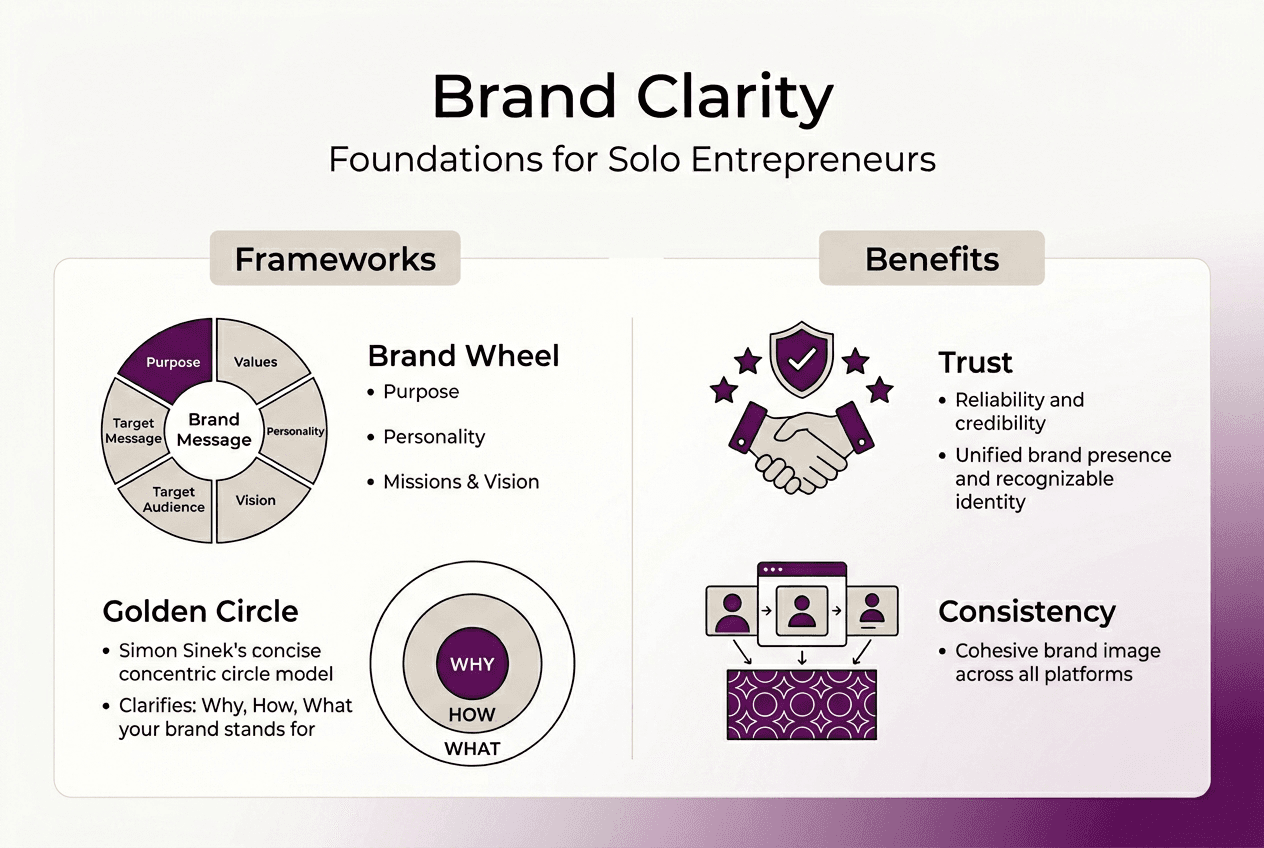
The Brand Wheel Framework puts your brand essence at the center, with spokes radiating outward to values, benefits, personality traits, and proof points. This visual model helps you see how every element connects back to your core. When evaluating a new product idea or marketing message, you can literally trace it back to the center to check alignment.
Aaker’s Brand Personality Dimensions identifies five personality archetypes: sincerity, excitement, competence, sophistication, and ruggedness. Your brand might blend two or three, but understanding your dominant traits helps you communicate consistently. A brand rooted in sincerity and competence shouldn’t suddenly adopt edgy, rebellious messaging just because it’s trending.
The Golden Circle model, developed by Simon Sinek, structures your clarity around three questions. Why: your purpose and belief. How: your unique process or approach. What: your actual products or services. Most businesses communicate from the outside in, starting with what they sell. Clarity comes from reversing this, starting with why you exist and letting that drive everything else.
Here’s how these frameworks compare:
| Framework | Primary Focus | Complexity | Best Use Case | | — | — | | Quarterly Clarity Method | Ongoing maintenance | Low | Regular brand health checks | | Brand Wheel | Visual brand architecture | Medium | Initial brand definition | | Aaker Personality Dimensions | Brand character | Low | Messaging tone development | | Golden Circle | Purpose and motivation | Medium | Strategic positioning |
To implement these frameworks effectively:
- Start with the Golden Circle to define your why, how, and what in one sitting.
- Build your Brand Wheel over a week, refining each spoke with customer feedback.
- Identify your top two Aaker personality dimensions through team discussion or surveys.
- Schedule your first Quarterly Clarity Method review 90 days out with specific metrics to track.
- Document everything in a single brand clarity guide that your whole team can access.
Pro Tip: The biggest mistake is treating these frameworks as creative exercises instead of strategic tools. Don’t brainstorm aspirational values you wish you had. Document the actual principles already guiding your best decisions. Your real brand clarity already exists in your actions. These frameworks just help you articulate and systematize it.
These methods work because they force specificity. Vague statements like “we value quality” don’t create clarity. Specific commitments like “we spend 20% more time on research than competitors because we believe informed decisions prevent costly mistakes” do. That’s the difference between branding theater and brand positioning that drives business decisions.
When you combine these frameworks with values driven branding, you create a clarity system that evolves with your business while maintaining strategic coherence.
Navigating brand clarity challenges and nuances
Brand drift happens when you lose focus during growth or pivots. You start serving a new customer segment without adjusting your messaging. You add products that don’t align with your core values. You hire team members who don’t understand your brand essence. Each small deviation feels insignificant, but they compound into confusion. Your original customers don’t recognize you anymore, and new prospects can’t figure out what you stand for.
Brand dilution weakens your equity through poor extensions or inconsistent messaging. A productivity tool brand that suddenly launches a meditation app without connecting it to their core promise confuses their audience. A consultant known for direct, no-nonsense advice who starts posting inspirational quotes erodes their authority. Brand dilution and drift often stem from chasing revenue opportunities without strategic filters.
Over narrowing creates different problems. You define your niche so specifically that you limit future growth. You become so committed to one positioning that you can’t pivot when the market shifts. You exclude potential customers who would benefit from your work but don’t fit your rigid definition. The goal is focused clarity, not constraining specificity.
Category Defiant Distinctiveness offers a powerful alternative. Instead of fitting neatly into existing categories or creating confusion by defying all norms, you strategically challenge specific conventions while maintaining clarity about your core value. You stand out by being different in ways that matter to your audience, not just different for the sake of novelty.
Signs your brand clarity is compromised:
- Your elevator pitch changes depending on who’s asking
- Team members describe your brand differently
- Customer feedback reveals confusion about what you actually do
- You struggle to decide which opportunities align with your business
- Your messaging feels generic and could apply to any competitor
- You’re exhausted trying to maintain multiple brand voices across platforms
Pro Tip: Conduct a messaging audit every quarter by collecting all your customer facing content from the past 90 days. Read it as if you’re a new prospect. Do you see consistent themes, values, and positioning? Or does it feel like three different companies? This simple exercise reveals drift before it damages your reputation. Compare your current messaging against your documented brand essence and note any deviations.
“The strongest brands maintain clarity not by resisting change, but by filtering every change through their core purpose. Evolution and consistency aren’t opposites. They’re partners in sustainable growth.”
When you spot early signs of drift or dilution, use messaging clarity fixes to realign quickly. The longer you wait, the harder it becomes to restore coherence without confusing your existing audience. Small, consistent corrections beat major rebranding efforts every time.
Applying brand clarity for sustainable growth
Translating clarity into action requires systematic implementation. Here’s your step-by-step process:
- Define your brand purpose by completing this statement: “We exist to help [specific audience] achieve [specific transformation] because [core belief about the world].”
- Identify your three non-negotiable values by reviewing your toughest business decisions and finding the principles that guided them.
- Articulate your positioning by naming who you serve, what problem you solve, how you’re different, and why it matters.
- Create your messaging framework with core messages for each audience segment, supporting proof points, and tone guidelines.
- Document everything in a living brand clarity guide that you update quarterly based on real market feedback.
Integrate clarity into daily operations:
- Filter every marketing decision through your brand purpose before execution
- Train team members using real examples of on-brand and off-brand choices
- Review customer communications monthly to ensure messaging consistency
- Use your values as criteria when evaluating partnerships or collaborations
- Build brand clarity checkpoints into your product development process
The Quarterly Clarity Method keeps you aligned during growth. Every 90 days, block three hours to review performance data, competitor positioning changes, and messaging consistency. Ask: Are we still serving our core audience? Do our values still guide our decisions? Is our messaging landing as intended? Make small adjustments before small drift becomes major confusion.
Your brand story development must align with your clarified purpose and values. Stories create emotional resonance, but only when they authentically reflect your brand essence. Don’t manufacture origin stories that sound impressive but don’t connect to your actual values. Share the real moments that shaped your business beliefs.
Values driven branding boosts trust because customers can verify your claims through your actions. When you say you value transparency, your pricing should be clear. When you claim customer focus, your support should be responsive. Alignment between stated values and lived values is what transforms clarity into credibility.
Practical tools accelerate this process. Workshops provide structured time to work through frameworks with expert guidance. Templates ensure you don’t miss critical elements. Feedback loops from customers and team members reveal blind spots. The branding process for entrepreneurs works best when you combine self-reflection with external input.
Research shows that 85% of entrepreneurs succeed within 3 months after clarifying their brand purpose. This isn’t magic. It’s the compound effect of making aligned decisions consistently. Each choice reinforces your positioning. Each message strengthens recognition. Each customer interaction builds trust.
The key is starting now, not waiting for perfect conditions. Your brand clarity will improve through application, not just contemplation. Document your current understanding, test it in the market, gather feedback, and refine. This cycle of clarity, action, learning, and adjustment is how sustainable brands are built.
Discover the customer StarMap™ AI Power Workshop
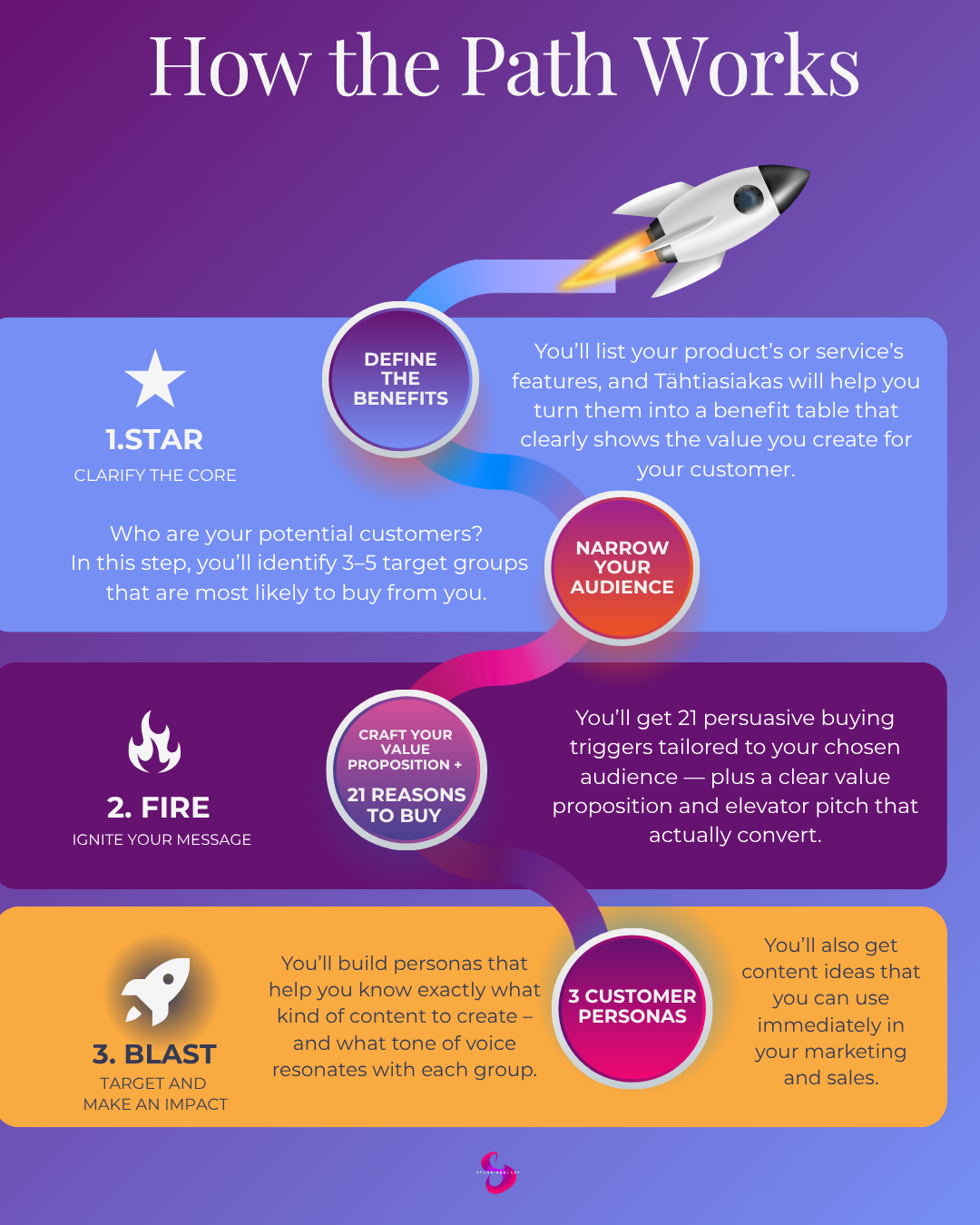
Achieving brand clarity becomes significantly faster when you combine proven frameworks with AI powered insights. The Customer StarMap™ AI Power Workshop helps solo entrepreneurs and small teams gain deep clarity about their brand positioning and customer alignment in a structured, guided session.
This workshop uses AI to analyze your current messaging, identify gaps between your intended brand and how customers actually perceive you, and refine your strategic focus. You’ll walk away with a clear brand positioning statement, validated customer insights, and messaging frameworks you can implement immediately. It’s designed specifically for entrepreneurs who want expert guidance without the agency price tag or timeline.
If you’ve worked through the frameworks in this guide and want accelerated progress with personalized feedback, the Customer StarMap™ workshop provides that next level of clarity and confidence.
Frequently asked questions
What is the simplest way to define brand clarity?
Brand clarity is knowing exactly what your brand stands for, who it serves, and why it matters, then communicating that consistently across every touchpoint. It’s the strategic foundation that makes all your business decisions easier because you have clear criteria for what aligns and what doesn’t.
How do I avoid common brand clarity mistakes?
The biggest mistake is treating clarity as a creative exercise instead of strategic documentation. Don’t invent aspirational values. Identify the principles already guiding your best decisions. Also, avoid the trap of defining clarity once and never revisiting it. Use the Quarterly Clarity Method to maintain alignment as your business evolves.
Can I maintain brand clarity while growing my business?
Absolutely, but it requires intentional systems. Growth creates pressure to serve new segments, add products, and scale messaging. Maintain clarity by filtering every opportunity through your documented brand purpose and values. Regular quarterly reviews catch drift early, and clear documentation ensures team members make aligned decisions independently.
How do I measure if my brand clarity is actually working?
Track three indicators: customer feedback consistency, team decision confidence, and conversion efficiency. When customers describe your brand similarly to how you describe it, clarity is working. When team members make aligned decisions without constant guidance, clarity is embedded. When your marketing converts better because messaging resonates, clarity is driving results.
What’s the difference between brand clarity and brand positioning?
Brand clarity is your internal understanding of what your brand stands for, your values, and your purpose. Brand positioning is how you communicate that clarity externally to differentiate from competitors and resonate with your target audience. Clarity comes first and informs positioning. You can’t position effectively without clarity, but clarity alone doesn’t guarantee strong positioning.
How long does it take to achieve brand clarity?
Initial clarity can emerge in a focused week using frameworks like the Golden Circle and Brand Wheel. However, true clarity deepens over time through application and refinement. Most entrepreneurs see significant clarity improvements within 90 days of systematic work, with ongoing quarterly reviews maintaining and strengthening that clarity as the business evolves.